




Thatched Cottage Watercolour Art
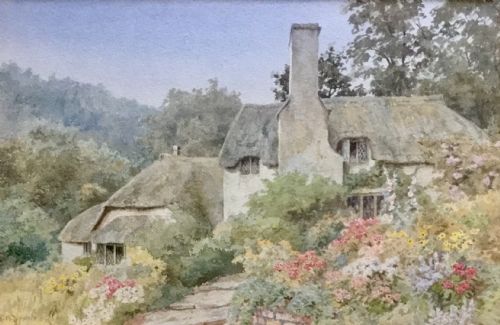
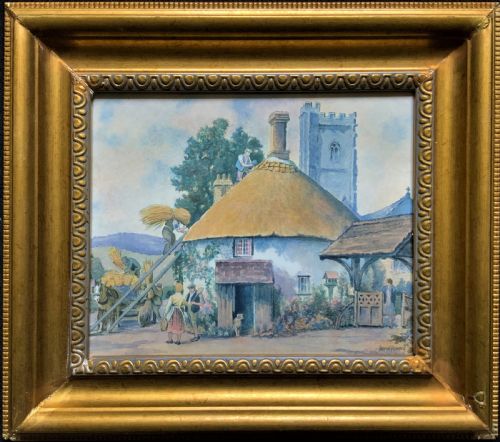
Thatched cottage watercolour art captures rural English pastoral scenes through delicate pigment on paper, offering collectors a quiet window into traditional village life.
Thatched Cottage Watercolour Art
Thatched cottage watercolour art comprises framed paintings and wall art executed on paper using watercolour pigment and watercolour paint. These works depict rural landscapes, village scenes, and cottage gardens across various historical periods.
The pieces on this page most commonly reflect Victorian and Edwardian aesthetics, alongside works from the Georgian period through to the 1940s. Subjects frequently include pastoral genres, coastal settings, and English school countryside views.
Materials and Construction
Artists employed watercolour pigment applied to paper surfaces, often encased behind glass within wooden or gilt frames. These traditional components preserve the delicate translucent washes characteristic of the medium.
The physical build relies on straightforward framing techniques that protect the works on paper from environmental moisture while displaying the brushwork clearly.
Listings feature works spanning the Georgian, Victorian, and Edwardian periods, utilising paper, watercolour pigment, wood, and glass.
Distinctions in Quality
Quality rests in the precision of the brushwork and the artist's handling of light and shadow across the thatched rooflines and garden foliage. Stronger examples display confident draughtsmanship and atmospheric depth within the landscape.
Condition also separates examples, particularly the preservation of the paper support and the vibrancy of the watercolour pigments against fading over time.
Harry Sylvester Stannard·Thomas James Lloyd·Joseph Kirkpatrick·Arthur Claude Strachan·Walter Henry Sweet·David Woodlock·Thomas Rowlandson
The Thatched Cottage Watercolour Art Glossary
- Watercolour
- A painting method in which the paints are made of pigments suspended in a water-based solution. This medium allows for transparent washes of colour that interact with the white paper beneath.
- Pastoral
- Art relating to the rural life and country landscapes of shepherds and villagers. These scenes romanticise the simplicity of agricultural existence.
- Gilt
- Covered thinly with gold leaf or gold paint. This finish commonly appears on the wooden frames enclosing antique watercolours.
- Georgian
- The period of British history spanning the reigns of the four Georges from 1714 to 1830. Pieces from this era demonstrate early roots in British watercolour traditions.
- Victorian
- The period covering the reign of Queen Victoria from 1837 to 1901. Art from this time frequently embraces detailed realism and narrative rural themes.
Thatched Cottage Watercolour Art: Frequently Asked Questions
How should I hang watercolour art?
Keep framed watercolours away from direct sunlight to prevent the pigments from fading over time. Indirect natural light in a dry room suits them best.
Ensure the wall is stable and the hanging wire or brackets securely support the weight of the wood and glass frame.
What periods do these paintings span?
The works stretch from the Georgian era through Victorian and Edwardian times, extending into the 1930s and 1940s. Each era brings subtle shifts in pastoral subject matter and framing styles.
Earlier pieces often lean toward traditional English school realism, while later works capture changing rural communities.
How do I care for antique paper art?
Protect the paper by maintaining stable indoor humidity levels and avoiding damp environments. Professional framing with acid-free backing materials helps preserve the paper over decades.
Consult a paper conservator if the mount shows signs of foxing or discolouration.