



Thatched Cottage Painting
These thatched cottage painting works capture rural domesticity through traditional pigments, appealing directly to collectors of pastoral scenery.
Thatched Cottage Painting
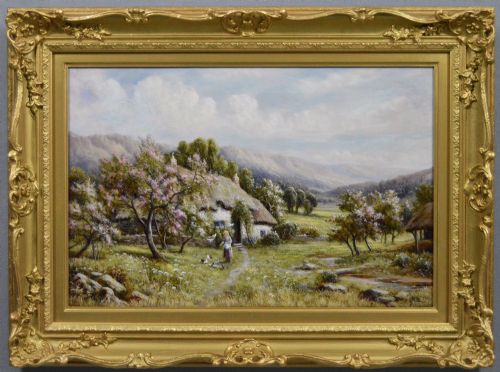
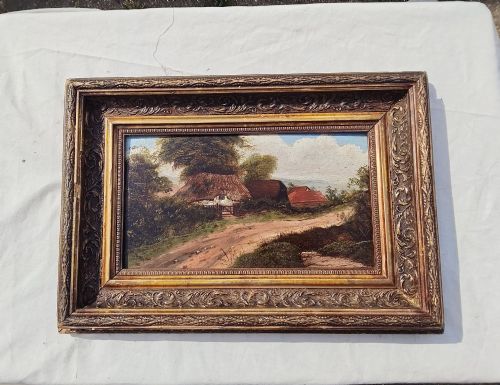
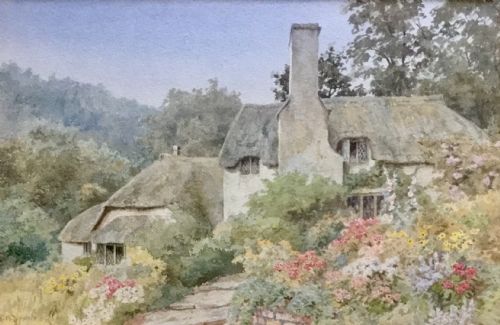
A thatched cottage painting depicts rural domestic architecture embedded within pastoral landscapes, ranging from quiet lane views to busy farmyard scenes. These works appear across the nineteenth century and into the twentieth century, reflecting a sustained artistic interest in traditional British country life.
Most examples found here utilise watercolour or oil paint as the primary medium, applied to paper, card, canvas, or wood panels. The architectural subjects often feature timber framing, garden flowers, and figures engaged in daily rural tasks.
The visual styles span Victorian pastoral, Edwardian pastoral, English country pastoral, and Scottish impressionism. Works originate from named British artists as well as provincial and anonymous British schools active across these periods.
Materials and Technique
Artists create these watercolours by suspending finely ground pigments in water-soluble binders, applying transparent washes onto paper or card support surfaces. This technique allows for delicate tonal gradations across skies, foliage, and cottage stonework.
Oil paintings employ pigments bound in drying oils such as linseed, laid thickly or in thin glazes upon canvas, wood, or cardboard. These works frequently incorporate framing elements of gilt wood and glass to protect the painted surface.
Retail Price Guide 2026
Typical UK retail prices for thatched cottage painting, calculated from the Sellingantiques database of over a million retail prices indexed since 2003. This retail price guide relies exclusively on Sellingantiques data; no external sources or auction records are used, so the figures do not describe the wider market.
Recorded styles encompass Victorian pastoral, Edwardian pastoral, and Scottish impressionism.
The Spectrum of Quality
Quality rests upon the artist's handling of atmospheric light, architectural perspective, and the integration of figures into the landscape. Superior works demonstrate confident brushwork and precise draughtsmanship, whereas lesser examples rely on formulaic composition.
The choice of support and the preservation of the original framing significantly influence the overall character. Works retaining contemporary gilt frames or signed by documented painters command greater distinction among collectors.
John McDougal·David Heward·Singleton Jowett·Peace Sykes·David Woodlock·Sidney Valentine Gardner·Alfred Broge·Christian Berthelsen·Stanley Herdman·David Bates·W H Davis·F Fletcher·C F Watson·Henry Charles Fox·Harold Knight
The Thatched Cottage Painting Glossary
- Watercolour
- A painting method where the paints are made of pigments suspended in a water-based solution. This medium yields translucent effects prized for atmospheric landscape work.
- Oil Paint
- A slow-drying paint consisting of pigment particles suspended in a drying oil. It permits rich colour blending and textured impasto application.
- Pastoral
- A genre of art depicting the rural life of shepherds, cottages, and country landscapes. It romanticises simplicity and agrarian harmony.
- Impressionism
- A style of painting emphasising light and its changing qualities rather than meticulous detail. Scottish practitioners adapted these loose brush techniques to local scenery.
- Gilt Wood
- Wood treated with gold leaf or gold-coloured gilding paint. It typically forms the decorative border of the picture frame.
Frequently Asked Questions
What periods do these paintings come from?
The works span from the nineteenth century through the Edwardian era into the mid-twentieth century. Examples include Victorian creations and later twentieth-century interpretations.
Specific dates or estimated periods are recorded by dealers based on stylistic evidence and artist signatures. These eras reflect changing approaches to pastoral and impressionist landscape painting.
How were these landscape artworks framed?
Many paintings are presented in period frames constructed from gilt wood. Glass frequently protects the delicate paper and card supports of watercolours.
Original framing complements the aesthetic of the artwork and helps preserve the fragile surface materials from environmental damage.
What subjects accompany the cottages?
Common companion subjects include garden flowers, figures feeding animals, riverbanks, boats, and country tracks. Some scenes depict daily labour or domestic tranquility.
These elements provide narrative context and scale to the rural architecture depicted in the composition.
How do I distinguish regional styles?
Regional variations appear through the handling of light and brushwork, such as the distinctive touch found in Scottish impressionism or West Yorkshire views. Local topography and architectural details also vary by region.
Examining the signature and the recorded provenance helps attribute the piece to a specific British school or artist.