






Terracotta Ziegler Rug
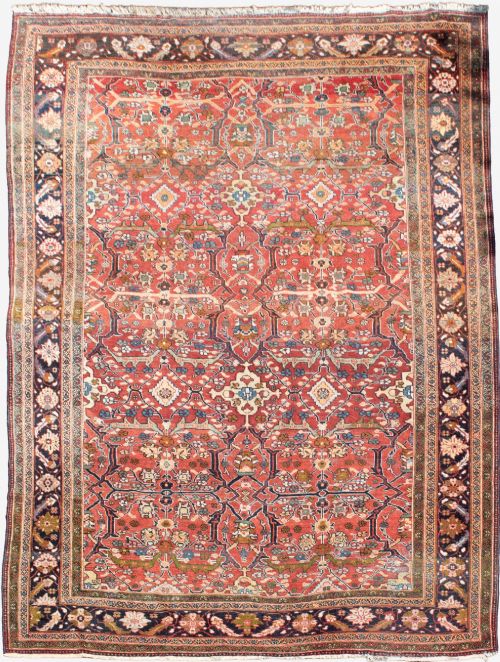
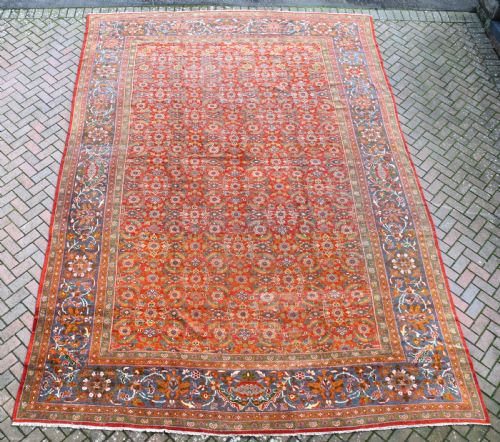
A terracotta ziegler rug brings monumental nineteenth-century Persian design into a room with muted tones and expansive, open floral patterns.
Terracotta Ziegler Rug
A terracotta ziegler rug is a large-scale Persian carpet produced primarily during the late nineteenth century, encompassing styles commonly associated with Ziegler and Sultanabad workshops. These floor coverings are defined by soft terracotta fields paired with large, restrained floral motifs rather than the dense, intricate medallion patterns typical of other Persian weaving traditions.
The pieces listed here span the 1880s, 1890s, and the turn of the twentieth century, appearing as room-size carpets, grand palace dimensions, and smaller area rugs. They originate from Western Persia, carrying designations such as Mahal alongside Sultanabad and Ziegler.
Buyers choose this specific type of rug for its decorative versatility, as the muted palettes and spacious designs integrate seamlessly into contemporary and traditional interiors alike without overwhelming the room.
How they were made
These carpets are constructed with wool pile knotted onto sturdy cotton foundations, a combination that provides both supple handle underfoot and structural durability for large formats. The materials were handled by skilled weavers in Persian workshops to produce expansive room-size and palace-size carpets.
Dyes of the period achieved the characteristic terracotta and softer secondary tones through traditional vegetable dyeing methods, allowing the colours to age gracefully over more than a century of use.
Listings span the late nineteenth century, specifically featuring pieces dated to 1880, 1890, and 1900, constructed from wool and cotton.
What varies in quality
Quality in these nineteenth-century rugs rests largely on the proportion and execution of the design across large surfaces, where maintaining balance in expansive fields requires exceptional weaver discipline. The subtlety of the terracotta ground tone and the clarity of the drawing separate standard room-size carpets from finer workshop productions.
Preservation of the wool pile across expansive areas also dictates the standing of a piece, alongside the integrity of the cotton foundation supporting these heavy formats.
Ziegler & Co
The Terracotta Ziegler Rug Glossary
- Ziegler
- A nineteenth-century commercial carpet enterprise based in Persia that produced large-scale decorative rugs tailored for Western interior tastes. Their output is known for softer palettes and spacious floral patterns.
- Sultanabad
- A regional Persian weaving centre and style designation from the nineteenth century. These carpets typically feature oversized botanical motifs set against muted grounds.
- Mahal
- A category of nineteenth-century Persian carpets from the surrounding district of Sultanabad. They share similar decorative traits with broader Sultanabad and Ziegler productions.
- Pile
- The surface of the rug formed by the cut ends of knots. In these nineteenth-century pieces, it is traditionally spun wool.
Terracotta Ziegler Rug: Frequently Asked Questions
How do I clean a nineteenth-century carpet?
Professional specialist cleaning is essential for antique wool and cotton rugs of this age. Standard domestic methods risk damaging the natural dyes and historical foundation.
Regular gentle vacuuming without a beater bar removes surface dust safely between professional visits.
Where should I place a large carpet?
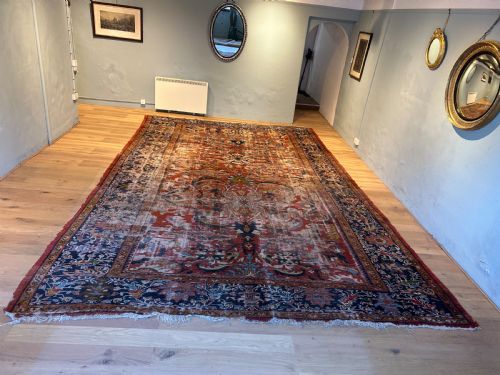
Grand room-size and palace-size rugs anchor primary living spaces, dining rooms, or libraries. They require adequate floor exposure to display the expansive terracotta fields properly.
Using a quality underlay protects the cotton foundation and prevents slipping on hard floors.
How do I distinguish Sultanabad from Mahal?
Sultanabad and Mahal rugs share common origins in the same West Persian region during the nineteenth century. Distinctions often rely on subtle variations in drawing scale and workshop attribution.
Both types exhibit the open, decorative compositions sought after by collectors and interior designers.
Are these carpets suitable for daily use?
The robust wool pile and cotton construction designed for nineteenth-century households remain durable for modern living. Normal foot traffic is well-tolerated by these established room-size carpets.
Placing them out of harsh, direct sunlight preserves the muted terracotta tones over time.