
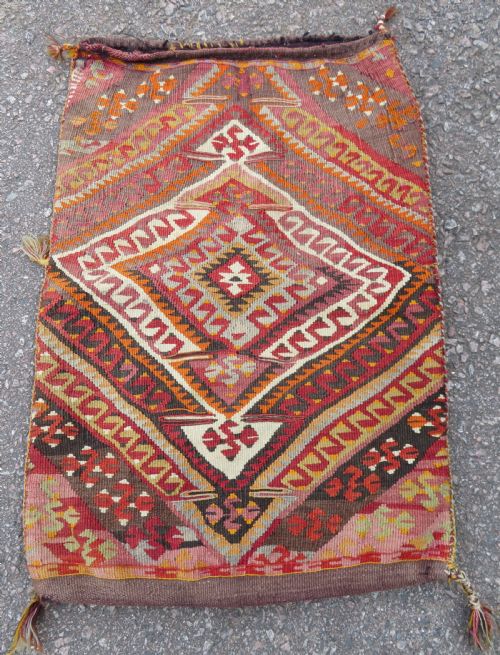


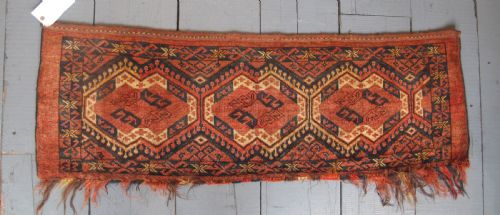

Terracotta Woven Storage Bag
These terracotta woven storage bag examples are woven tribal textiles used by nomadic groups, offering rich colours and geometric designs for modern interiors.
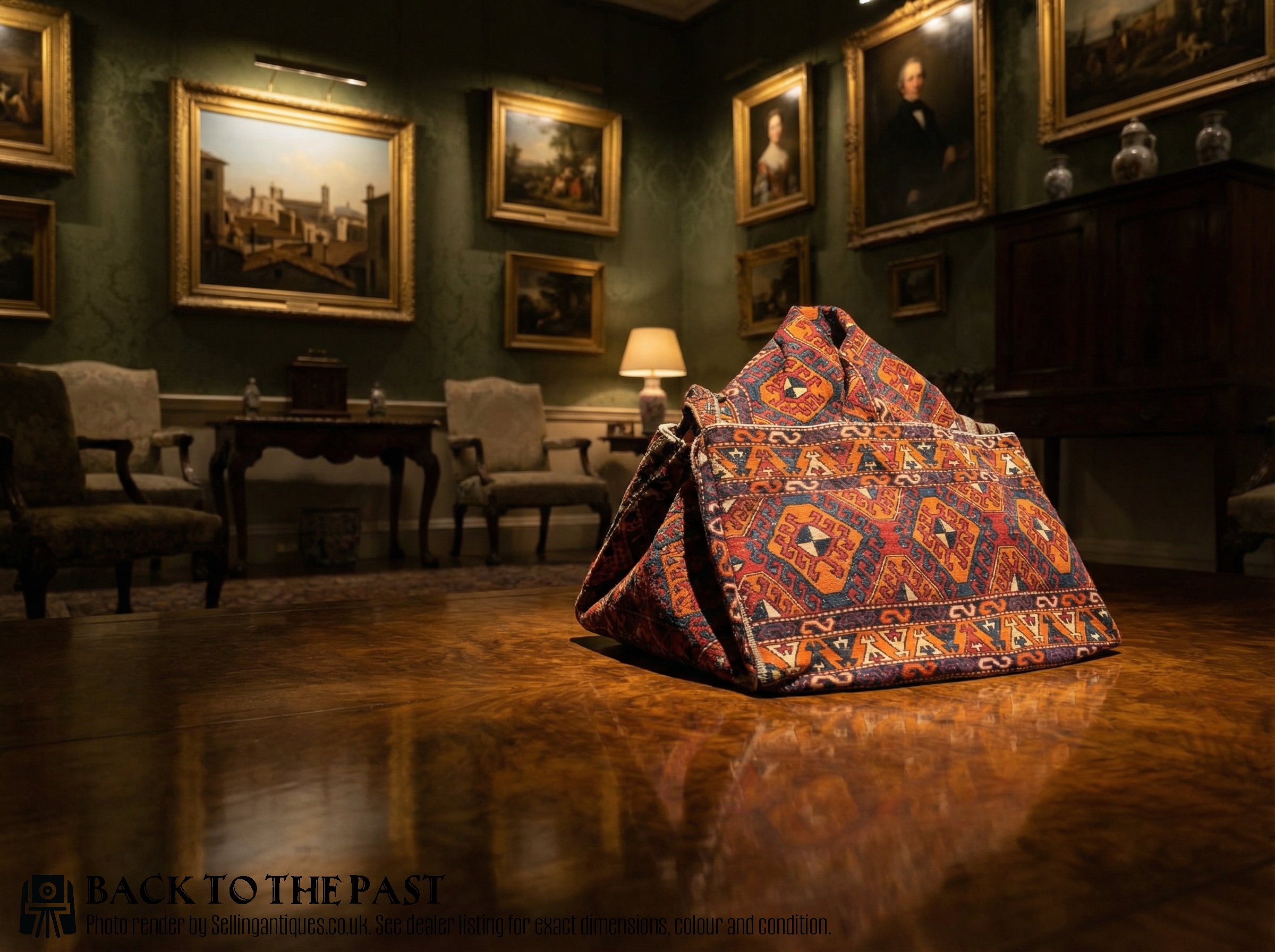
Terracotta Woven Storage Bag
When searching for a terracotta woven storage bag, collectors encounter antique tribal textiles originating from Central Asian, Caucasian, and nomadic traditions. These pieces include storage bags, bag faces, torbas, mafrash sides, chuvals, and tent pole bags produced between the late nineteenth century and the early twentieth century.
The objects take the form of utilitarian containers designed for nomadic life, ranging from spindle bags and salt bags to larger storage pouches. Most surviving examples display warm terracotta and reddish brown tones derived from natural dyes used by weavers across the region.
How they were made
These items are constructed from hand-spun wool, cotton, and goat hair, utilising traditional flatweave and pile techniques. Artisans applied natural dyes to coloured yarns, producing durable textiles designed to withstand daily camp use.
Weavers employed banded designs, repeating guls, and structural flatweave patterns. Many surviving examples retain their original wool or plain weave backs, demonstrating complete nomadic construction methods.
Nomads wove specialised bags just for tent poles and spindles, ensuring every stick had a proper home.
What varies in quality
Quality in these woven storage pieces depends on the fineness of the wool, the clarity of the natural dyes, and the crispness of the tribal motifs. Intricate guls and balanced banded flatweave layouts distinguish superior examples.
The survival of original backs, complete formats such as full mafrash sides or tent pole bags, and tight structural knotting or weave density mark the upper tier of these antique textiles.
The Terracotta Woven Storage Bag Glossary
- Torba
- A small Turkmen storage bag used within a nomadic tent. These rectangular containers typically hung against tent walls.
- Mafrash
- A large rectangular storage container or bedding bag used during tribal migrations. They are frequently found as complete structures or individual side panels.
- Chuval
- A large Turkmen tent storage bag used for household possessions. They often feature repeating primary guls across the face.
- Gul
- A medallion or repeating primary motif found in Turkmen and tribal weaving. These geometric forms identify specific tribal groups.
- Flatweave
- A textile constructed without pile by interweaving warp and weft threads. Banded flatweaves form structural parts of nomadic bags.
Terracotta Woven Storage Bag: Frequently Asked Questions
What is a terracotta woven storage bag used for?
Nomadic groups utilised these woven bags to store household items, bedding, salt, and spinning tools inside tents or during seasonal migrations.
Today, collectors display these textiles on walls or place them on furniture to introduce warm terracotta hues and historic textures into interior spaces.
How do you date a terracotta woven storage bag?
Dating relies on wool quality, natural dye analysis, tribal structure, and stylistic conventions associated with late nineteenth and early twentieth century production.
Pieces from this era typically exhibit characteristic Yomut, Tekke, Baluch, or Caucasian design elements combined with hand-spun materials.
What is the difference between a torba and a chuval?
A torba is a smaller storage bag designed for smaller possessions or general wall hanging, while a chuval is a significantly larger storage sack intended for bedding and bulky household goods.
Both forms share traditional tribal weaving techniques and distinct geometric gul patterns.
Are original backs important on these bags?
The presence of an original wool or plain weave back adds considerable interest for collectors seeking complete, unaltered ethnographic examples.
Many surviving pieces circulate as bag faces only, having been separated from their original reverse construction over time.