


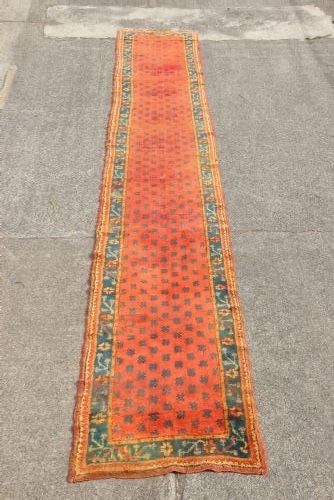

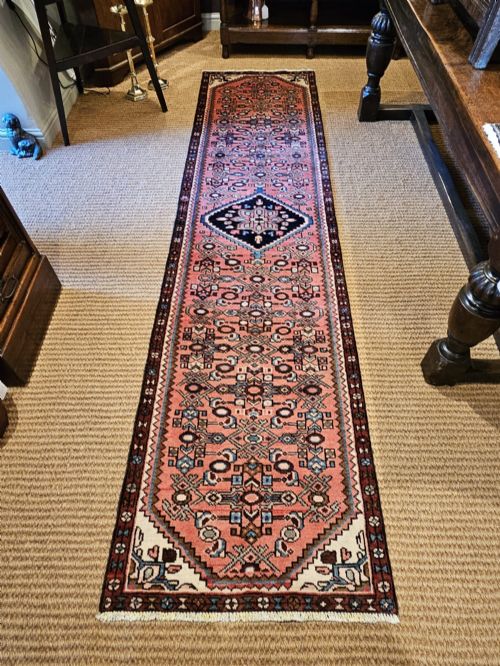
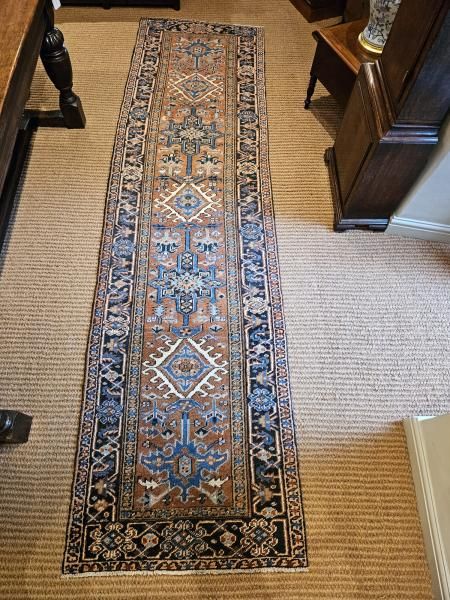
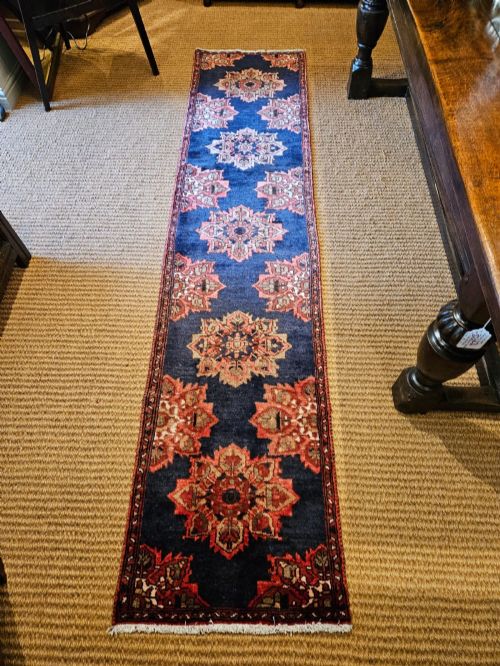

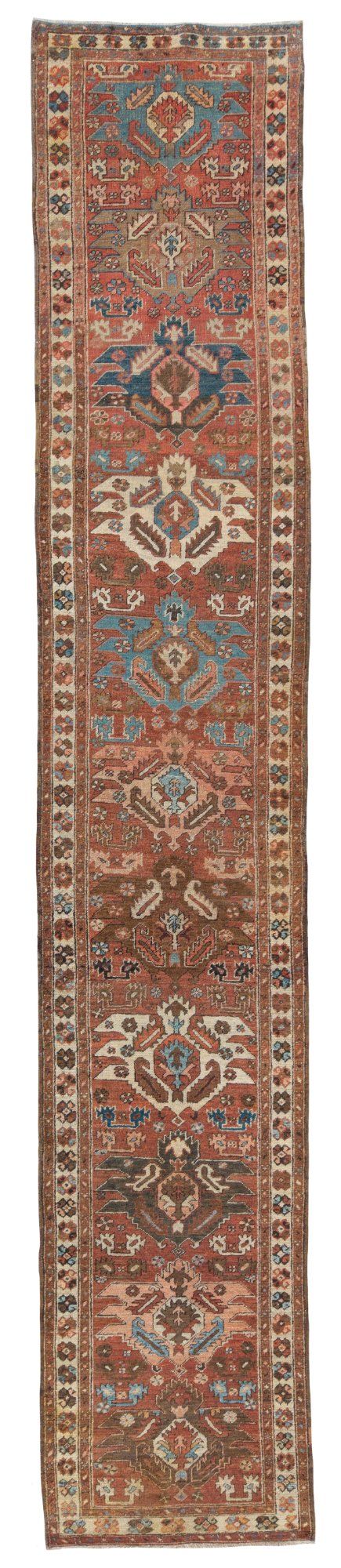
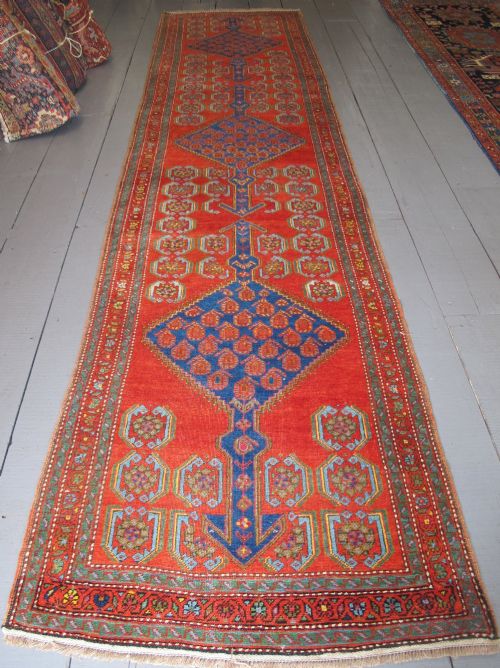


Terracotta Wool Hallway Rug
A terracotta wool hallway rug brings depth and warmth to a corridor through time-worn Persian and tribal patterns.
Terracotta Wool Hallway Rug
A terracotta wool hallway rug consists of narrow, elongated floor coverings designed specifically for corridors and passages. These pieces originate predominantly from Persian and tribal weaving centres dating from the nineteenth and early twentieth centuries.
The version most commonly met on this page is the antique runner or long carpet, often measuring several metres in length. Examples span traditional styles such as Heriz, Kurdish, Bakshaish, Ushak, and Bidjar.
Makers shaped these formats to fit domestic thresholds and hallways, utilising durable structures that endure heavy foot traffic. The predominant palette leans toward terracotta, rust, and earthy red tones set against contrasting blues and creams.
Materials and construction
Weavers built these runners using hand-spun wool for both the pile and the foundational warps and wefts. This material provides natural resilience and a tactile density unique to antique textile production.
Artisans employed manual knotting techniques on vertical looms, securing the pile row by row. Supplementary cotton elements appear in select foundations to add stability to the elongated runner format.
Listings feature pieces from the nineteenth century up to the 1930s, constructed predominantly from wool and hand-spun wool.
Assessing quality in antique runners
Quality rests upon the fineness of the knotting and the density of the wool foundation. Tighter, heavier weaves produce robust runners that maintain their structural integrity over decades of use.
The integrity of the natural dyes dictates visual depth. Pieces retaining vibrant, saturated terracotta and secondary tones from traditional organic sources hold greater visual resonance than flat or faded applications.
Proportion and scale distinguish superior village and tribal weaving. Well-balanced geometric medallions or balanced all-over shrub designs demonstrate the weaver's control over complex layouts across a narrow format.
Heriz weavers·Kurdish tribes·Bidjar workshops·Ushak looms·Bakshaish makers
The Terracotta Wool Hallway Rug Glossary
- Runner
- A long, narrow carpet format intended for corridors, staircases, and hallways. These pieces typically measure three to five times longer than they are wide.
- Pile
- The vertical or diagonal yarn surface of a rug formed by the cut ends of knots. It provides the soft texture and visual display.
- Warp
- The stationary longitudinal threads stretched on a loom parallel to each other. The pile knots are tied around these foundational elements.
- Weft
- The horizontal threads passed across the warp threads to hold the knots in place. They are beaten down firmly after each row.
- Kilim
- A flat-woven carpet or rug produced without a pile. These pieces rely on interlocking weft threads to create geometric patterns.
Terracotta Wool Hallway Rug: Frequently Asked Questions
How do I clean an antique wool runner?
Gentle surface brushing and professional specialist washing preserve the natural lanolin in antique wool. Avoid harsh chemical agents or modern immersion cleaning.
Regular light vacuuming without a rotating beater bar prevents dust accumulation within the dense pile.
Where should I place a long hallway runner?
These narrow formats suit corridors, entrance halls, and narrow galleries where floor protection and visual warmth are required. They soften sound and guide movement through architectural spaces.
Ensure the dimensions leave a consistent margin of exposed floor around the perimeter of the passage.
How do I identify a Kurdish tribal rug?
Kurdish pieces often feature robust geometric motifs, strong indigo contrasts, and heavy wool foundations. Their construction reflects the traditional weaving practices of Kurdish communities.
Look for distinctive rustic handles and spontaneous tribal layouts within the field.
What causes the distressed look in old runners?
Natural age, light exposure, and generations of foot traffic create an even, low pile and softened coloration. This honest wear demonstrates genuine antique status.
Such patination enhances the integration of terracotta and earthy tones into domestic interiors.