

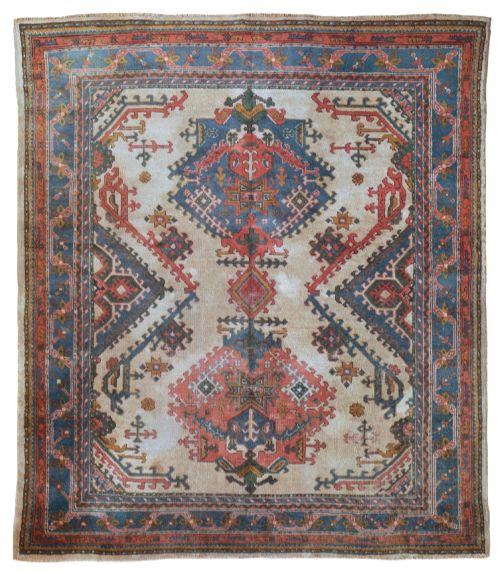


Terracotta Ushak Area Rug
A terracotta ushak area rug brings grand Ottoman pattern and warm, earthy tones into a room.
Terracotta Ushak Area Rug
A terracotta ushak area rug represents a distinct group of hand-knotted floor coverings rooted in Turkish and Anatolian traditions. When you search for a terracotta ushak area rug, you encounter pieces originating from the late nineteenth century through to the early twentieth century. The selection spans large carpets and smaller rugs, often categorised under Ottoman or traditional Turkish styles.
Most examples you meet here date from the 1880s, 1890s, and 1900s, with occasional pieces from the 1870s. These floor coverings function primarily as large area rugs and carpets designed to anchor a drawing room or study. The overarching aesthetic draws directly from Ottoman design motifs executed in soft, warm terracotta and muted colour palettes.
How they were made
Weavers constructed these rugs using traditional hand-knotting techniques on a foundation of natural fibres. The structural materials recorded in these pieces consist of wool and cotton, providing a sturdy yet flexible base for the pile.
Certain finer examples incorporate angora wool, which imparts a distinct lustre and a softer handle to the surface pile. Artisans relied on hand-spun materials and traditional dying methods to achieve the characteristic terracotta tones and faded patinas seen across the period.
Terracotta Ushak Area Rug Retail Price Guide 2026
Typical asking prices for terracotta ushak area rug among the pieces listed under this phrase on Sellingantiques today, from the lower quarter to the upper quarter. They describe what is for sale here now, not the wider market.
Angora wool adds a secret softness to certain rugs, proving that nineteenth-century sheep sometimes wore very fancy coats indeed.
What varies in quality
The distinction between standard examples and finer pieces often lies in the choice of pile material and the crispness of the weave. Rugs incorporating angora wool typically offer a more luminous surface and greater tactile softness compared to standard wool constructions.
Scale and proportion also define the upper tier of these textiles, particularly in large format carpets where maintaining balanced geometric or floral motifs requires exceptional skill. The degree of natural fading and the integrity of the original foundation edges further separate ordinary survivals from exceptional collector pieces.
The Terracotta Ushak Area Rug Glossary
- Ushak
- A traditional style of Turkish rug originating from the town of Usak, known for large-scale floral designs and subdued colour schemes. These rugs formed a cornerstone of Ottoman weaving tradition.
- Angora wool
- A fine, soft fibre obtained from angora goats, utilised in specific antique rugs to impart a silky texture and gentle sheen. This material distinguishes particular finer weaves from standard wool constructions.
- Anatolian
- Pertaining to the region of Anatolia, encompassing the Asian part of Turkey where these historic hand-knotted textiles were produced. It defines the broader geographical origin of traditional Turkish carpet weaving.
- Ottoman
- Relating to the historical Ottoman Empire, whose artistic patronage and cultural aesthetic heavily influenced the design motifs found in these carpets. The style embraces traditional geometric and floral elements.
- Pile
- The raised surface of a rug formed by the ends of knotted yarn standing upright from the foundation. In these antique pieces, the wear and texture of the pile reveal the age and handling of the textile.
Terracotta Ushak Area Rug: Frequently Asked Questions
What is a terracotta ushak area rug?
A terracotta ushak area rug is a hand-knotted antique floor covering originating from Turkey during the late nineteenth or early twentieth century. These pieces are distinguished by their warm terracotta colour palette and traditional Ottoman design influences.
They were produced in various dimensions, functioning as both room-sized carpets and smaller area rugs. The aesthetic relies on muted tones and historic motifs that complement traditional and contemporary interiors alike.
How do I care for an antique rug?
Caring for an antique rug involves gentle maintenance such as regular light vacuuming without a rotating brush bar. Keeping the textile out of direct, harsh sunlight prevents the natural terracotta and faded dyes from shifting further.
Professional cleaning tailored for antique wool and cotton textiles is essential every few years. Placing a proper underlay beneath the rug also reduces friction and preserves the historic foundation.
Where were these rugs made?
These rugs were made in the historic weaving region of Anatolia, specifically centred around the Turkish town of Usak. This area has a long-standing reputation for producing significant carpets for both domestic use and international export.
The craft was passed down through generations of local artisans who utilised indigenous materials like wool, cotton, and occasionally angora wool.
How do I identify the age of an ushak rug?
Identifying the age of an ushak rug involves examining the natural materials, the characteristics of the dyes, and the structural weave. Pieces from the late nineteenth century often display specific regional motifs and hand-spun wool foundations that differ from later commercial productions.
Comparing structural details and documented periods helps establish a reliable timeline for these antique textiles.