

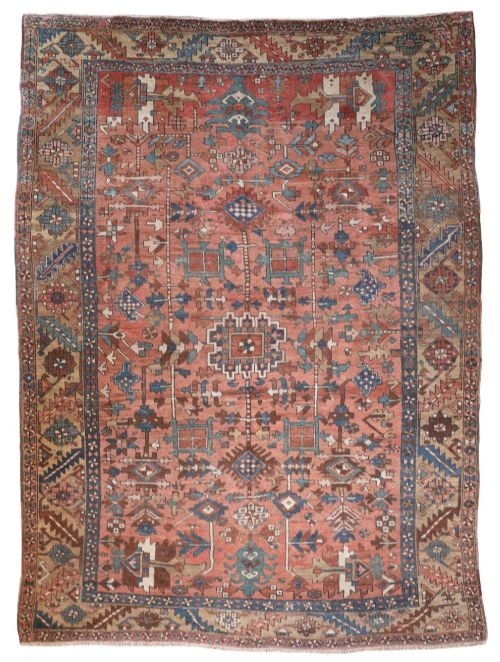
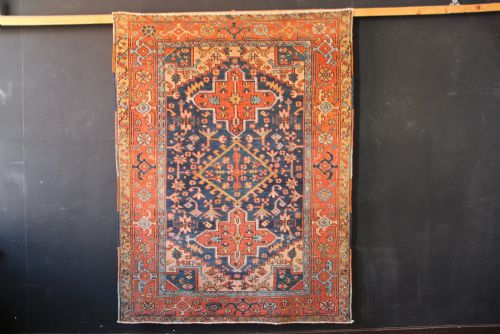
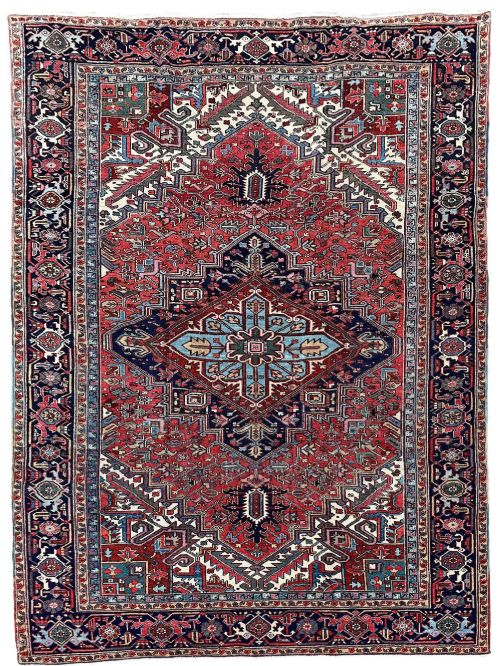

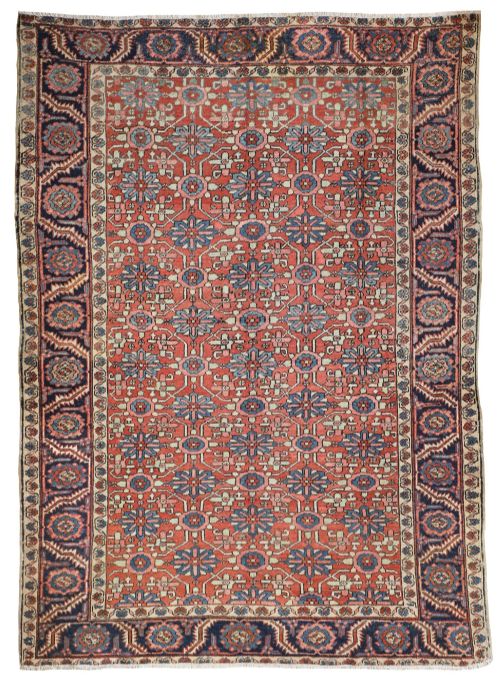

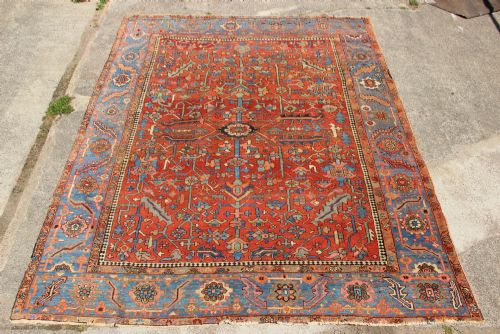
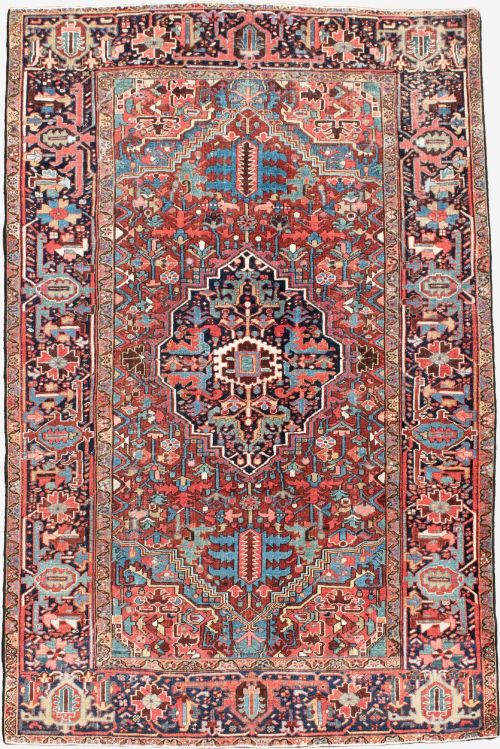

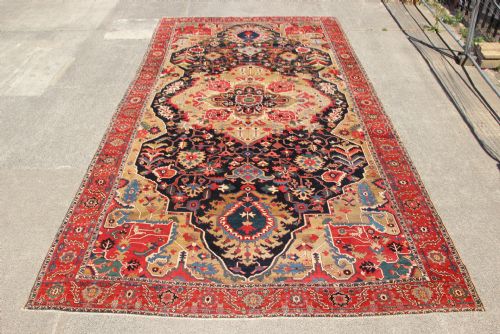
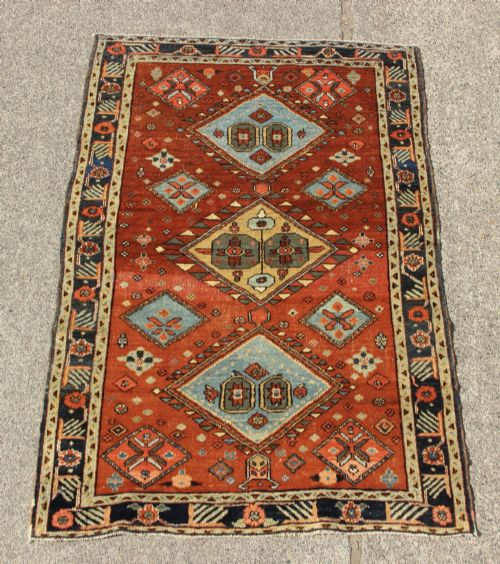


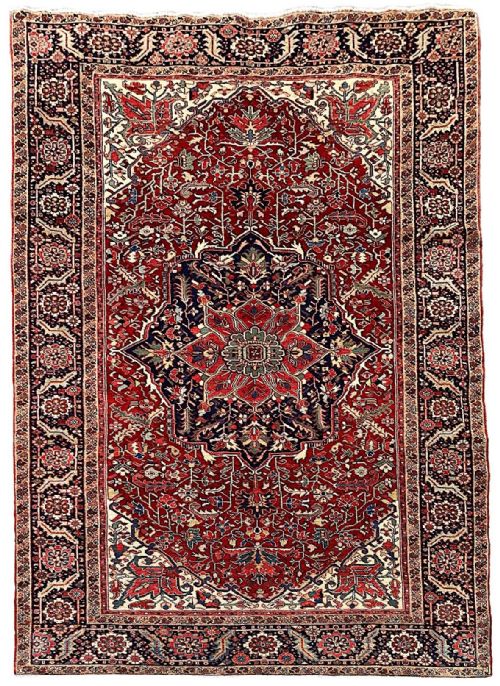
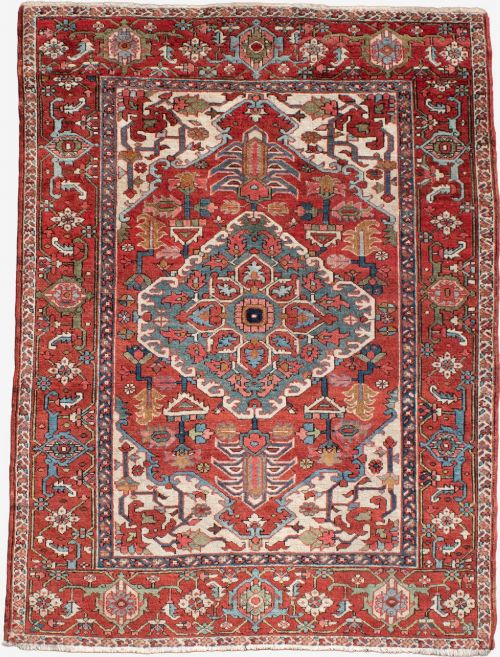

Terracotta Heriz Area Carpet
These terracotta heriz area carpet pieces anchor a room with bold geometric designs woven in north-west Persia.
Terracotta Heriz Area Carpet
A terracotta heriz area carpet originates from the north-west region of Persia, encompassing large rugs and grand room-sized floor coverings. The typical format centres on a bold geometric medallion structure framed by heavy, stylised borders.
Most examples found here date from the late nineteenth century through to the early decades of the twentieth century. Production spans from village workshops to larger domestic settings, yielding substantial rugs designed for heavy daily use.
Materials and construction
Weavers utilised sturdy wool pile hand-spun for durability, knotted tightly onto a strong cotton warp foundation. This combination gives these carpets their characteristic crisp geometric drawing and heavy handle.
Natural dye stuffs provided the robust terracotta grounds and contrasting tones of ivory and sky blue seen across these village carpets.
Terracotta Heriz Area Carpet Retail Price Guide 2026
Typical asking prices for terracotta heriz area carpet among the pieces listed under this phrase on Sellingantiques today, from the lower quarter to the upper quarter. They describe what is for sale here now, not the wider market.
Listings span several decades from the mid-nineteenth century to the 1930s, using wool pile on cotton foundations.
Assessing quality and village origin
Quality rests upon the fineness of the weave and the clarity of the geometric drawing within the central medallion. Finer knots permit sharper angles and more intricate secondary ornamentation in the corners.
The choice of secondary palette, from deep indigo to soft ivory against the terracotta field, distinguishes standard village work from exceptionally decorative country house carpets.
The Terracotta Heriz Area Carpet Glossary
- Warp
- The vertical foundation threads running lengthwise through the carpet, onto which the wool knots are tied. Cotton is typical for these north-west Persian village rugs.
- Medallion
- The large central ornamental motif dominating the field of the carpet. In this tradition, it usually takes a bold geometric or polygonal form.
- Serapi
- A sub-type of Heriz carpet generally associated with earlier nineteenth-century weaving, known for a more open design and softer, muted palette. They command strong interest from collectors.
- Bakshaish
- An adjacent village weaving tradition related to Heriz production, characterised by rustic geometric patterns and spacious tribal layouts. These date back to the mid-nineteenth century in this group.
Terracotta Heriz Area Carpet: Frequently Asked Questions
How do I clean a terracotta heriz area carpet?
Regular gentle vacuuming without a rotating power head removes surface grit safely. Professional specialist washing is required for deeper maintenance to protect the wool pile and cotton foundation.
Avoid household detergents or excessive moisture which can cause natural dyes to bleed across the terracotta field.
Where should I place a large heriz carpet?
These robust floor coverings suit high-traffic reception rooms, studies, and dining areas where their sturdy wool construction withstands daily movement. Ensure the rug sits flat on a quality underlay to prevent sliding and reduce wear on the foundation.
Keep them away from direct, strong sunlight to preserve the depth of the terracotta and indigo tones over time.
How do I distinguish Serapi from standard Heriz?
Serapi carpets typically display a more spacious, relaxed geometric layout with a slightly coarser and heavier weave than later Heriz production. The colour palettes often incorporate softer terracotta and muted blues.
Standard Heriz pieces from the early twentieth century feature tighter knotting and sharper, more rigid geometric drawing in the medallions.
What underlay is best for antique Persian rugs?
A breathable, natural rubber and felt underlay secures the carpet firmly in place without trapping damaging moisture beneath the cotton warp. This extra layer cushions the wool pile against hard wooden or stone flooring.
Choose an underlay cut slightly smaller than the rug dimensions to ensure the edges lie flat.