




Terracotta Ceramic Bowl
A terracotta ceramic bowl brings earthy warmth and tactile weight to a room, offering a direct link to centuries of utilitarian and decorative domestic craft.
Terracotta Ceramic Bowl
A terracotta ceramic bowl encompasses robust utilitarian vessels alongside decorative forms, connecting everyday historical domestic use with ornamental display. When exploring a terracotta ceramic bowl selection, you encounter substantial proportions designed for functional tasks or visual impact.
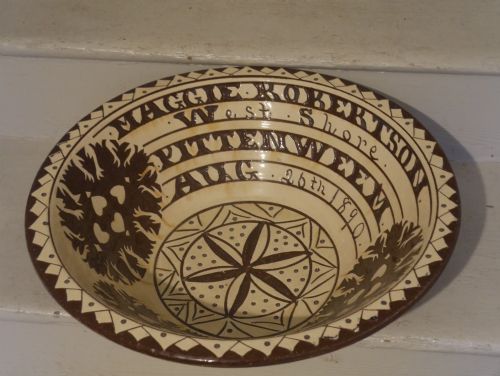
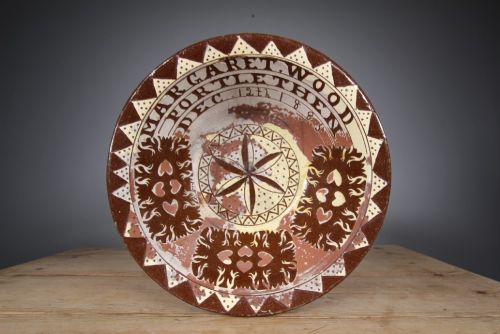
The material lineage spans from early earthenwares and glazed pots to pieces finished with slip, enamel, and lead glaze. Origins range across English country workshops, Scottish potteries such as Seaton, French provincial centres, and Asian porcelain traditions.
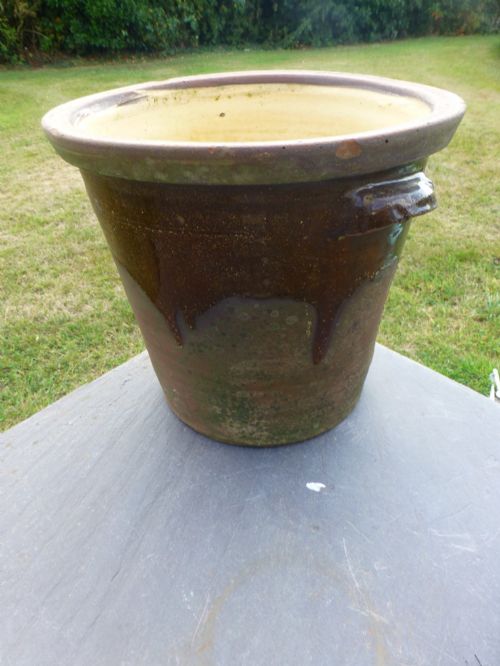
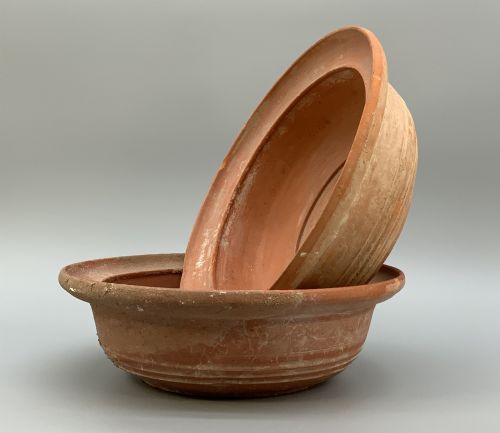
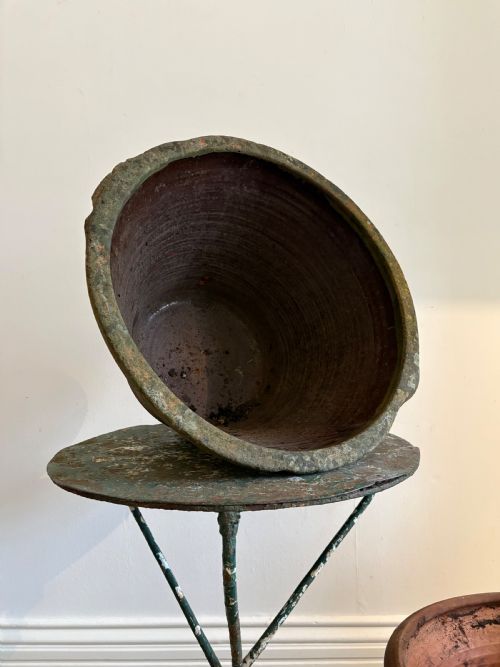
Forms vary from large dairy bowls and garden pancheons to intricate Japanese Imari and Chinese Han dynasty vessels. Examples stretch chronologically from pre-sixteenth century antiquities through Victorian production to Art Deco powder boxes.
How they were made
Makers shaped porous earthenware and terracotta on the wheel or built them by hand, frequently applying lead glazes or slip interiors to ensure liquid retention in utilitarian vessels. These functional surfaces combined with raw exterior clay bodies to balance durability with tactile warmth.
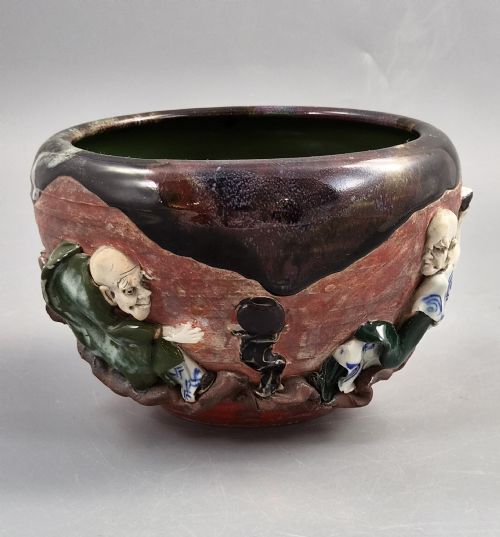
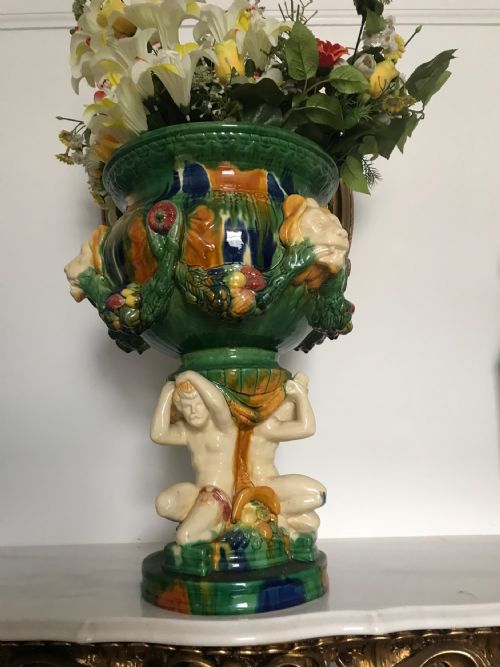
Surface decoration integrated hand-painted details, relief figures, and specialised glazing techniques such as Imari palettes or green glazes. Firing methods dictated the final depth of the clay body and the adherence of the enamel or glaze layers.
The selection includes regional English slipware, French tian bowls, and Japanese Imari porcelain alongside Victorian garden pancheons.
What varies in quality
Quality rests upon the crispness of the form, the integrity of the glaze or slip application, and the balance of the vessel. A well-thrown dairy bowl or decorative basin displays consistent wall thickness and purposeful proportion.
Distinction also arises from the sophistication of surface decoration, whether in the precision of hand-painted motifs or the complexity of relief figures. Historical age and regional provenance further elevate the standing of a piece within its category.
Inoue Ryōsai·Shozo·Seaton Pottery·Royal Dux·Mason
The Terracotta Ceramic Bowl Glossary
- Terracotta
- A porous, unglazed or glazed red earthenware clay fired at relatively low temperatures. It forms the structural body for many traditional utilitarian and garden vessels.
- Slip
- A liquid mixture of clay and water applied to pottery before firing to smooth the surface or create decorative patterns. It provides a contrasting background for slip-painted designs.
- Dairy bowl
- A wide, shallow utilitarian vessel historically utilised for setting milk and separating cream. These pieces frequently feature glazed interiors for hygiene and ease of cleaning.
- Imari
- A style of Japanese porcelain characterised by underglaze blue and overglaze red, gold, and other colours. It influenced various decorative ceramics across later periods.
- Pancheon
- A large earthenware or terracotta vessel used in domestic food preparation and dairy work. They often present generous diameters and sturdy rims suited to heavy farm use.
Terracotta Ceramic Bowl: Frequently Asked Questions
What is a terracotta ceramic bowl used for?
These vessels served diverse practical and decorative roles historically, ranging from dairy work and food preparation to interior display.
Today, larger examples function effectively as planters or statement decorative objects within contemporary interiors.
How do I care for antique terracotta?
Porous clay bodies require gentle handling and protection from persistent moisture to preserve the structural integrity of the material.
Glazed interiors withstand light functional use, but unglazed exterior surfaces benefit from dry dusting rather than immersion.
How can I tell the period?
Dating relies upon stylistic markers, material composition, and characteristic glaze signatures associated with specific centuries or movements.
Form traditions, such as nineteenth-century dairy wares or pre-sixteenth century antiquities, provide key contextual clues.
What is slipware pottery?
Slipware involves coating an earthenware body with a liquid clay mixture before firing to decorate or seal the surface.
This technique creates distinctive linear patterns and rich textural contrasts visible across various regional traditions.