
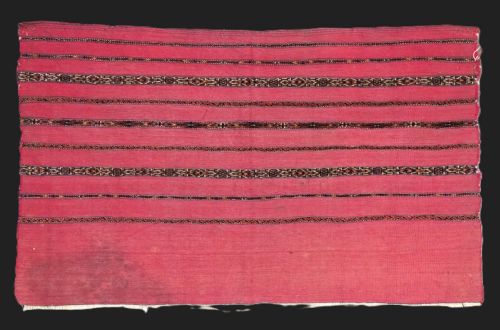


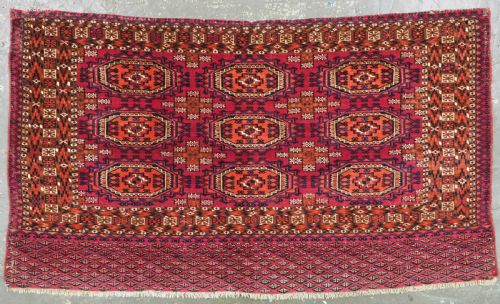

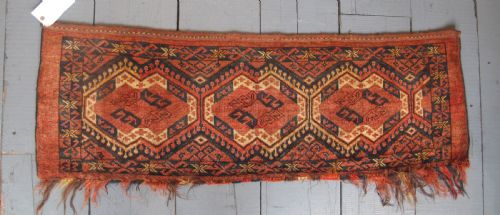
Tekke Chuval Panel
A tekke chuval panel is a Central Asian tribal textile designed for nomadic storage, prized by collectors for its geometric precision and rich wool pile.
Tekke Chuval Panel
When you search for tekke chuval panel, you are looking at antique tribal textiles originating from Central Asia, specifically created by Turkmen tribes. These pieces functioned originally as storage bag faces or complete bags used within nomadic dwellings.
The selections available here span from the mid-nineteenth century to the end of that century, encompassing dates around 1850, 1870, 1880, and 1890. You will encounter individual chuval faces, complete examples retaining their original backs, and paired sets.
What varies in quality
The distinction between standard examples and the finest pieces lies in the density of the weave and the crispness of the tribal motifs. A tighter knot count allows for sharper definition within the repeating patterns and complex border structures.
Completeness also influences the standing of a piece, as surviving examples retaining their original cotton or wool backs command particular attention. The vibrancy and stability of the natural dyes further separate ordinary examples from exceptional ones.
Nomadic weavers packed these bags with winter blankets long before anyone thought to hang them on a modern living room wall.
The Tekke Chuval Panel Glossary
- Chuval
- A large tent storage bag produced by nomadic tribes for household possessions and bedding. These items formed an essential part of Turkmen domestic life.
- Gul
- A primary medallion motif repeated across Turkmen carpets and bag faces. Each design often relates to a specific tribal lineage or subgroup.
- Mafrash
- A smaller storage container or bedding bag created using similar weaving techniques to the chuval. These pieces display comparable tribal designs.
- Kap
- A storage bag or bag face used within nomadic tents. The term shares operational similarities with chuval and mafrash definitions.
- Natural Dyes
- Colourants derived from plants, insects, and minerals rather than synthetic compounds. These substances yield the characteristic rich hues seen in nineteenth-century tribal weaving.
Tekke Chuval Panel: Frequently Asked Questions
What is a tekke chuval panel?
A tekke chuval panel is an antique tribal textile woven by the Tekke Turkmen tribe in Central Asia. They served as decorative faces for large nomadic storage bags.
Today, collectors appreciate these panels as standalone textile art, displaying them on walls or surfaces to highlight their intricate geometric patterns and natural dye colours.
How old are these textile panels?
The pieces available on this page date from the nineteenth century, specifically spanning the mid to late periods between 1850 and 1890.
Age is determined through material analysis, dye characteristics, and traditional weaving structures associated with Central Asian nomadic production.
Were these panels used as rugs?
No, they were originally constructed as functional storage containers for use inside nomadic tents rather than floor coverings. Their format is typically wider than it is tall, suited for tent storage.
While occasionally classified under small rugs or tribal textiles due to their flat weave construction, their primary historic function was containment.
How do I care for a textile panel?
Protect antique wool and cotton textiles from direct sunlight to prevent natural dye fading. Gentle vacuuming with a mesh screen or professional textile cleaning helps preserve the pile.
Mounting panels flat on breathable backing materials distributes weight evenly if displayed on a wall.