
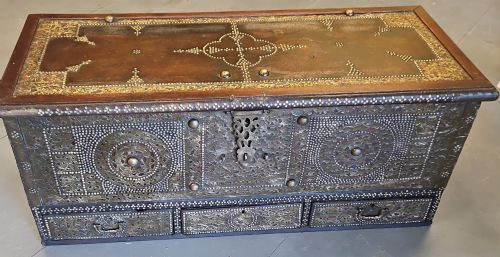


Teak Wooden Coffer
A teak wooden coffer brings robust construction and rich grain, built to hold valuables through travel and domestic service.
Teak Wooden Coffer
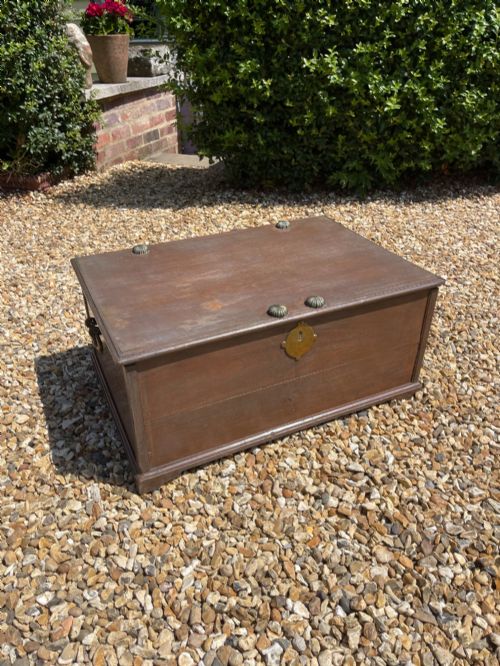
A teak wooden coffer encompasses heavy storage chests, campaign trunks, and dowry boxes originating from Anglo-Indian, Victorian, and colonial contexts. These pieces serve as practical storage items, often doubling as tables or benches depending on their scale and form.
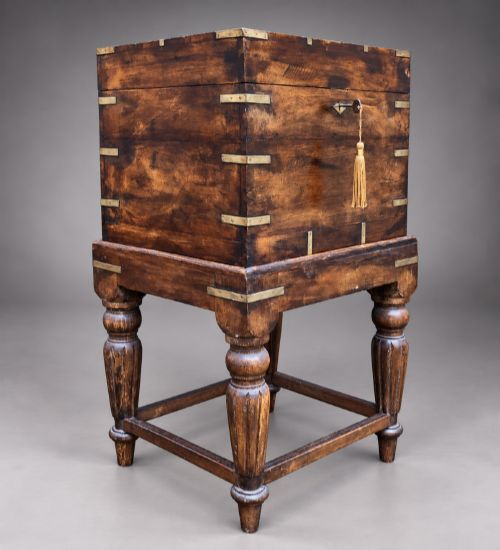
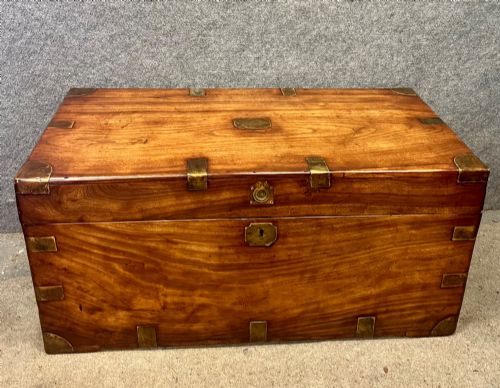
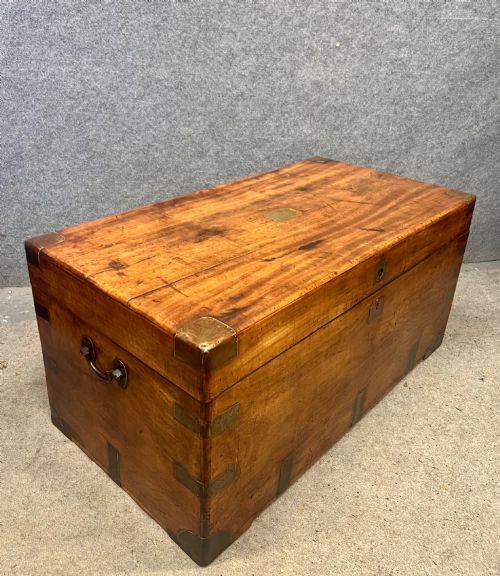
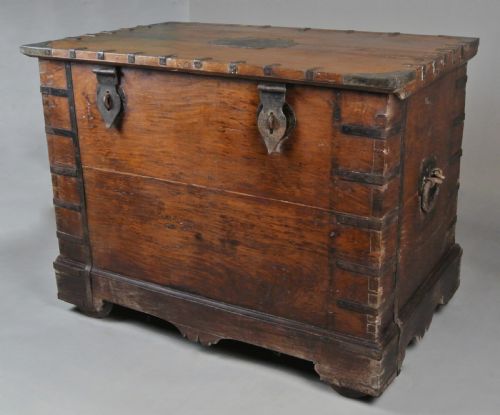
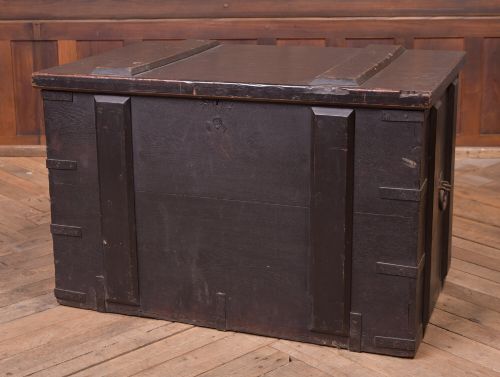
The version most commonly encountered on this page is the brass-bound or iron-banded trunk from the nineteenth century. These sturdy examples reflect global trade routes, combining utilitarian strength with decorative metalwork.
Materials and construction methods
Makers utilised dense teak and assorted hardwoods to ensure structural integrity against climate shifts and heavy transit. This dense timber resists warping and provides a durable substrate for intricate carving or smooth panel assembly.
Metal reinforcement defines the construction, with brass corners, straps, and iron binding securing the joints. These protective elements combine with flush-mounted handles to withstand the rigours of sea voyages and overland travel.
Listings feature items from the eighteenth, nineteenth, and early twentieth centuries, spanning Victorian, colonial, and Anglo-Indian styles.
Assessing quality in construction and detail
Quality rests in the precision of the metal mounts and the tightness of the joinery. Superior examples display neatly fitted brass banding, secure dovetail joints, and well-preserved interior compartments or tills.
The presence of carved ornamentation and secondary timbers such as ebony elevates the standing of a piece. Finer items retain original patination on the wood surfaces and complete, functioning locking mechanisms.
The Teak Wooden Coffer Glossary
- Campaign trunk
- A chest designed for military or civilian travel, featuring recessed brass handles and reinforced corners for easy transit.
- Zanzibar chest
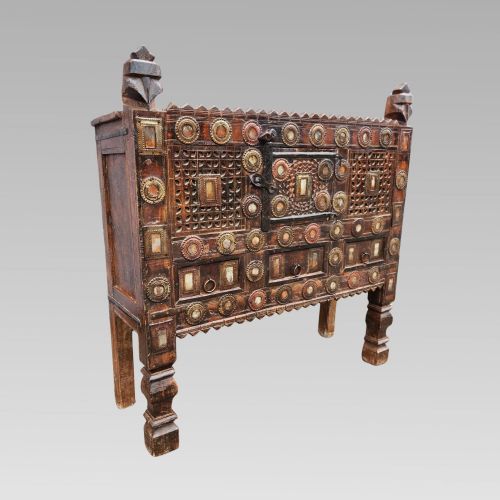
- A distinct form of trade chest characterised by heavy brass studding, strapwork, and elaborate decorative plate mounts.
- Dowry chest
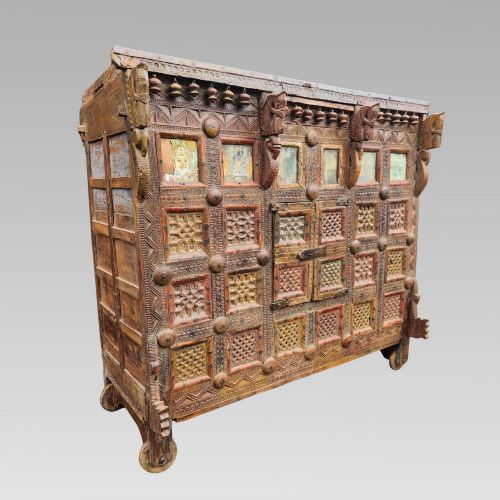
- A large storage box created to hold household goods and textiles for a marriage, often bearing deep surface carving.
- Cellarette
- A specialised cabinet or chest designed specifically for holding wine bottles and related drinking vessels securely.
- Gerobog
- A traditional large marriage chest, frequently fitted with wheels for movement across domestic floors.
Teak Wooden Coffer: Frequently Asked Questions
What is a teak wooden coffer?
A teak wooden coffer is a heavy storage chest built from durable timber, often reinforced with metal for travel or secure domestic holding.
These items range from plain utilitarian military trunks to ornately carved dowry boxes and trading chests.
How were these chests used historically?
Owners used them to transport personal belongings, valuable commodities, and documents during long journeys across land and sea.
In homes, they functioned as secure containers for linens, garments, and valuables while doubling as surface furniture.
How do I care for teak furniture?
Keep the wood conditioned by avoiding direct, prolonged exposure to harsh sunlight and sudden temperature shifts.
Dust the surfaces regularly with a dry cloth and occasionally apply appropriate natural wax to maintain the grain.
How can I tell the period?
Dating relies on examining the construction methods, the style of the brass hardware, and the specific joinery techniques used inside.
Nineteenth-century examples frequently display characteristic campaign mounts and hand-beaten metal fastenings.