

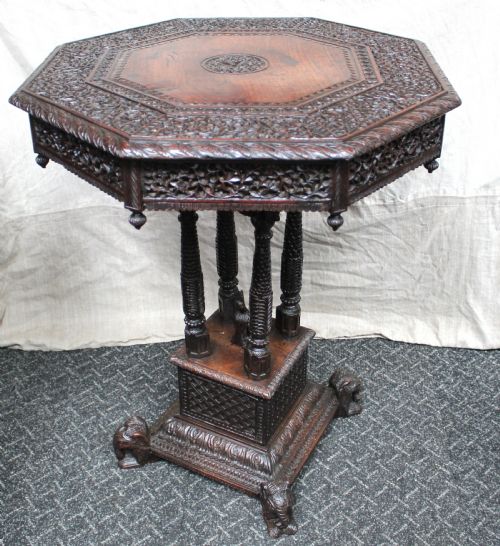


Teak Octagonal Occasional Table
These teak octagonal occasional table pieces bring intricate colonial craftsmanship and rich timber grain to domestic spaces.

Teak Octagonal Occasional Table
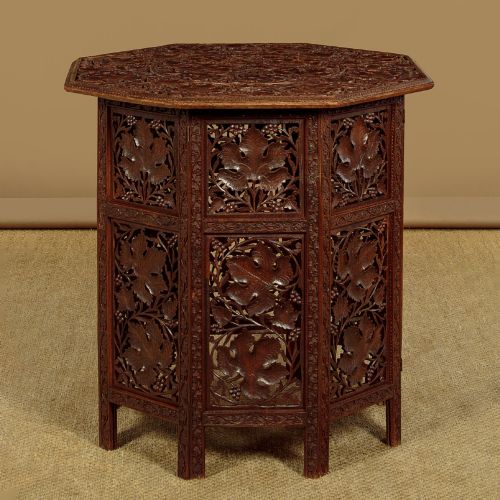
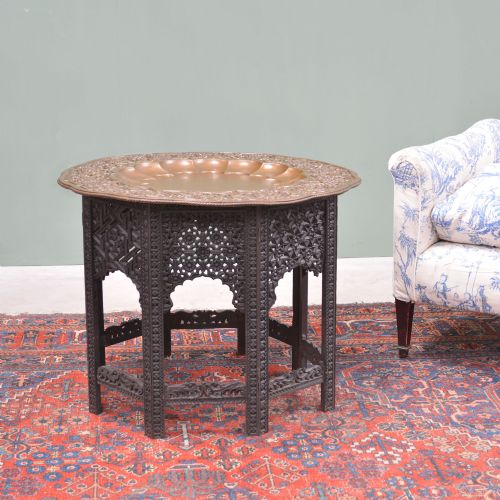
A teak octagonal occasional table serves as a versatile accent surface rooted in nineteenth-century and early twentieth-century Anglo-Indian and Burmese traditions. The geometric eight-sided top sits atop folding or fixed bases, ranging from compact side stands to substantial centre tables.
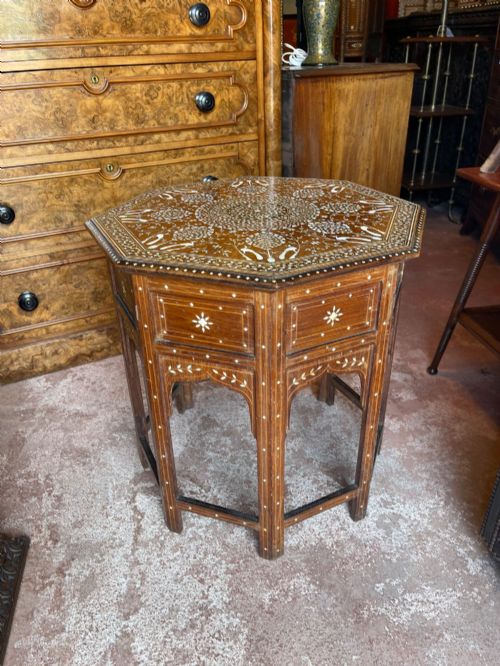
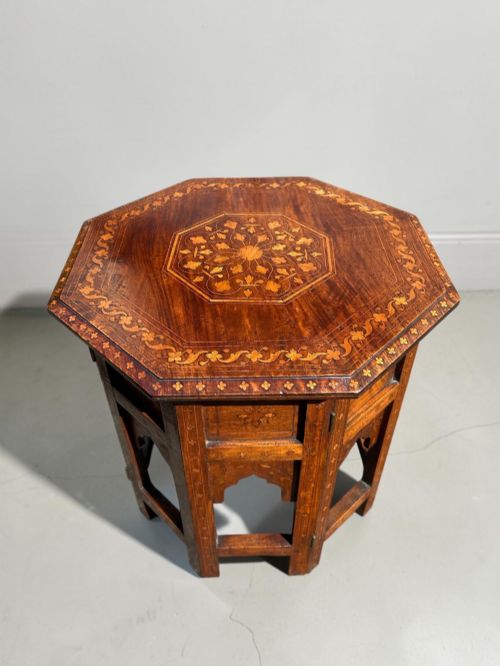
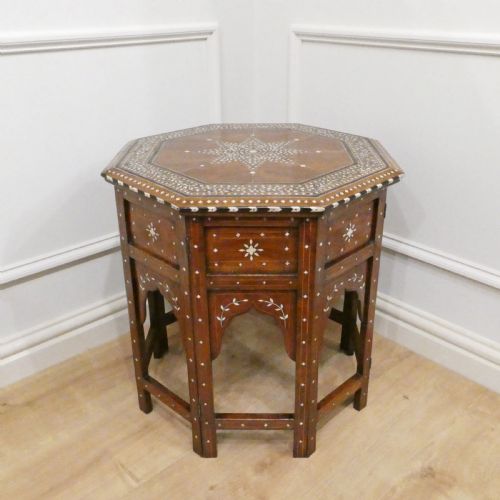
Most examples encountered here originate from the Victorian era up to the 1930s, encompassing regional workshops across India and Burma. Buyers commonly find brass, bone, or copper inlaid variants alongside deeply carved hardwood structures.
How they were made
Artisans constructed these pieces primarily from dense tropical hardwoods, utilising durable teak supplemented by rosewood highlights and wax finishes. The timber provides a stable canvas capable of sustaining intricate hand-carving without splitting.
Surface ornamentation relies on contrasting materials set directly into the wood. Craftsmen hammered brass wire and sheet into routed channels alongside delicate bone segments to form geometric and floral motifs.
Teak Octagonal Occasional Table Retail Price Guide 2026
Typical asking prices for teak octagonal occasional table among the pieces listed under this phrase on Sellingantiques today, from the lower quarter to the upper quarter. They describe what is for sale here now, not the wider market.
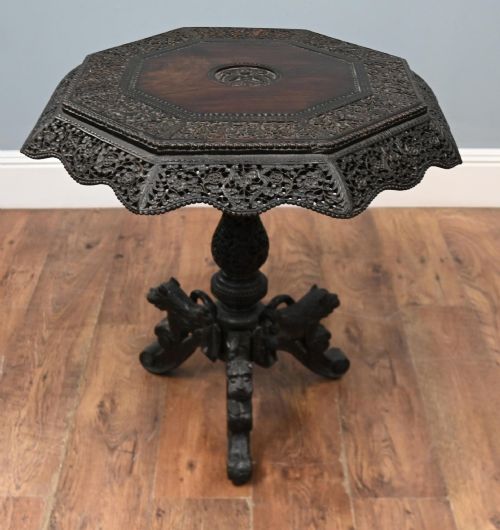
Several curious examples incorporate carved elephant and camel figures directly into the base architecture to support the tabletop.
What varies in quality
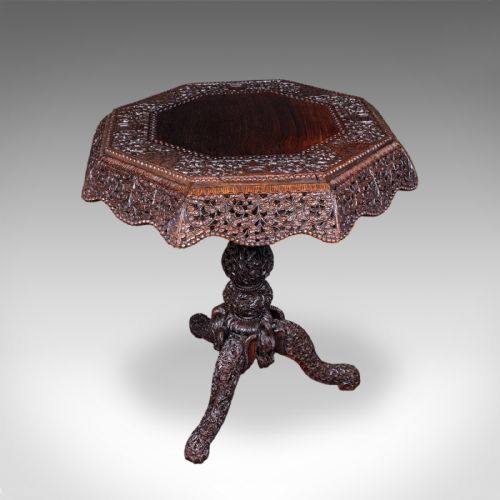
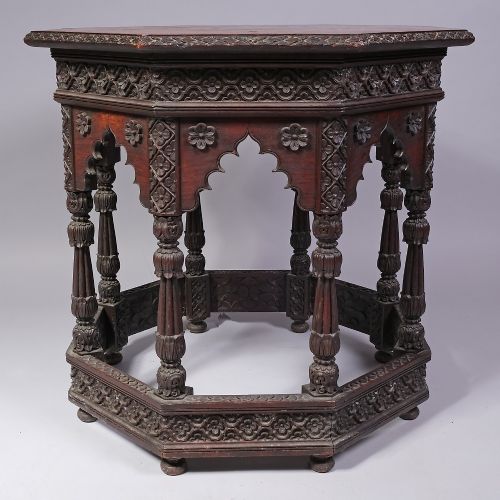
The distinction between standard items and superior examples lies in the depth and precision of the surface carving. Finer pieces display crisp, undercut foliage and figures with minimal softening across the relief work.
Inlay execution further separates the tier of craftsmanship. Exceptional tables integrate brass and bone with tight joints and complete pattern continuity, whereas lesser items show gaps and simpler stamped decoration.
The Teak Octagonal Occasional Table Glossary
- Hoshiarpur
- A region in Punjab renowned for intricate woodwork and inlay production. Tables from this centre frequently feature dense bone and brass decoration on folding frames.
- Anglo-Indian
- A stylistic descriptor for furniture manufactured during British rule in India. These designs combine European domestic forms with indigenous carving traditions.
- Campaign furniture
- Portable pieces designed for military officers or travellers. These tables often incorporate folding mechanisms for ease of transport.
- Tray top
- A raised rim configuration on a table surface. This feature prevents items from sliding off during use.
- Fretted
- Openwork carving achieved by piercing the timber. This technique creates delicate, lace-like patterns across panels and aprons.
Teak Octagonal Occasional Table: Frequently Asked Questions
How were these tables used originally?
These pieces functioned primarily as portable tea tables, side stands, or decorative accents within colonial and domestic interiors. Their folding frames allowed for convenient storage and relocation.
Over time, owners adapted them to serve as lamp tables or centrepieces in drawing rooms and parlours.
How do I care for a teak table?
Maintain the timber using a neutral wax finish to preserve the natural grain and protect the dry wood. Avoid placing the furniture near direct heat sources to prevent timber shrinkage.
Clean inlaid sections gently with a soft brush to remove dust from the recesses without dislodging brass or bone elements.
Are the folding bases original?
Many examples utilise traditional interlocking hinge systems designed to fold flat for transport. These operational mechanisms are characteristic of campaign and occasional furniture from the period.
Checking the joint construction helps confirm whether the base structure corresponds to the manufacture date of the top.
How do I distinguish Hoshiarpur work?
Hoshiarpur pieces are identified by their characteristic all-over inlay of brass wire and delicate bone sections. The woodwork typically covers the entire surface in dense geometric or floral patterns.
Regional variations from Burma or Bombay tend to feature heavier relief carving and figural elements such as elephants or camels rather than flat mosaic inlay.