




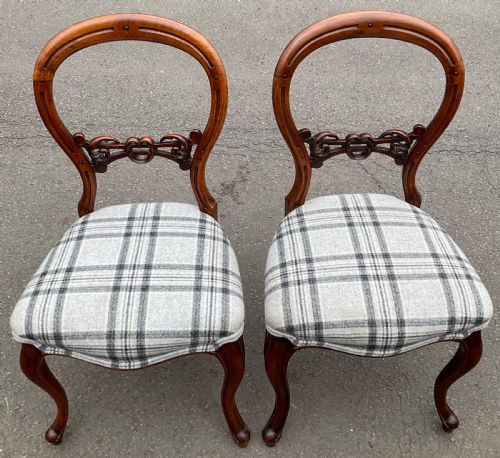


Tartan Upholstered Seat
A tartan upholstered seat brings warmth and pattern to a room, spanning periods from Victorian to Art Deco in sturdy wood and wool.
Tartan Upholstered Seat
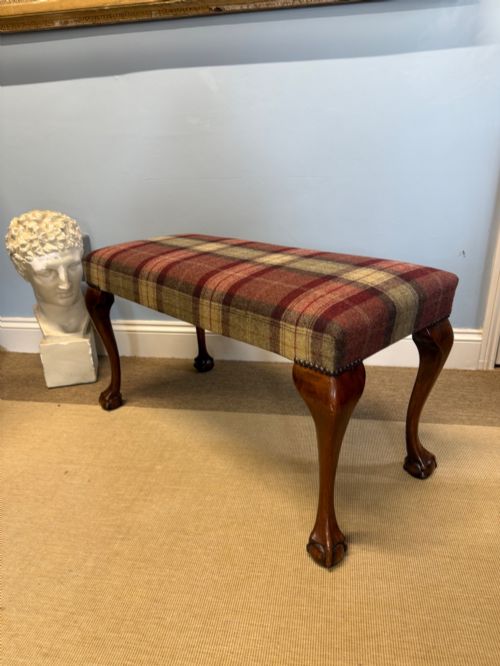
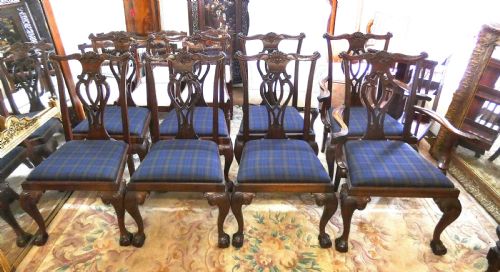
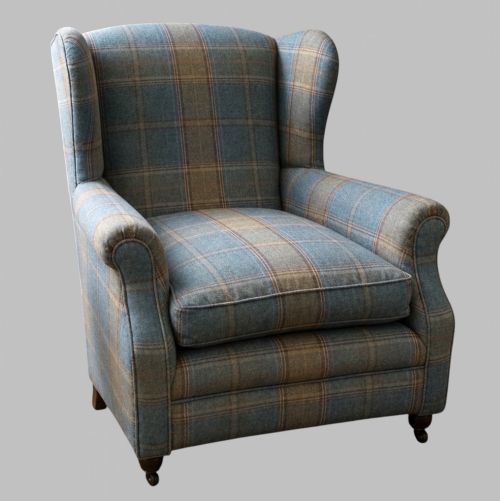
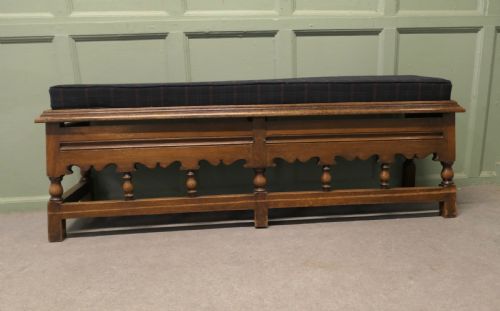
A tartan upholstered seat covers a broad range of domestic furniture designed for comfort and informal reception. When searching for a tartan upholstered seat, buyers encounter forms such as armchairs, side chairs, dining chairs, benches, and dressing stools. These pieces appear across multiple eras, including Victorian, Edwardian, and the 1930s.
Stools and benches serve auxiliary seating roles in hallways and bedrooms, while armchairs and dining sets anchor principal living spaces. The integration of wool and woven fabric upholstery defines the character of these listings.
What varies in quality
The calibre of a tartan upholstered seat rests on the integrity of the timber frame and the precision of the wood carving. Robust construction in woods like mahogany and walnut separates substantial framework from lighter builds.
Execution of period styling, such as cabriole legs or Gothic tracery, dictates the refinement of the piece. The choice of wool fabric and the alignment of the woven pattern contribute to the overall visual balance.
Brass club fenders offer a warm place to sit near the hearth, combining metalwork with fireside padding.
Harry & Lou Epstein
The Tartan Upholstered Seat Glossary
- Cabriole leg
- A furniture leg that curves out and then tapers inward, terminating in a foot. This form draws inspiration from animal limbs and appears frequently on eighteenth and nineteenth century seating.
- Bergère
- An enclosed armchair with upholstered sides set into a wooden frame. The exposed wood forms a finished border around the padded areas.
- Club fender
- A low, padded seat frame surrounding a fireplace hearth, constructed from metal such as brass. It provides auxiliary seating close to the fire.
- Wingback armchair
- A high backed chair with side panels designed to shield the occupant from drafts. Early examples date to domestic interiors where heat retention was paramount.
Tartan Upholstered Seat: Frequently Asked Questions
How do I clean tartan wool upholstery?
Wool fabric requires gentle surface cleaning with a soft brush to remove dust and loose particles. Spot cleaning should be handled according to specific textile guidelines without saturating the internal padding.
Harsh chemical detergents damage natural wool fibres and alter the woven pattern. Professional textile cleaning preserves the integrity of older fabric coverings.
Can I use an antique stool as a footstool?
Stools and benches built during the Victorian and Edwardian periods function effectively as footstools or low seating. Their sturdy wood frames support regular domestic use.
Placement should consider the height of existing chairs and sofas to ensure comfortable leg support. Freestanding benches also serve as casual seating in hallways.
What rooms suit a tartan armchair?
Armchairs upholstered in wool plaid fit naturally into libraries, studies, and living rooms alongside wood furniture. Their traditional patterns add visual warmth to neutral interiors.
Placement near natural light sources highlights the texture of the woven fabric and the carved details of the mahogany or walnut frame.
How do I identify a Victorian seating piece?
Victorian chairs and stools typically feature dense walnut or mahogany frames with prominent carved elements. Common indicators include cabriole legs, turned supports, and heavier structural proportions.
Stylistic revivals during this period often incorporated Gothic or classical motifs into domestic furniture. Upholstery styles range from tight buttoning to patterned wool fabrics.