

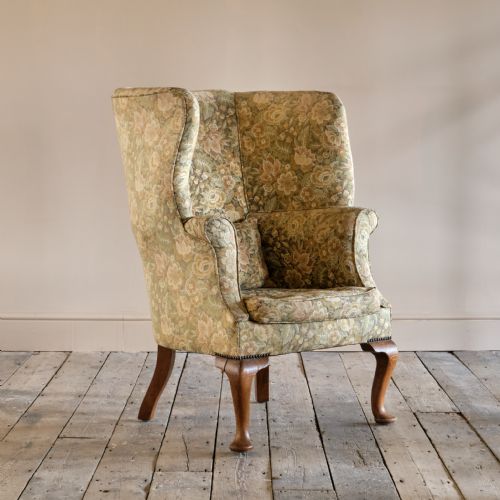


Tapestry Wingback Armchair
A tapestry wingback armchair offers deep comfort and historic presence, anchoring a room with traditional upholstery and shielding the sitter from draughts.
Tapestry Wingback Armchair
A tapestry wingback armchair is a substantial fireside seat designed with protective wings and upholstered in woven tapestry fabric or related textiles. These chairs bridge several centuries of British seating design, taking inspiration from earlier forms while incorporating later Revival movements.
Buyers browsing this selection will encounter pieces spanning from the eighteenth century through to the early decades of the twentieth century. The inventory includes single fireside chairs, matched pairs, and library armchairs rendered in styles that reference Georgian, Queen Anne, and Jacobean eras.
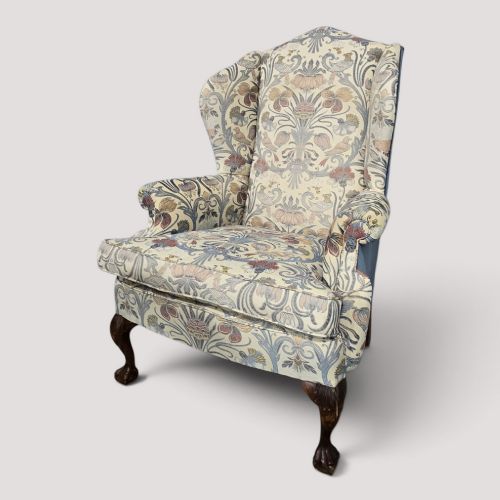
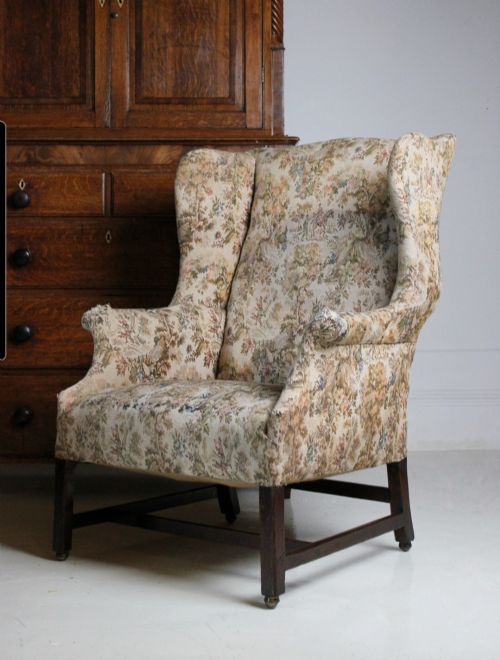
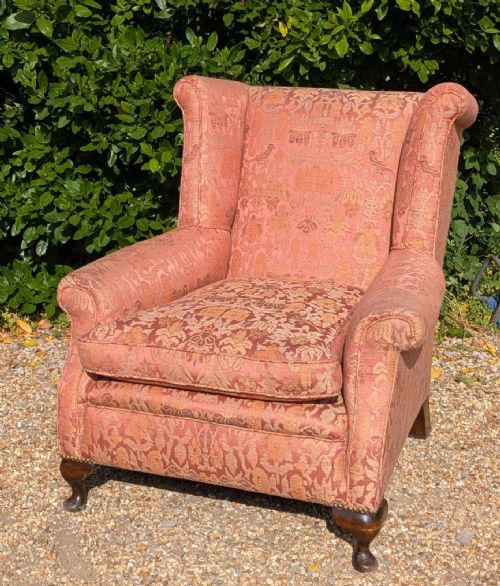
The defining characteristic across these examples remains the high upholstered back flanked by prominent wings designed to trap heat around the head and shoulders. Variants range from strict period pieces to later revival iterations finished with claw and ball feet or wooden stretchers.
How they were made
Construction relies on sturdy frames built from timbers such as mahogany, walnut, and assorted hardwoods. These robust wooden skeletons provide the structural integrity required to support deep upholstery and frequent sitting over generations.
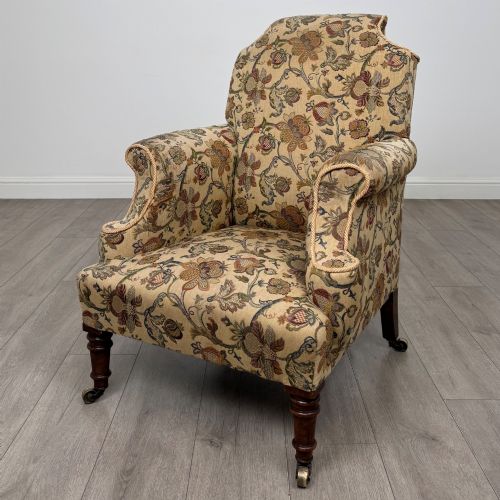
Upholstery techniques utilise woven tapestry fabric, often featuring floral or forest motifs that define the visual character of the piece. Traditional stuffing methods, including feather filling in select examples, give the seats their characteristic depth and resilience.
Visible woodwork frequently showcases period-appropriate carving or turning, particularly on the legs and arm supports. Brass accents, such as castors or studwork, appear across various examples to finish the joins and edges of the textile coverings.
The listings show armchairs spanning the eighteenth, nineteenth, and twentieth centuries, utilising mahogany, walnut, and tapestries.
What varies in quality
Quality reveals itself in the fidelity of the period style and the proportion of the wooden frame. Finer examples display confident carving on the legs and a balanced silhouette that respects the historical design idiom.
The standard of the tapestry upholstery and the internal stuffing dictate the tactile success of the chair. Superior pieces feature dense, supportive cushioning and tightly woven textiles that complement the scale of the wooden frame.
William Morris
The Tapestry Wingback Armchair Glossary
- Wingback
- An upholstered armchair featuring lateral panels or wings designed to deflect draughts and retain fireplace heat. This form became prominent in domestic interiors during the late seventeenth and eighteenth centuries.
- Tapestry
- A heavy, hand or machine-woven textile featuring pictorial or decorative designs, commonly used for substantial upholstery. It provides both durability and rich surface pattern.
- Queen Anne Style
- A graceful furniture design idiom characterised by curving lines, cabriole legs, and pad feet. Revival versions of this style appear frequently in later seating.
- Claw and ball
- A furniture foot carved to represent a bird's talon clutching a ball, popular on eighteenth-century seating and later revival pieces. It adds a sculptural anchor to the base of the chair.
Tapestry Wingback Armchair: Frequently Asked Questions
How do I date a wingback armchair?
Dating relies on examining the timber species, leg profiles, and construction methods used in the frame. Subtle shifts in the shaping of the wings and arms also indicate the era of manufacture.
Revival pieces often blend historical motifs from different centuries, requiring careful observation of the secondary woods and upholstery techniques to determine their true age.
Are tapestry wingbacks comfortable for daily use?
These armchairs were originally engineered for relaxation by the hearth, offering deep seats and supportive high backs. Many examples feature generous proportions suited to modern lounging.
Comfort levels can vary depending on the condition of the internal stuffing and support webbing, which may require professional restoration or re-upholstering.
What is the difference between Georgian and revival styles?
Authentic Georgian armchairs were made during the eighteenth century and exhibit the proportions and craftsmanship of that specific period. They carry the patina of genuine age.
Revival pieces were manufactured later, such as during the Victorian or Edwardian eras, copying earlier aesthetic standards while employing contemporary workshop practices.
How should I care for antique tapestry upholstery?
Protect the woven fabric from direct sunlight to prevent the coloured threads from fading over time. Gentle vacuuming with a low-suction attachment helps remove dust without damaging the weave.
Professional textile cleaners should handle any deeper cleaning requirements to ensure the historic fibres remain intact and stable.