
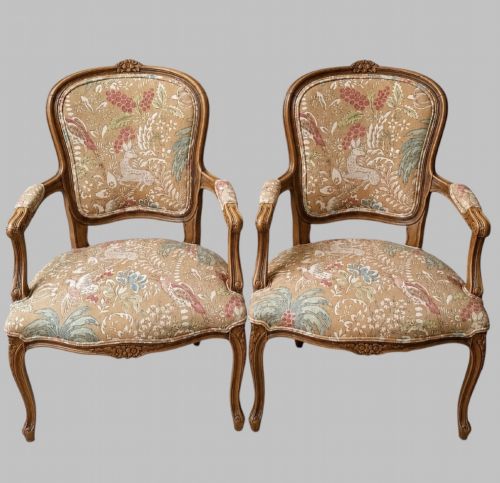
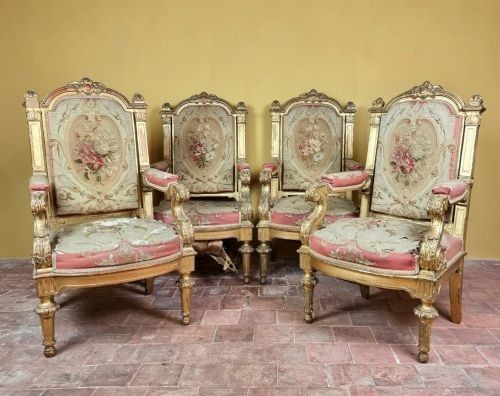


Tapestry Upholstered Fauteuil
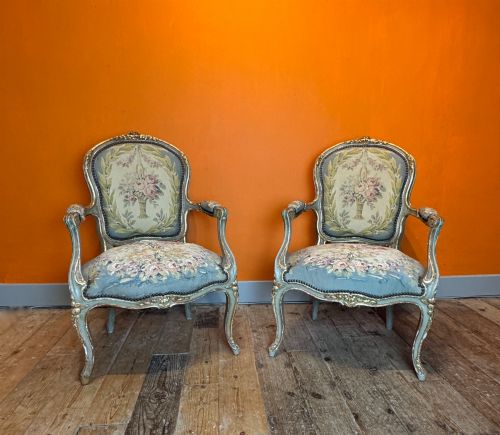
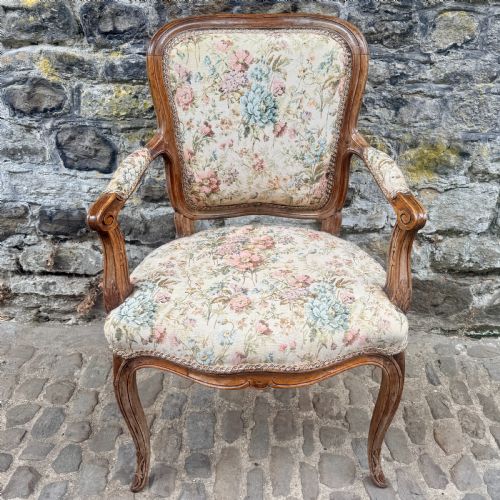
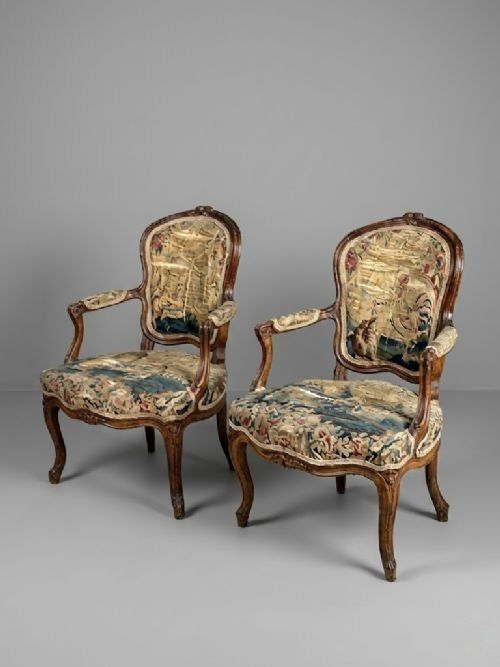
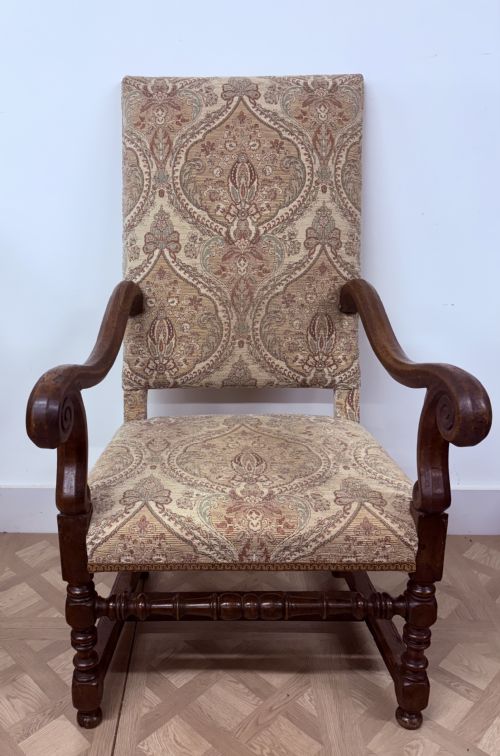
A tapestry upholstered fauteuil brings open seating and historic textile panels together, offering a traditional armchair for a formal interior.
Tapestry Upholstered Fauteuil
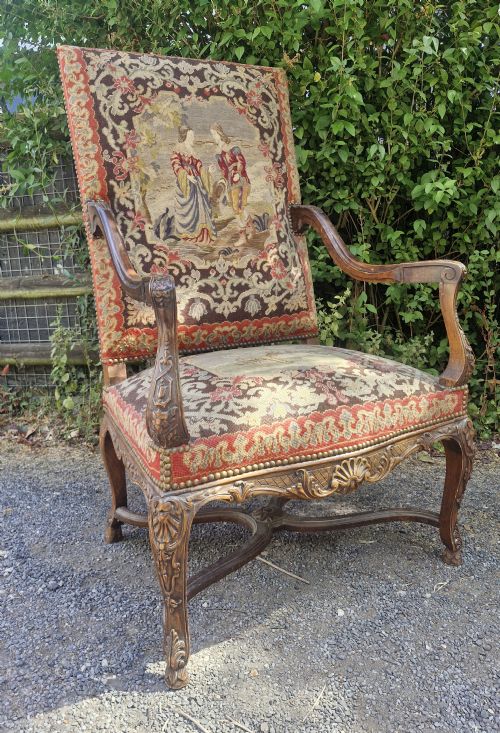
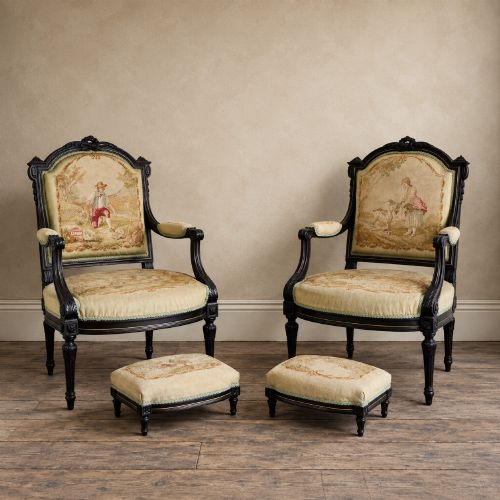
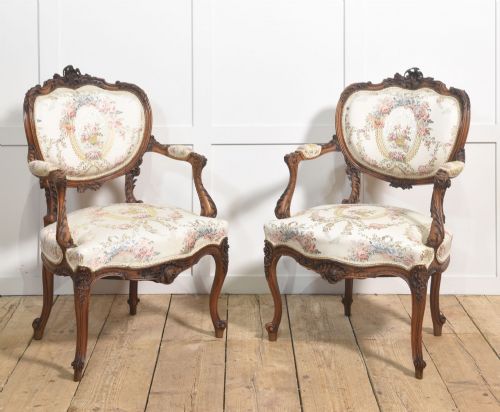
When you search for a tapestry upholstered fauteuil, you are looking at open-armed seating designed with textile covers, most frequently originating from French workshops and salons. The examples you encounter on this page span several centuries, with the nineteenth century heavily represented alongside eighteenth-century originals and later revivals.
These open armchairs combine wooden frames with woven wool panels, needlework, or petit point covers. Buyers seek them for their decorative presence, combining carved structural timber with historic textile artistry in a single chair.
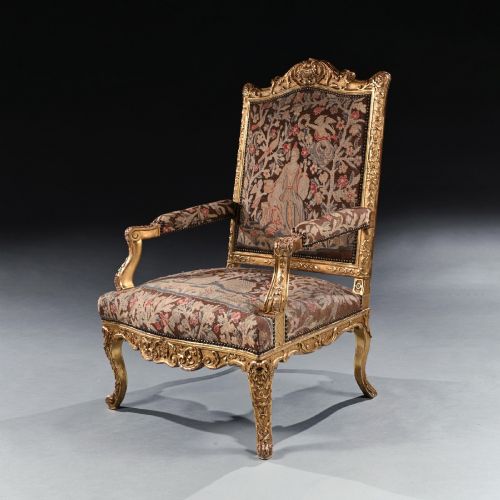
The selections range from provincial walnut frames to giltwood and painted salon chairs. Stylistic variations include Louis XV, Louis XVI, and Rococo revivals, providing distinct silhouettes from different periods of European furniture design.
How they were made
Makers constructed the structural frames of these armchairs from hardwoods such as walnut, beech, mahogany, and rosewood, often shaping the timber through carving and joining. Some frames received painted, parcel gilt, or fully gilded finishes to enhance their decorative appeal in formal settings.
The upholstery technique relied on hand-stitched needlepoint, Aubusson weaving, and wool tapestry fabric stretched across open frames. Artisans secured these textile panels with brass tacks or traditional fixings, pairing structural woodwork with detailed textile craft.
The documented pieces span from the seventeenth century through the nineteenth century, including various Louis revival styles.
What varies in quality
The standard of a tapestry upholstered fauteuil depends heavily on the crispness of the wood carving and the density of the timber frame. Walnut and giltwood examples often display more refined chisel work than simpler provincial alternatives.
The quality of the textile cover dictates much of the piece's character, separating coarse work from fine petit point and hand-stitched needlework panels. Original period covers with tight, even stitching hold greater interest than later replacements.
Holland and Sons
The Tapestry Upholstered Fauteuil Glossary
- Fauteuil
- An open-armed wooden armchair with upholstered seat, back, and arm pads, originating in France. These chairs typically feature exposed wooden framing around the upholstered sections.
- Petit point
- A fine, count-thread needlepoint embroidery worked on single-mesh canvas. This technique allows for intricate detail and complex pictorial scenes on upholstery panels.
- Aubusson
- A style of tapestry woven in the French town of Aubusson, known for pictorial designs without pile. These textiles were frequently adapted for chair and sofa coverings.
- Giltwood
- Timber that has been coated with a thin layer of gold leaf or gesso and gold paint. This finish creates a reflective, luxurious surface popular in formal European salons.
- Needlework
- General handicraft where yarn is stitched onto a canvas foundation to create patterns or pictures. It forms the primary decorative surface for many historic chair seats and backs.
Tapestry Upholstered Fauteuil: Frequently Asked Questions
How are these armchairs cleaned?
Surface dust is removed using soft brushes or low-suction vacuum attachments designed for textiles. Moisture and standard cleaning detergents are avoided to protect old wool threads and wooden finishes.
Professional textile conservators handle deeper cleaning requirements for fragile needlework panels. Timber frames require dry cloth dusting rather than liquid polish.
Can I use an antique fauteuil daily?
These open armchairs function well for gentle daily seating in low-traffic rooms. Their historic joints and antique frames require mindful use rather than heavy lounging.
Placing them away from direct sunlight protects the wool tapestry from fading. Regular rotation prevents uneven wear on the historic textiles.
How do I spot a true period frame?
Examination of the timber joints reveals hand-cut joinery and signs of age-related shrinkage. Tool marks and fastener types help distinguish eighteenth-century and nineteenth-century construction methods from modern reproductions.
Patina on the wood surface develops naturally over centuries through handling and wax application. Inspecting the underside often shows matching wear patterns consistent with the stated era.