
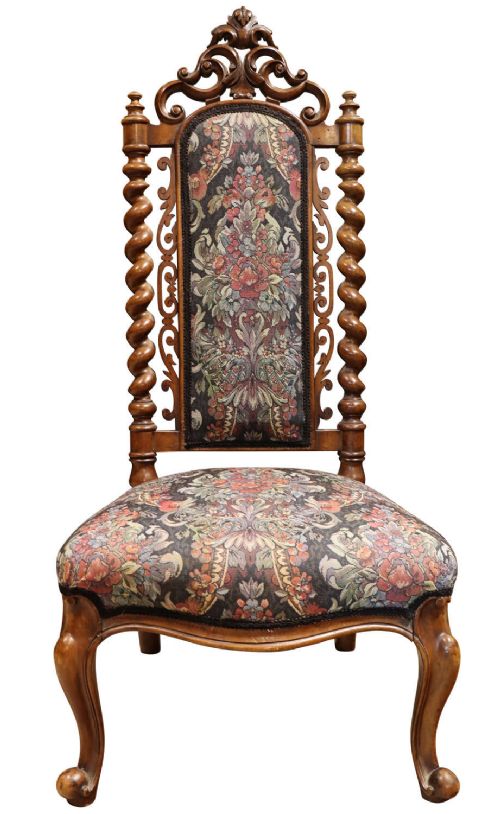
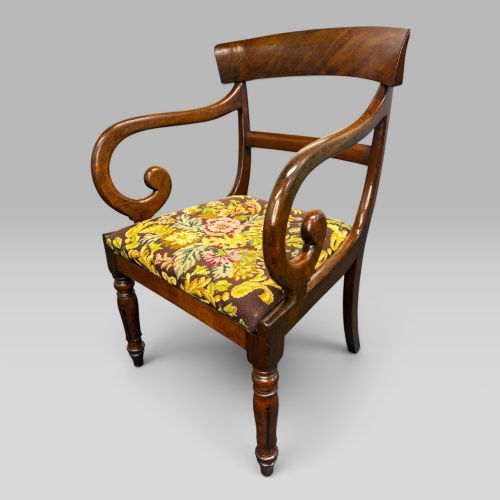
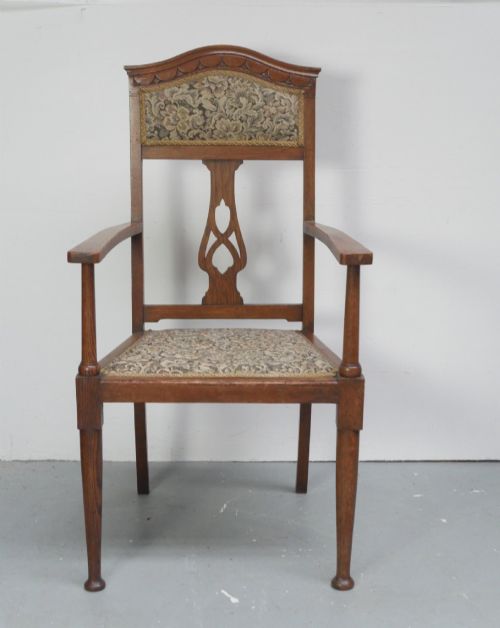
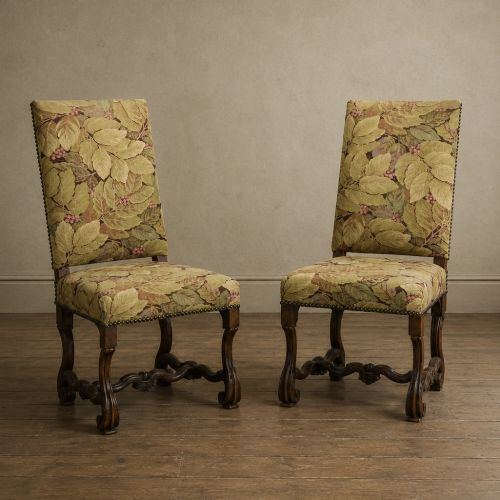
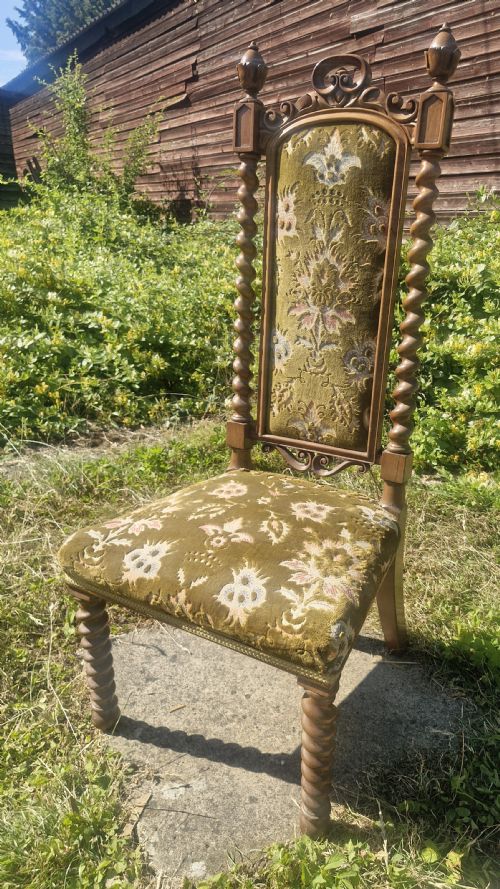
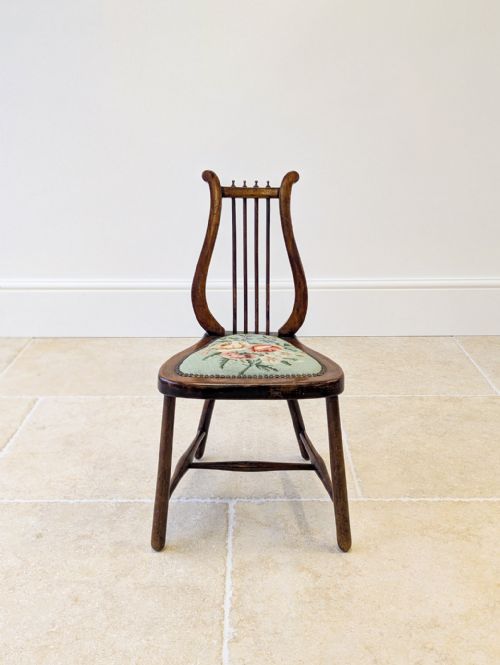
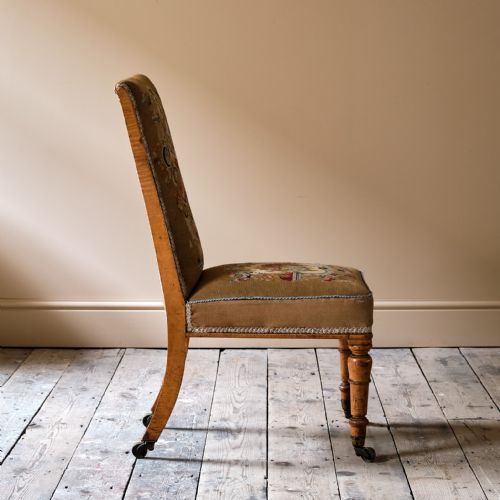


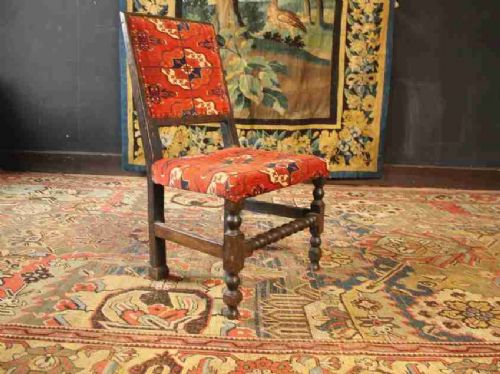

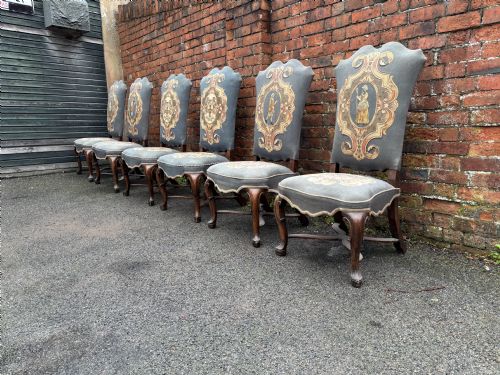


Tapestry Upholstered Dining Chairs
These tapestry upholstered dining chairs bring rich textile panels and substantial timber frames together for daily seating.
Tapestry Upholstered Dining Chairs
Tapestry upholstered dining chairs combine sturdy wood frames with decorative fabric seats and backs. These pieces appear across several historical eras, most frequently seen in Victorian, Edwardian, and earlier George III forms.
The selection includes matching sets alongside pairs and single side chairs or armchairs. Frames span multiple timber types, carrying woven needlepoint, wool work, or textile covers on the seat pads and back panels.
Materials and Construction
Cabinet makers utilised dense hardwoods such as mahogany, walnut, oak, and rosewood for the structural frames. These timbers were carved, turned, and jointed to support the weight of daily use.
Textile panels feature hand-stitched needlepoint, wool work, and woven tapestry fabric fixed over padded seats. Brass elements occasionally appear on frames and castors to finish the construction.
Eras represented include the 17th Century, George II, George III, Regency, Victorian, and Edwardian periods.
Assessing Quality and Execution
The standard of timber carving and the tightness of frame joints define the upper tiers of production. Finely carved details on the mahogany or walnut show the maker's hand clearly.
The density and fineness of the needlepoint or woven tapestry work indicate the level of care given to the textile. Coarser threads and simpler weaves sit at the standard end of the scale.
Jas Shoolbred
The Tapestry Upholstered Dining Chairs Glossary
- Side chair
- A chair without arms designed primarily for use at a dining table. These form the majority of standard seating sets.
- Elbow armchair
- A seating piece featuring supportive armrests, often used at the head of a dining table. They complement matching side chair sets.
- Needlepoint
- A type of canvas work embroidery executed with a yarn in a counted thread stitch. It creates the dense pictorial surfaces seen on many seat pads.
- Cross-frame
- A structural furniture base formed by intersecting wooden stretchers or legs. This configuration provides additional stability to the seat.
- Chippendale style
- A furniture design pattern inspired by the 18th-century cabinet maker, characterised by carved rails and pierced splats. These designs recur in later revival periods.
Tapestry Upholstered Dining Chairs: Frequently Asked Questions
How do I date tapestry upholstered dining chairs?
Dating relies upon timber selection, structural joinery methods, and the style of the carved ornament on the frame. Victorian and Edwardian examples often display machine finishing alongside hand stitching, whereas earlier 18th-century pieces show entirely hand-wrought construction.
The textile upholstery itself may be a later replacement applied to an older timber frame. Examining the underside of the seat frame reveals the original webbing, tack holes, and timber ageing that confirm the true period.
Can these chairs be used daily?
Most antique timber frames are structurally robust enough for regular dining room use if the joints remain tight. Professional conservation ensures the frame securely bears weight.
Delicate antique tapestry and needlepoint fabrics require gentle treatment to prevent wear. Placing protective covers or rotating the usage helps preserve fragile historic textiles.
Are replacement tapestry seats acceptable?
Replacement upholstery is common because historic textiles wear out long before the hardwood frames. Many pieces have received new needlepoint or wool work covers over the decades.
Matching the period style of the textile maintains the visual integrity of the chair. Traditional materials and stitching methods suit older frames best.
What is the difference between a side chair and an armchair?
Side chairs lack armrests and fit compactly along the sides of a dining table. They were produced in large sets to accommodate guests.
Armchairs feature elbow rests and traditionally sat at the head of the table for the host. They offer a wider seat and more substantial framing.