
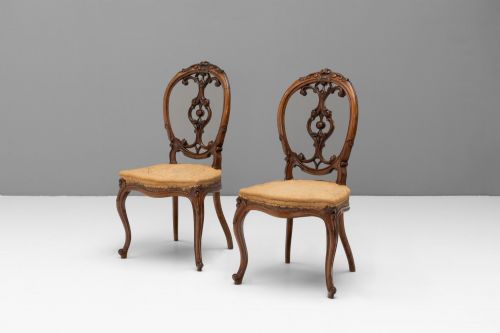


French Walnut Side Chairs
French walnut side chairs bring continental character to a room, offering practical seating shaped by centuries of revival design.
French Walnut Side Chairs
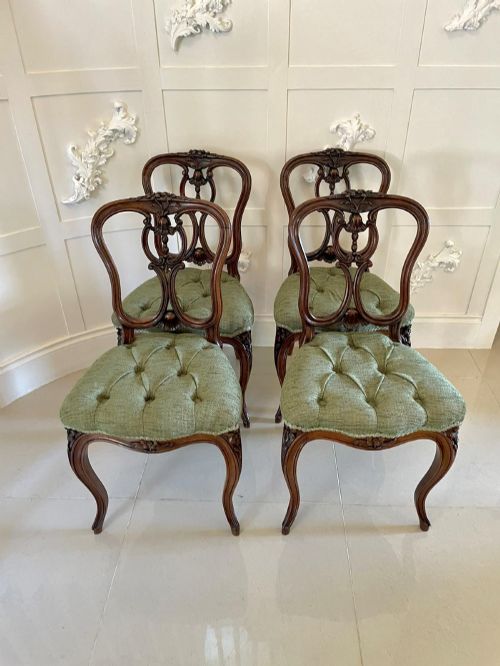
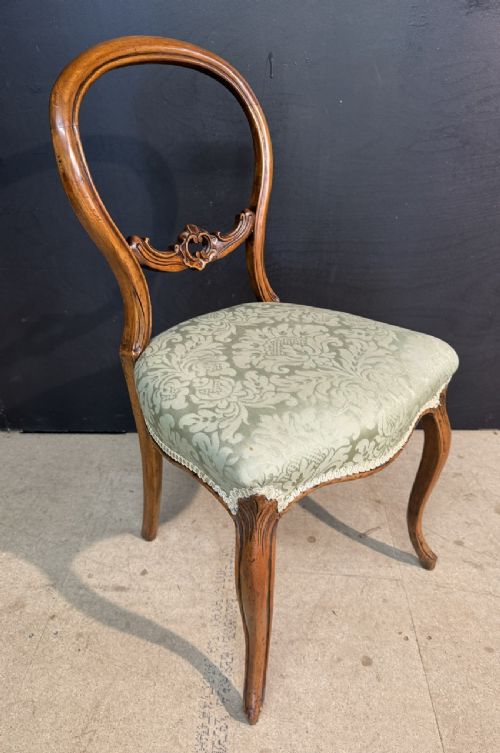
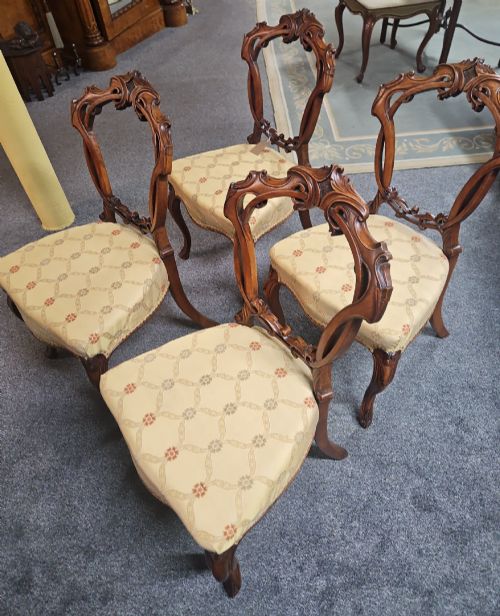
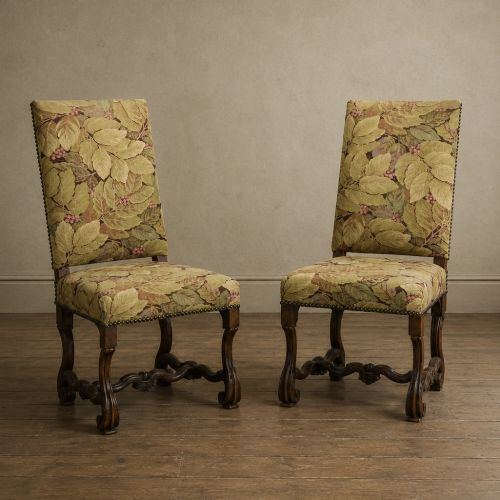
French walnut side chairs bridge domestic utility and decorative ambition, appearing primarily as dining, salon or hall seating across Victorian and early twentieth-century periods. Buyers seeking french walnut side chairs typically encounter pieces bearing stylistic revivals, particularly Rococo and Louis forms influenced by French design traditions.
The material expression centres on walnut timber, frequently paired with upholstery fabric, leather, cane, textile, damask or brass accents. Forms range from single chairs to matched sets of four, six or twelve, alongside pairs suited for drawing rooms or bedrooms.
Materials and construction methods
Cabinetmakers constructed these frames predominantly from solid walnut, valued for its rich grain and responsiveness to detailed carving. Workshops shaped the wood into characteristic cabriole legs and curved backs, often incorporating structural joints designed to withstand regular domestic use.
Surfaces received various treatments, from exposed carved timber to parcel gilt highlights and ormolu mounts. Seating areas were finished with cane work, rush, or padded foundations covered in leather, damask and textile fabrics.
Listings demonstrate a strong preference for walnut timber, complemented by cane, leather, and damask upholstery across nineteenth and twentieth-century periods.
Distinctions in craftsmanship
Quality rests in the depth and crispness of the carved details on the walnut frame, where fluid lines and confident curves distinguish superior work from simpler production. The integrity of the underlying joinery dictates stability, as solid construction prevents movement in the joints over decades of use.
The choice of secondary materials, such as heavy silk damask, supple leather, or finely woven cane, elevates the presence of the seating. Matching sets retain greater cohesion than assembled groups, while branded workshop attribution adds documented provenance.
Morison & Co of Edinburgh
The French Walnut Side Chairs Glossary
- Cabriole leg
- A furniture leg that curves outward at the knee and tapers inward to an ankle, mimicking animal limbs. This form appears frequently on chairs inspired by Louis XV designs.
- Caned
- Woven cane panels utilised for chair seats and backs. This technique provides a light, flexible surface using split rattan.
- Damask
- A reversible figured fabric featuring patterns woven into the cloth. It often appears on formal seating from the nineteenth century.
- Ormolu
- Gilded bronze mounts applied to furniture for decoration. These metal elements accent the walnut frames of high-status pieces.
- Rush seat
- Seating woven from marsh plants twisted into cord. This traditional method creates a durable, textured surface on rustic or provincial chairs.
French Walnut Side Chairs: Frequently Asked Questions
How do I spot a true period piece?
Examine the walnut timber for natural ageing, tool marks, and construction methods consistent with nineteenth-century cabinetmaking.
Check that the carved elements integrate into the frame structure rather than appearing as applied resin or modern additions.
Can I use these chairs for daily dining?
Most sturdy walnut frames handle regular dining use well, provided the joints remain tight and secure.
Consider having older upholstered or caned seats reinforced by a professional conservator if you plan frequent seating.
What styles dominate this selection?
Revival styles predominate, drawing heavily on Rococo, Louis XV, and Louis XIV design vocabulary.
French Provincial and Chateau aesthetics also appear, offering alternative interpretations of classical continental furniture.
How should I care for walnut wood?
Keep wooden surfaces away from direct sunlight and extreme humidity changes to prevent timber splitting.
Apply microcrystalline wax occasionally to nourish the walnut grain without building up heavy chemical residues.