
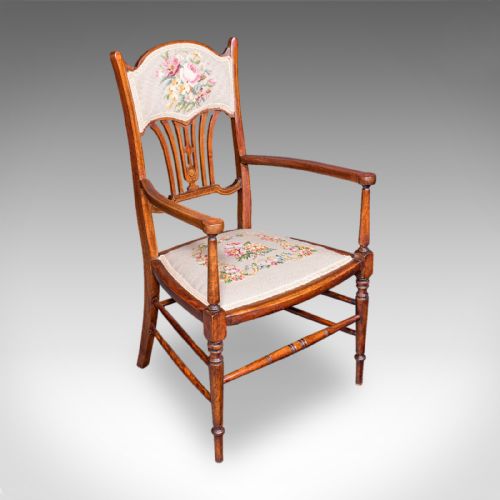
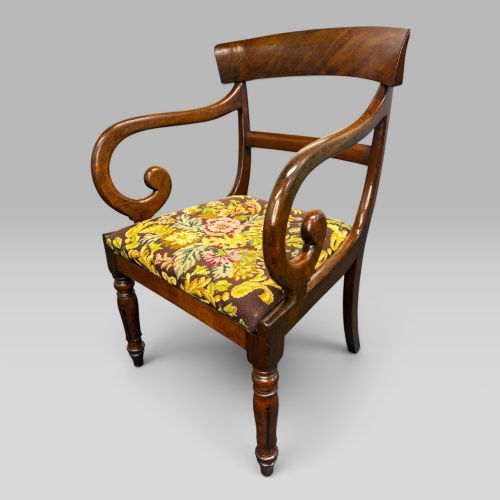
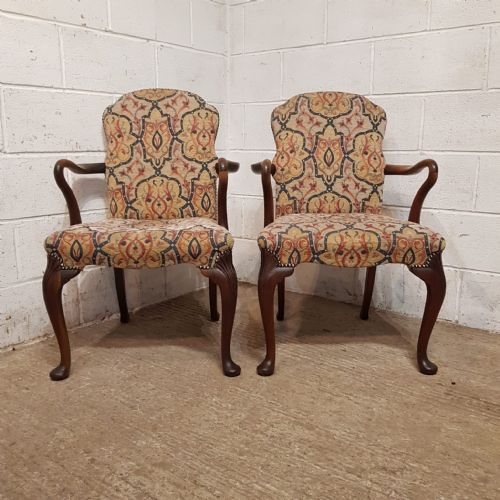
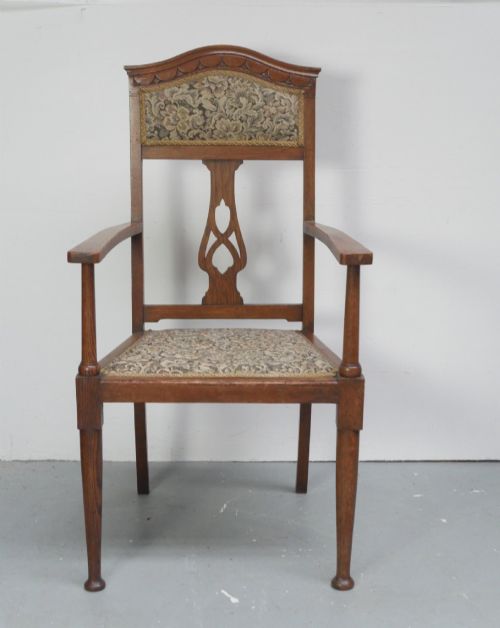
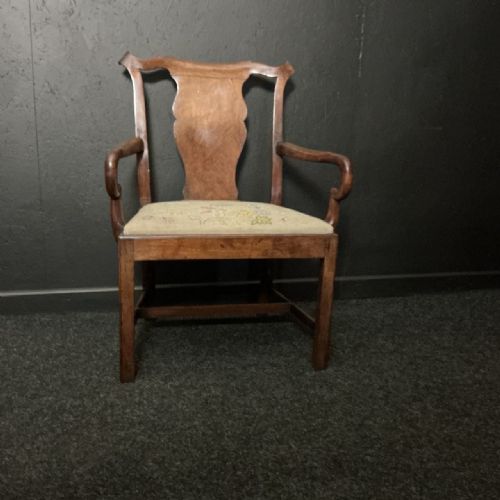
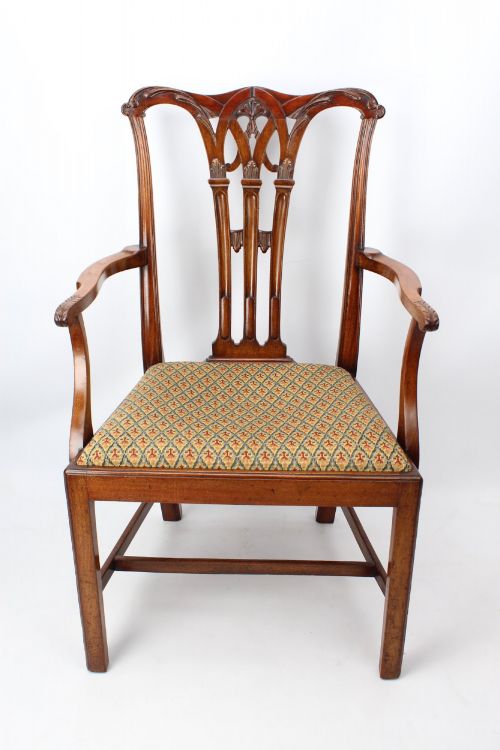


Tapestry Seat Desk Armchair
A tapestry seat desk armchair brings practical support and needlepoint texture to a writing space.
Tapestry Seat Desk Armchair
A tapestry seat desk armchair combines a supportive timber frame with a textile or needlepoint upholstered pad designed for a writing table. These seats appear across periods ranging from the eighteenth century through the Edwardian era, spanning styles such as Georgian, Regency, and Victorian.
The materials recorded for these pieces include mahogany, walnut, oak, and elm, paired with tapestry, needlepoint, or fabric upholstery. Buyers frequently encounter elbow chairs, corner chairs, and carver chairs built for studies, libraries, and morning rooms.
Materials and Construction
Frames are constructed from solid hardwoods such as mahogany, walnut, oak, elm, and beech, chosen for structural stability and grain figure. Timber components are joined through traditional cabinetry methods to support the demands of daily use at a desk.
Seats feature textile coverings including tapestry, needlepoint, and fabric upholstery stretched over drop-in frames or padded foundations. Brass details occasionally appear as decorative or structural elements within the furniture assembly.
Listings for this phrase include examples framed in mahogany, walnut, oak, elm, and beech across Georgian, Regency, and Victorian periods.
Evaluating Quality and Craftsmanship
The standard of a tapestry seat desk armchair rests on the crispness of timber carving, the selection of figured wood, and the structural integrity of the frame joints. Superior examples exhibit deliberate proportions and hand-carved details that reflect the stylistic conventions of their period.
Upholstery quality depends on the execution of the needlepoint or tapestry work and how sympathetically the textile integrates with the timber frame. Pieces that retain harmonious proportions between the elbow supports and the upholstered seat demonstrate higher design success.
The Tapestry Seat Desk Armchair Glossary
- Elbow Chair
- An armchair featuring low arms designed to support the user's elbows while seated at a desk or table. These pieces often serve in libraries and morning rooms.
- Corner Chair
- A seating form designed to fit into the corner of a room, typically featuring a diagonal orientation with a continuous backrest rail supported on turned or carved pillars.
- Needlepoint
- A type of canvas work embroidery utilised historically for durable upholstery on chair seats. It provides a textured decorative surface.
- Drop-In Seat
- A removable upholstered frame that drops into a recess in the chair rails. This construction method simplifies reupholstery and maintenance.
- Carver Chair
- A traditional term for an armchair, often matching a set of single dining or side chairs. They provide wider proportions and armrests for primary seating.
Tapestry Seat Desk Armchair: Frequently Asked Questions
How do I identify a Georgian desk armchair?
Georgian desk armchairs typically feature mahogany or walnut timber construction with traditional joinery, vase-shaped splats, or upholstered drop-in seats. Their proportions reflect the functional design priorities of the eighteenth century.
Look for regional variations in wood choice, such as dark elm or oak, which indicate country-made craftsmanship alongside formal metropolitan cabinet-making.
What is the difference between an elbow chair and a corner chair?
An elbow chair provides side armrests attached to a standard front-facing seating frame intended for desks or tables. A corner chair is built with a diagonal plan meant to tuck into room angles.
Corner chairs usually feature a continuous curved back rail resting on multiple uprights, whereas elbow chairs follow conventional rectangular or curved front orientations.
How should I care for tapestry and needlepoint upholstery?
Protect textile and needlepoint seats from direct sunlight to prevent fading of the wool and silk threads. Regular gentle vacuuming through a mesh screen removes dust without disturbing the stitching.
Avoid placing these chairs in damp environments where natural timber frames and textile fibres might absorb moisture and degrade over time.
Can I use a Victorian desk chair daily?
Victorian desk chairs built from solid mahogany, walnut, or oak possess sturdy timber frames suited for regular daily use. Checking the stability of the joints ensures the piece safely bears weight.
The durability of the seat depends on the underlying foundation and the condition of the tapestry or fabric upholstery.