

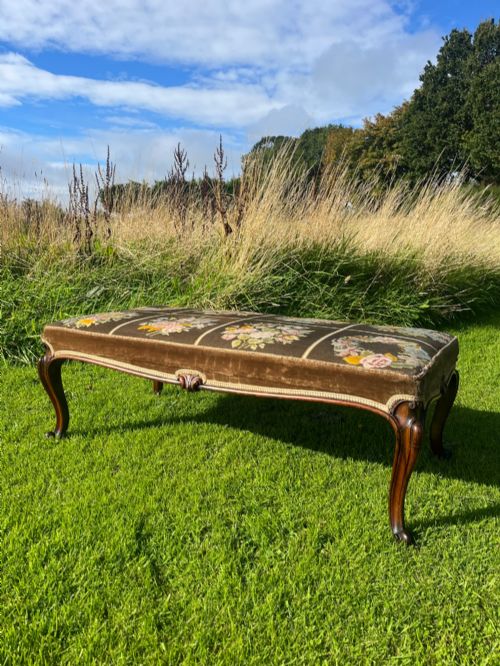
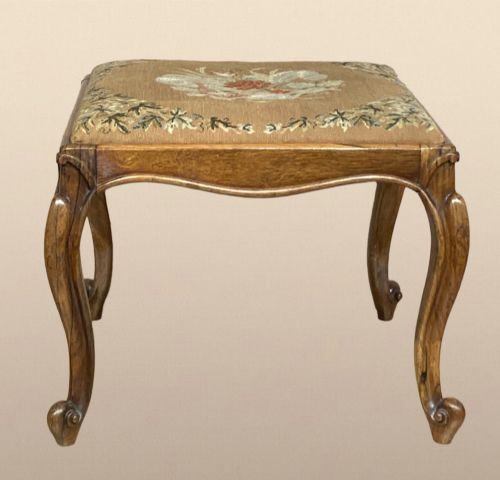
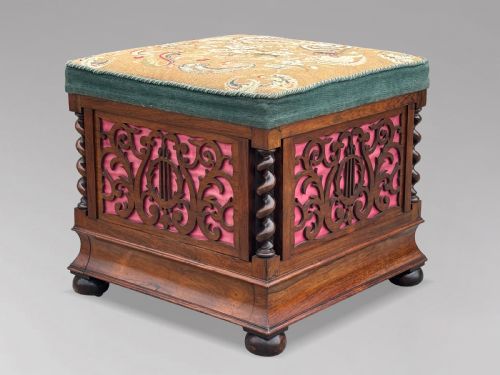
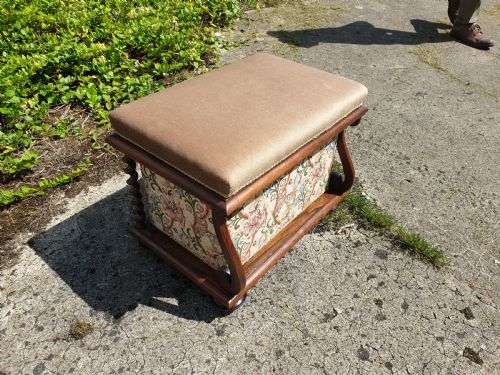


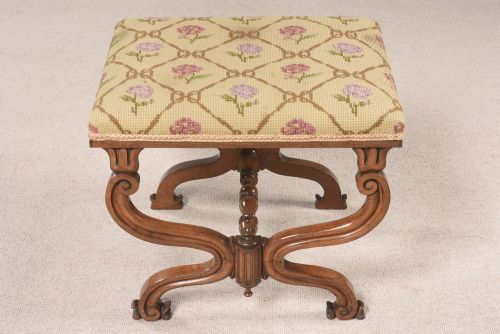
Tapestry Rosewood Footstool
These tapestry rosewood footstool pieces combine rich dark timbers with tactile textile tops, offering a dependable way to ground a traditional seating arrangement.
Tapestry Rosewood Footstool
A tapestry rosewood footstool brings together substantial dark timber framing and decorative woven or textile seat coverings. These domestic furnishings span periods from the Regency era through to the late Victorian years.
Most examples you encounter on this page date from the Victorian period, frequently taking the form of dressing stools, piano stools, or compact footstools. Forms range from simple low blocks to carved cabriole leg designs and cross frame supports.
Makers of the nineteenth century utilised dense exotic hardwoods alongside floral trellis and patterned textile upholstery. You will find rectangular and oval formats designed to complement period drawing rooms and boudoirs.
Construction and materials
The primary structural timber across these pieces is rosewood, selected for its deep colour and heavy grain. Workshops shaped this dense hardwood into curved cabriole legs, turned supports, and box seat frames.
Seat sections combine traditional textile work, including wool tapestry and velvet, secured over padded foundations. Carved details appear on frames from both the Regency and Victorian periods, demonstrating precise hand joinery.
Tapestry Rosewood Footstool Retail Price Guide 2026
Typical asking prices for tapestry rosewood footstool among the pieces listed under this phrase on Sellingantiques today, from the lower quarter to the upper quarter. They describe what is for sale here now, not the wider market.
Listings feature items from the Regency and Victorian periods, constructed primarily in rosewood with wool tapestry and velvet upholstery.
Distinguishing quality
Quality rests in the crispness of the timber carving and the integrity of the rosewood grain. Superior examples display fluent lines in scrollwork or cabriole legs without clumsy proportions.
The relationship between the heavy timber base and the textile top defines the piece. Finer items retain harmonious proportions and dense structural framing that withstands centuries of use.
The Tapestry Rosewood Footstool Glossary
- Rosewood
- A heavy, dense tropical timber prized for its dark purple-brown hue and distinctive grain patterns. Cabinet makers utilised this material for high-status furniture throughout the nineteenth century.
- Tapestry
- A form of heavy textile art featuring woven decorative patterns, frequently utilised for seat covers on period stools. This durable material introduces colour and texture to the timber frame.
- Cabriole leg
- A furniture leg featuring a double curve, typically arching outward and then tapering inward toward a scroll or pad foot. This design appears frequently on Victorian seating.
- Cross frame
- A furniture base constructed from intersecting members that form an X shape beneath the seat. This structural configuration provides stability while maintaining a compact footprint.
Tapestry Rosewood Footstool: Frequently Asked Questions
What periods do these footstools date from?
The pieces span the Regency and Victorian eras, encompassing items made around eighteen hundred through to the late nineteenth century. Most examples belong to the mid-Victorian decades.
Craftsmanship evolved from the classical restraint of Regency design into the more heavily carved and upholstered styles favoured by Victorian makers.
How were these stools used originally?
These furnishings served multiple domestic functions in period interiors, acting as footrests beside armchairs, low seating at dressing tables, or piano benches. Their compact dimensions allowed them to move easily around the room.
Box seat variants provided concealed storage for small household items while offering a sturdy upholstered platform for the feet.
Are the tapestry tops original?
Many pieces retain period textiles, including floral trellis tapestry and wool needlework, though upholstery is frequently renewed over time to ensure structural integrity.
When examining a piece, look at how the fabric integrates with the rosewood frame to understand its history of maintenance and restoration.
How do I care for rosewood furniture?
Protect dense hardwoods by placing them away from direct heat sources and strong sunlight, which can dry out the timber and fade the finish. Regular dusting with a soft cloth maintains the natural sheen of the wood.
Avoid using modern liquid polishes containing silicones, preferring traditional waxes that nourish the historic surface without building up residue.