


Tapestry Pole Screen
A tapestry pole screen deflects the hearth's fierce heat while displaying fine needlework.
Tapestry Pole Screen
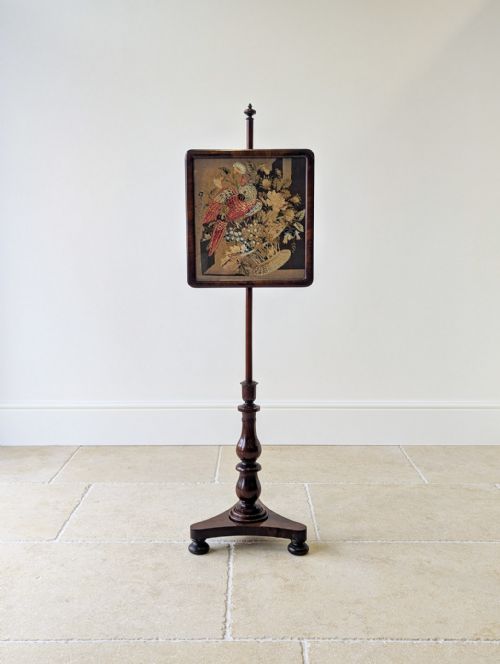
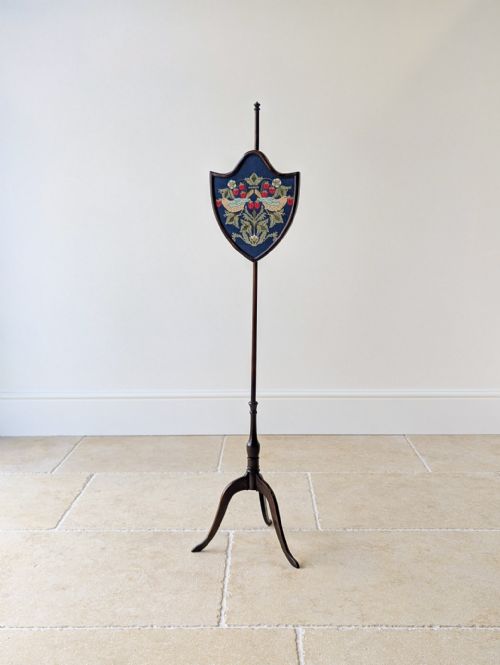
A tapestry pole screen consists of an adjustable panel mounted on a vertical shaft with a supported base, designed to protect the face from the open fire. You are looking for a fireside piece that combines functional heat shielding with decorative textile work.
The most common examples on this page date from the nineteenth century in Victorian and Regency styles, alongside earlier Georgian iterations. These pieces rely on tripod or pedestal bases carrying sliding woolwork panels.
Makers utilised dense timbers like mahogany and rosewood for the slender uprights and carved supports, housing wool and silk embroidered inserts.
How they were made
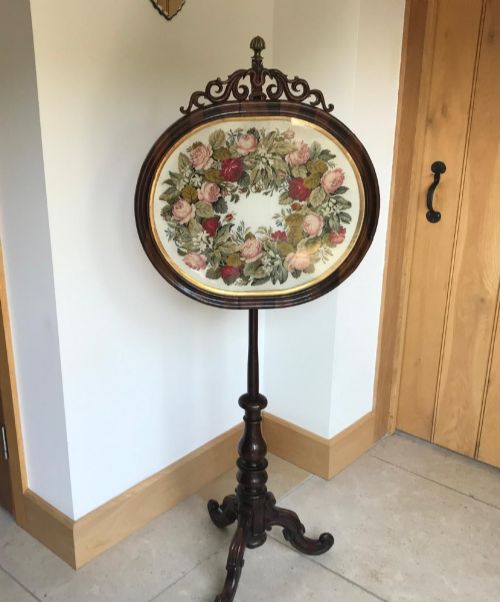
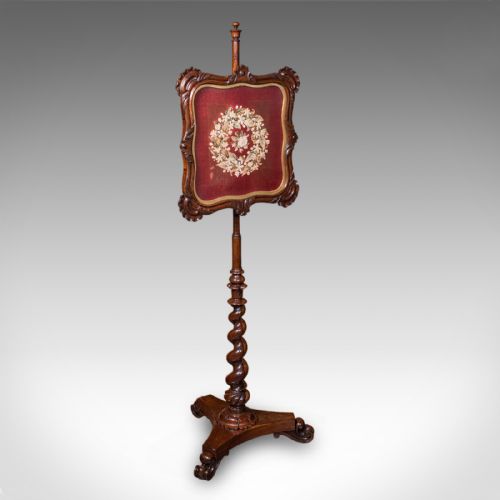
The uprights and bases depend on turned or carved mahogany, rosewood, and walnut, often raised on tripartite legs for stability. Metal components such as brass sliding mechanisms allow the textile panel to move vertically along the pole.
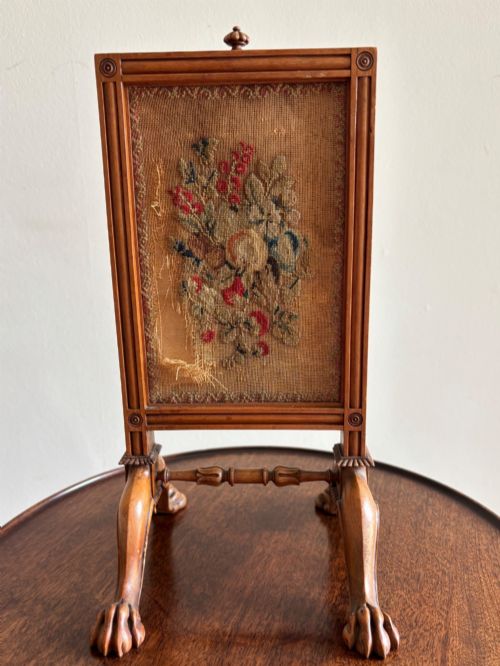
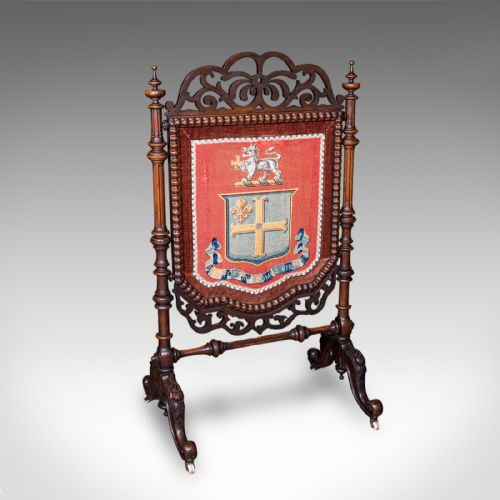
The panels themselves use needlepoint, woolwork, and embroidered textiles stretched over wooden frames, occasionally incorporating glass protection or armorial motifs. Cabinetmakers shaped the heavy timber bases while domestic hands stitched the decorative woolwork panels.
Current listings feature rosewood, mahogany, and walnut structures paired with wool needlepoint, tapestry, and brass hardware across Georgian and Victorian periods.
What varies in quality
The distinction between standard examples and finer pieces lies in the crispness of the timber carving on the tripod base and the complexity of the needlework panel. Superior execution shows in balanced proportions, tight joinery on the sliding mechanism, and dense woolwork depicting detailed floral or armorial scenes.
Lesser items display simpler turned poles with plain fabric insertions, whereas top-tier pieces utilise richly figured rosewood, parcel gilding, and finely articulated scrollwork or acanthus carving.
The Tapestry Pole Screen Glossary
- Pole screen
- A freestanding fireside accessory comprising an adjustable vertical shaft and a sliding panel. It protects the sitter from the heat of an open coal fire.
- Needlepoint
- Canvas work embroidery executed with wool or silk yarn. This technique forms the pictorial panels held within the wooden screen frames.
- Tripod base
- A three-legged support system providing stability for the central vertical shaft. These bases frequently feature cabriole legs or carved paw feet.
- Regency
- A British design period spanning the early nineteenth century. Pieces from this era often exhibit classical restraint and dark exotic timbers.
- William IV
- A transitional architectural and furniture style bridging Regency and Victorian eras. Items typically display robust proportions and scrolling woodwork.
Tapestry Pole Screen: Frequently Asked Questions
How do you adjust the panel height?
A concealed brass collar or friction clip inside the frame allows the panel to slide up and down the vertical pole. This mechanism lets the user position the textile screen to block heat at eye level.
Over decades of use, these brass fittings require careful handling to maintain their grip on the wooden shaft without marking the timber.
Where were they placed in a room?
These screens stood between the seating area and the fireplace to shield the face from intense radiant heat and prevent cosmetics from melting. They sat close to the hearth when the fire burned brightly.
When not needed for heat protection, they were turned away or positioned against walls to display the embroidered needlework.
How do I care for the textile panel?
Keep the woolwork away from direct sunlight to prevent the dyed yarns from fading over time. Gentle dusting with a soft brush maintains the surface without disturbing the stitching.
Avoid placing the screen too close to modern heat sources, which can dry out both the historic timber pole and the antique wool fibres.
Are the needlework panels original to the stands?
Many panels retain their first nineteenth-century woolwork, though domestic embroideries were occasionally updated or replaced by later makers. Close inspection of the mounting rabbet reveals whether the textile frame matches the age of the timber base.
Both period needlework and later replacement panels appear across these listings, reflecting centuries of domestic maintenance.