





Tapestry Lounge Chair
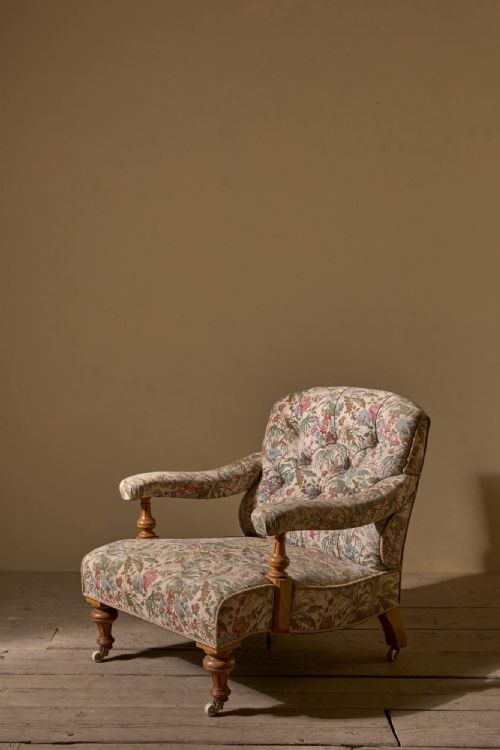
A tapestry lounge chair brings substantial period character and rich textile texture to a room, offering deep seating built for comfort.
Tapestry Lounge Chair
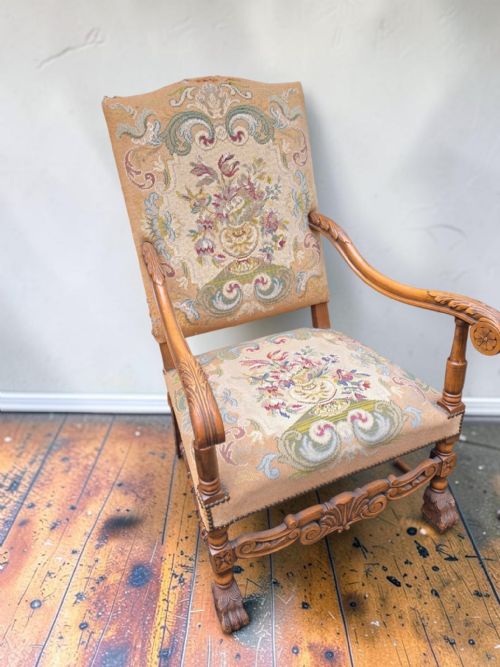
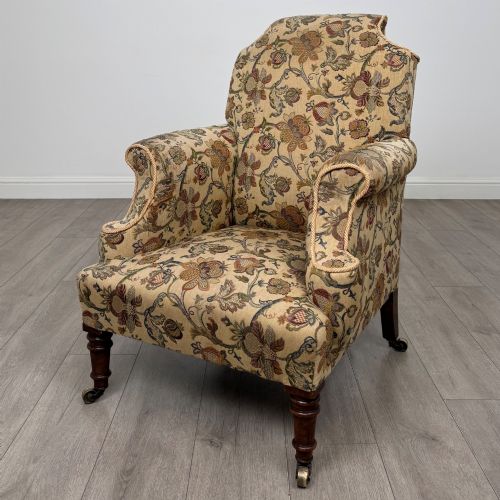
A tapestry lounge chair represents a distinct intersection of supportive seating and decorative woven textile art. When searching for a tapestry lounge chair, buyers encounter diverse forms ranging from nineteenth-century walnut frames to early twentieth-century wingback designs and Arts and Crafts oak pieces.
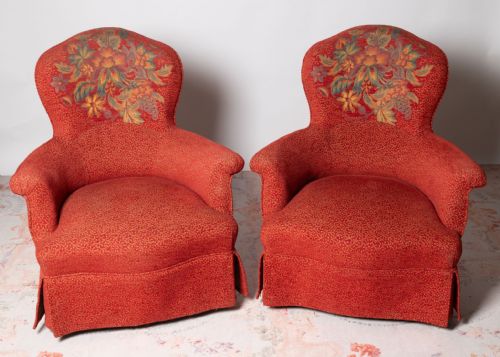
The selections span multiple eras including Victorian, Edwardian, and the 1920s, showcasing frameworks executed in walnut, mahogany, oak, and ebonised timber. Armchairs dominate the offerings, accompanied by occasional salon suites, slipper chairs, and chaise longues that utilise heavy woven coverings.
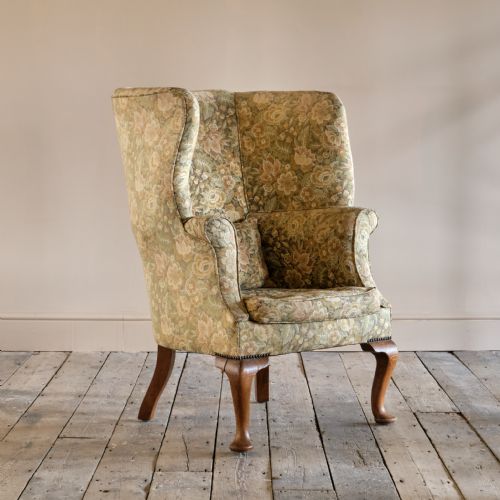
Origin and regional style vary significantly across the inventory, moving between English country house aesthetics, French Napoleon III influences, and Italian carved interpretations. Buyers most frequently meet large upholstered armchairs and wingbacks retaining period needlework, petit point, or kilim fabrics.
Materials and construction methods
Makers constructed the foundational frames of these seats using dense hardwoods such as walnut, mahogany, and oak, often incorporating carved wooden details on exposed legs and arms. Brass fittings occasionally appear on castors or structural joints, supporting the heavy timber chassis.
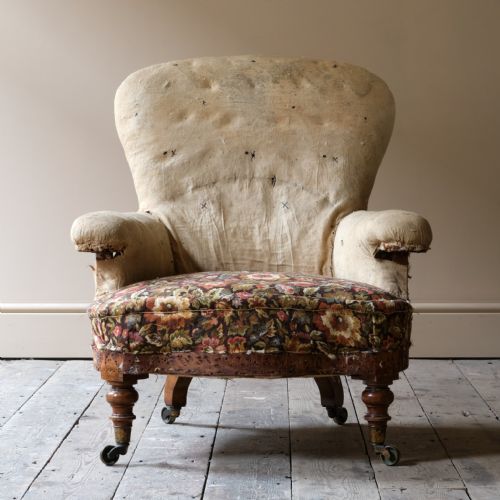
Upholstery relies on traditional techniques utilising durable tapestry fabric, velvet, or specialised woven wools stretched over sprung or feather-filled interiors. These textiles are secured directly to the wooden framework, often finished with decorative braiding or traditional piping.
A surprising number of these dignified nineteenth-century frames spent their youth hiding under heavy antimacassars before finally revealing their woven tapestry skins.
Assessing quality in period seating
Quality reveals itself in the structural integrity of the timber frame and the precision of the joinery beneath the upholstery. Superior examples demonstrate substantial weight, robust carving, and balanced proportions that maintain stability over decades of use.
The distinction between tiers rests upon the execution and condition of the woven textile cover, alongside the supportive quality of internal stuffing such as feathers or traditional springs. Original period needlework or well-preserved kilim and petit point upholstery elevates the standing of an armchair considerably.
Heals·Howard and Sons
The Tapestry Lounge Chair Glossary
- Petit point
- A very fine needlepoint stitch executed on single-thread canvas, allowing for intricate detail and subtle shading in antique chair coverings. This technique creates a smooth surface texture prized in nineteenth-century upholstery.
- Bergere
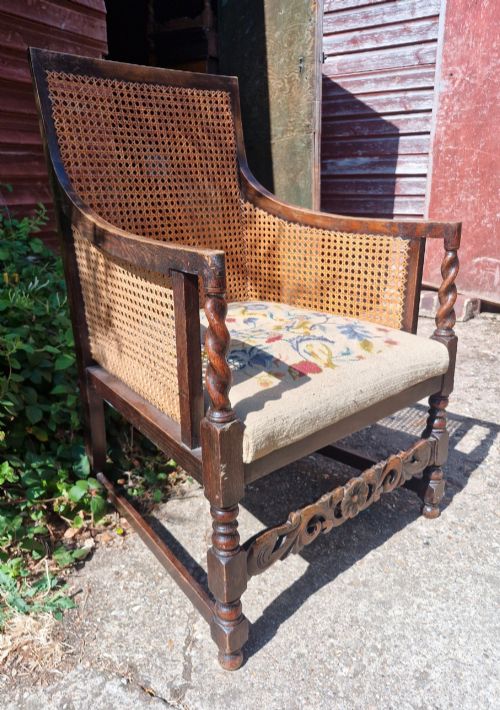
- An enclosed upholstered armchair with wooden framing visible around the sides and back, often featuring cane panels or tight fabric work. Originating in France, it provides a lighter visual profile than traditional stuffed armchairs.
- Wingback
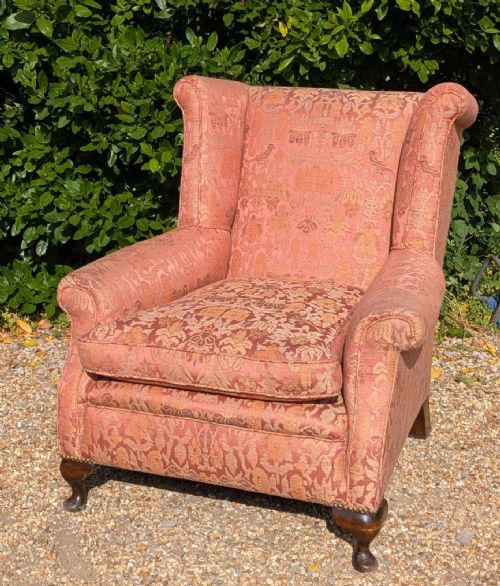
- An armchair featuring protective side panels attached to the arms and rising to the back, designed originally to shield the occupant from draughts. These seats often utilise heavy tapestry or velvet coverings.
- Kilim
- A flatwoven carpet or rug textile utilised historically to upholster lounge furniture, bringing geometric patterns and robust wool construction to the piece. It offers a dense, durable surface distinct from pile carpets.
- Bentwood
- Wood that has been heated with steam and bent into curved structural forms, famously utilised in early twentieth-century designs. This technique allows for organic, flowing lines without traditional carved joinery.
Tapestry Lounge Chair: Frequently Asked Questions
How do I date a tapestry lounge chair?
Dating relies primarily on the characteristics of the wooden frame, such as the timber species used and the style of the carved legs or arm supports. Victorian and Edwardian examples often display distinct revival motifs or characteristic upholstery methods.
The textile itself offers further clues, though many chairs have been recovered during their lifetime. Comparing the secondary woods and construction joints against known historical periods confirms the age of the piece.
Are these chairs comfortable for daily use?
Many of these armchairs were engineered specifically for relaxation in country houses or morning rooms, featuring deep seats and supportive backs. Interiors traditionally relied on feathers, horsehair, or coil springs to ensure lasting comfort.
Buyers should consider the internal padding and whether the piece has been recently reupholstered or re-sprung. Well-maintained historical lounge seating offers ergonomics comparable to modern furniture alongside distinct aesthetic depth.
How should I care for antique tapestry fabric?
Maintaining woven tapestry upholstery requires gentle, regular vacuuming with a low suction attachment through a protective mesh screen. This removes dust without catching loose threads or wearing down the antique wool and silk fibres.
Keep the chair away from direct sunlight to prevent fading of the natural dyes used in the vintage textile. Professional conservation cleaning is recommended for heavier stains rather than applying domestic cleaning agents.
Can I mix these chairs with modern interiors?
A period tapestry armchair introduces texture, colour, and historical weight that anchors contemporary living spaces effectively. Placing an ornate Victorian or Arts and Crafts seat against neutral modern walls creates a striking focal point.
The diverse styles available, from restrained oak frames to decorative French models, allow these pieces to integrate seamlessly into minimalist or eclectic modern rooms.