


Tapestry Foot Stool
These tapestry foot stool pieces combine period wooden frames with hand-worked textile upholstery, offering low seating and rest for the feet.
Tapestry Foot Stool
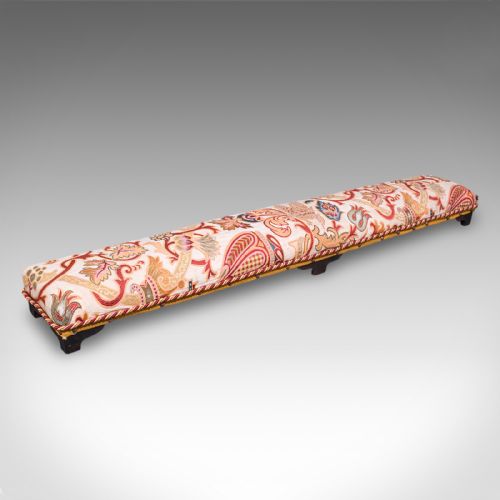
A tapestry foot stool sits low to the floor, built to support tired feet or serve as a small seat near a hearth. These items appear in forms ranging from small circular gout stools to long ottomans designed for country houses.
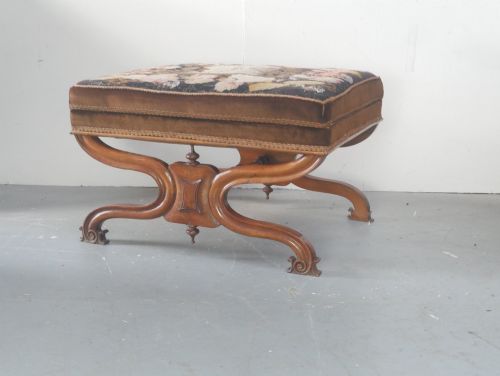
Victorian examples dominate the selection, often rendered in walnut or mahogany with elaborate needlepoint covers. Pieces span from the Georgian period through to the early twentieth century, incorporating revival styles like Queen Anne and Chippendale alongside French influences.
Materials and Construction
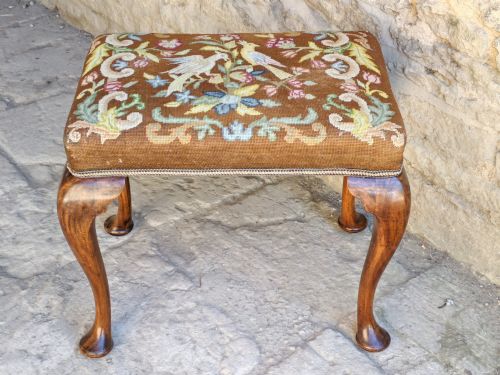
Carpenters and cabinet makers shaped the wooden frames from hardwoods including mahogany, walnut, rosewood, oak, and beech. These frames show disciplined turning, carved cabriole legs, or inlaid details such as Tunbridge ware.
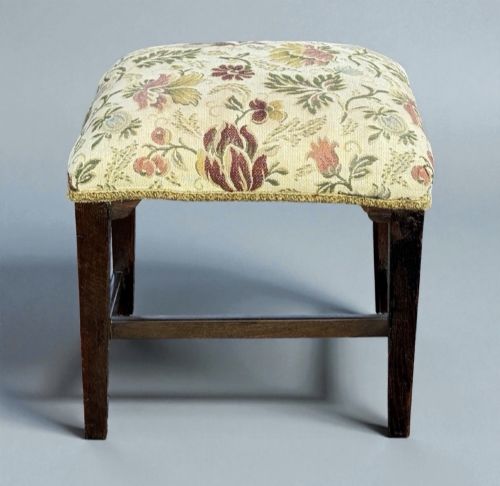
Textiles define the upper surface, utilising wool, velvet, and fabric worked in needlepoint, petit point, crewel, or geometric kilim designs. Upholstery techniques secure these heavy woven panels firmly over stuffing to sustain daily pressure from feet.
Listings feature woods like mahogany, walnut, and rosewood paired with wool and velvet textiles.
Determining Quality
The density and precision of the needlework dictate the upper tier of quality. Finer petit point stitching permits intricate floral trellises, geometric patterns, or pictorial scenes with subtle tonal shifts that coarse wools cannot achieve.
Timber selection and frame joinery separate standard examples from superior ones. Dense grain walnut and carved details like hunting dog heads or shaped aprons denote a higher standard of workshop production.
The Tapestry Foot Stool Glossary
- Needlepoint
- A form of canvas work embroidery executed with a yarn in a counted thread stitch. It creates the firm, durable decorative surface seen on many period upholstery panels.
- Gout stool
- A specialised low footrest designed with an adjustable or sloped top to elevate a foot affected by joint pain. These compact items often feature circular frames.
- Cabriole leg
- A furniture leg that curves out and then narrows down in a graceful S-shape, ending in a pad or claw foot. This form appears frequently on walnut and mahogany frames.
- Petit point
- A very fine variety of needlepoint worked on a high count canvas using single tent stitches. It allows for high resolution in floral and figural tapestry designs.
- Ottoman
- A low, upholstered seat or footstool without a back or arms, sometimes built with internal storage space. Larger versions accommodate multiple sitters or serve as central room pieces.
Tapestry Foot Stool: Frequently Asked Questions
What is a tapestry foot stool used for?
These pieces function primarily as rests for the feet when sitting in low chairs or beside fireplaces. They also serve as auxiliary seating in dressing rooms and parlours.
Historically, specific low forms called gout stools provided ergonomic support for resting ailing limbs. Their sturdy wooden frames and dense textile tops easily withstand daily functional use.
How do I date a Victorian footstool?
Dating relies on combining timber choices, upholstery styles, and structural forms. Mid-Victorian examples often use rosewood or walnut paired with heavy needlepoint.
Later Victorian items may incorporate Art Nouveau influences or machine-woven elements. Comparing the joinery underneath with dated pieces in the archive helps narrow the decade of manufacture.
Are the tapestry covers original?
Many surviving pieces retain their original hand-worked wool or needlepoint covers, secured with traditional brass tacks. Wear patterns on the wool often match the age of the wooden frame.
When needlepoint is remarkably crisp, it may represent a period-appropriate reupholstery. Close inspection of the fabric backing and tack holes reveals whether the textile has lived its full life with the frame.
How do I care for antique needlepoint upholstery?
Preserving the textile requires gentle vacuuming with a low suction brush attachment to remove dust from the wool fibres. Keep the piece away from direct sunlight to prevent the dyed yarns from fading.
Avoid placing heavy damp items directly onto the tapestry surface. Conditioning the underlying hardwood frame occasionally with appropriate wax maintains the timber without harming the fabric.