



Tall Wooden Torchere Pair
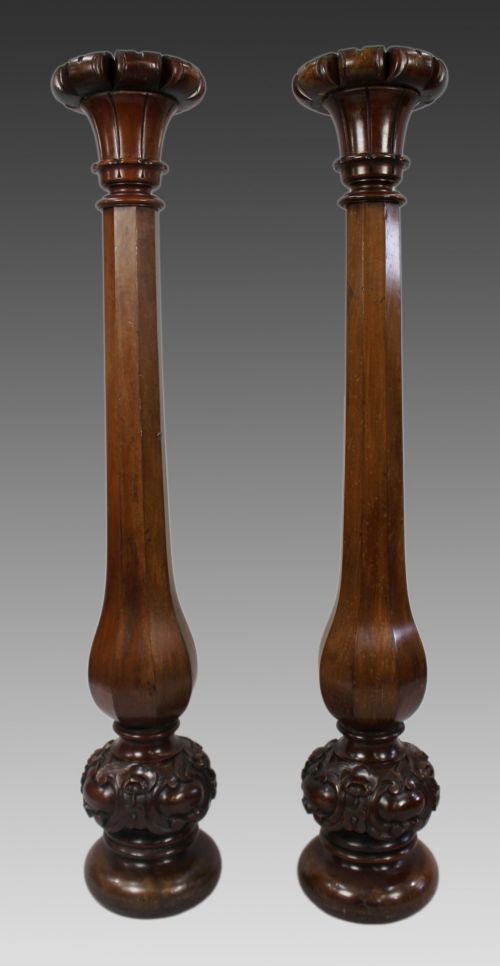
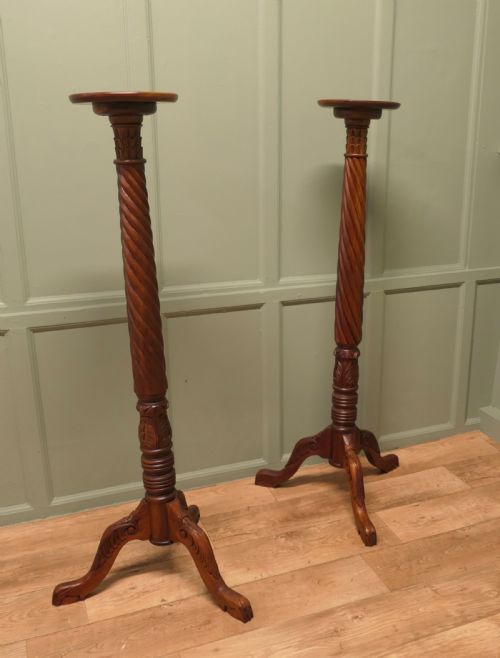
These tall wooden torchere pair examples bring architectural height and classical form into a room.
Tall Wooden Torchere Pair
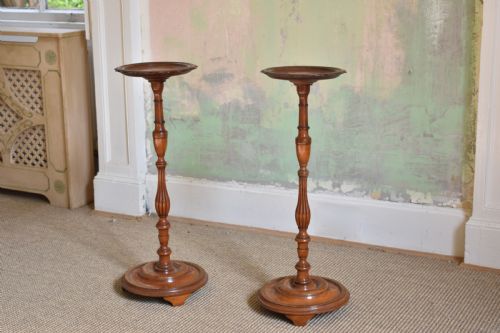
A tall wooden torchere pair comprises matching elevated stands originally designed to hold candles, lamps, or decorative objects. They serve as vertical accents in a room, drawing the eye upward and providing a commanding presence.
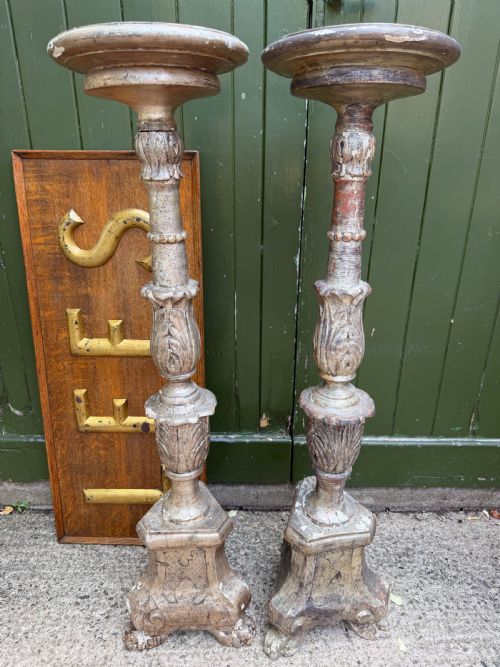
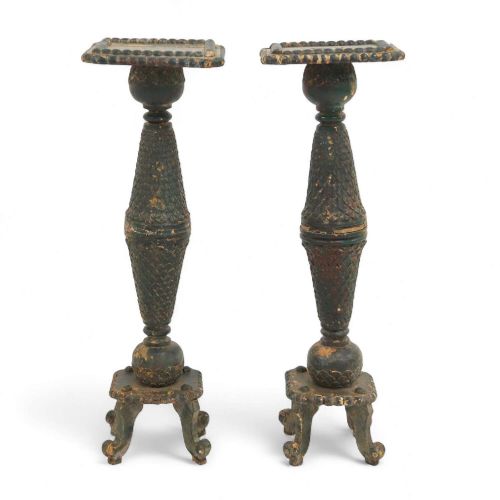
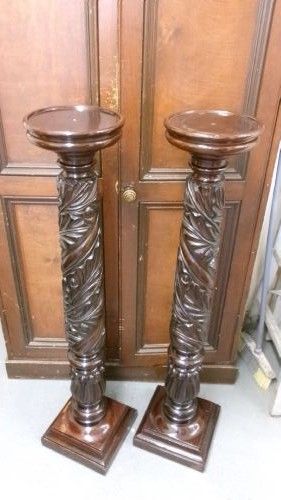
You will most commonly encounter pieces fashioned from mahogany, walnut, and oak, alongside surfaces finished in gesso, silver leaf, or original paint. The selection spans the eighteenth, nineteenth, and early twentieth centuries, encompassing Georgian, Victorian, and Edwardian periods.
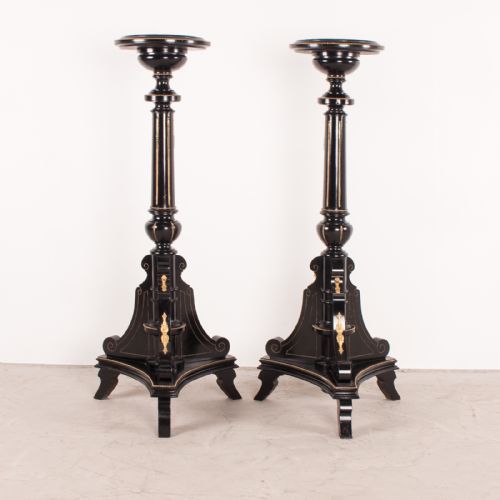
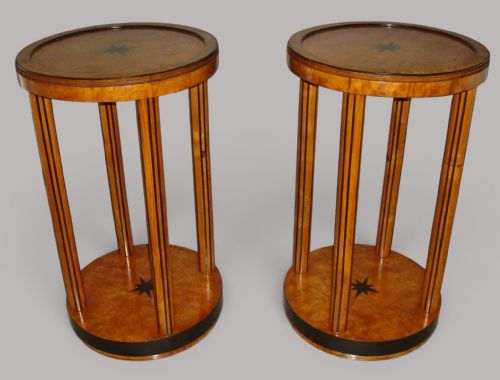
The forms vary from slender Italian carved and silvered standards to substantial English country house pedestals and inlaid satinwood tables. Makers and craftsmen utilised diverse regional styles, including French Napoleon III, Dutch Rococo, and Italian Baroque influences.
How they were made
Makers shaped these stands primarily from solid timbers like mahogany, walnut, and oak, often incorporating intricate hand-carving techniques. Turning on a lathe formed the slender central columns, while secondary woods provided structural stability.
Surface ornamentation involved sophisticated finishes such as silver leaf application, ebonising, gesso moulding, and decorative painted schemes. Inlaid satinwood and contrasting veneers added geometric or floral detail to the tops and shafts.
Tall Wooden Torchere Pair Retail Price Guide 2026
Typical asking prices for tall wooden torchere pair among the pieces listed under this phrase on Sellingantiques today, from the lower quarter to the upper quarter. They describe what is for sale here now, not the wider market.
Some nineteenth-century examples take the form of carved figures, turning a humble plant stand into an unexpected domestic companion.
What varies in quality
The sophistication of the hand-carving and the choice of primary timbers dictate the upper tiers of quality. Finer examples display crisply articulated foliage, figures, or fluting rather than mechanical or heavy-handed execution.
Surface preservation significantly influences the standing of a piece, whether dealing with untouched original paint, patinated mahogany, or delicate silver leaf. The structural integrity of the jointing where the column meets the base also determines overall stability.
The Tall Wooden Torchere Pair Glossary
- Torchere
- A tall ornamental stand designed for carrying a light or holding a candle and plant. These pieces evolved from seventeenth-century lighting supports into decorative display pedestals.
- Gesso
- A plaster-like mixture applied to wood surfaces as a base for painting or gilding. It allows craftsmen to model intricate low-relief ornamentation before applying metallic leaf.
- Ebonising
- A chemical or staining process applied to timber to imitate costly ebony wood. It became particularly popular for achieving a sleek, dark surface on nineteenth-century decorative stands.
- Satinwood
- A durable, lustrous hardwood featuring a golden-yellow sheen used extensively for fine veneers and inlay. Cabinet makers prized it for contrasting sharply against darker woods like mahogany.
Tall Wooden Torchere Pair: Frequently Asked Questions
What were torchere stands originally used for?
These tall stands originally held heavy wax candles or oil lamps to illuminate large rooms and grand hallways. As artificial lighting evolved, their purpose shifted towards displaying prized sculptures, urns, and decorative plants.
Today, they function primarily as sculptural elements that introduce height and focal points into interior spaces.
How do I distinguish eighteenth-century pieces?
Eighteenth-century examples typically exhibit dense, heavy native timbers such as mahogany or walnut, shaped through meticulous hand-tooling. They often feature classic architectural motifs and deep, natural patination accumulated over centuries.
In contrast, later nineteenth and twentieth-century versions may incorporate softer secondary woods, machine-assisted turning, or decorative revival styles.
Can these stands support heavy table lamps?
Most sturdy wooden stands easily accommodate standard table lamps or heavy decorative objects if the weight is balanced centrally. However, slender or heavily carved antique examples require careful placement to ensure stability on uneven floors.
Checking the width and weight distribution of the base helps determine what items can safely sit atop the surface.
Where should I place a torchere pair?
A matching pair works exceptionally well framing a doorway, fireplace, or large sideboard to create symmetrical visual balance. Placing them in corners or empty wall spaces adds vertical proportion to rooms with high ceilings.
They also serve effectively as pedestals for displaying art pieces where floor space is limited.