




19th Century Torchere Stands
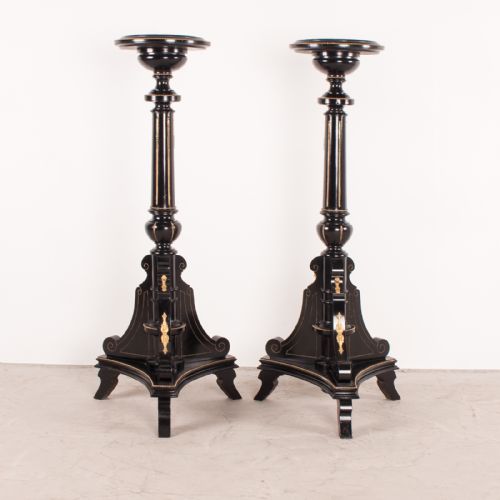
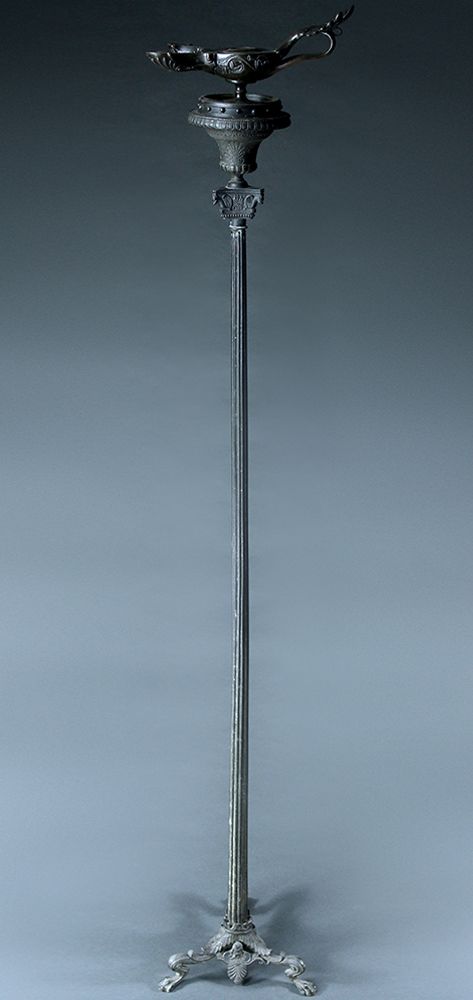
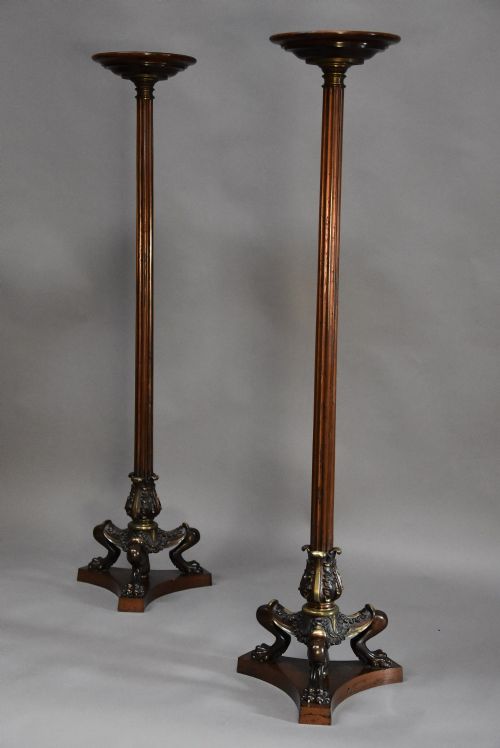
These 19th century torchere stands bring sculptural height and classical presence to interior spaces, holding lamps, plants, and decorative objects with distinct historical style.
19th Century Torchere Stands
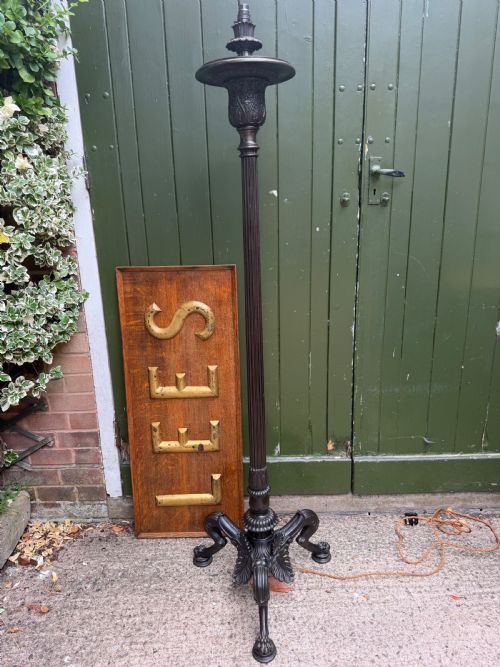
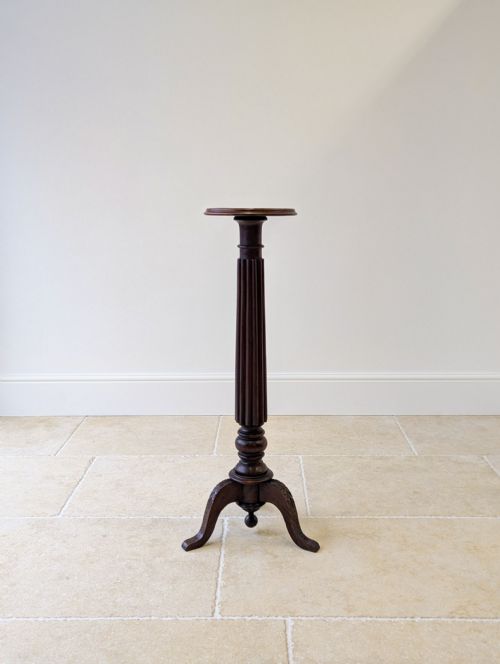
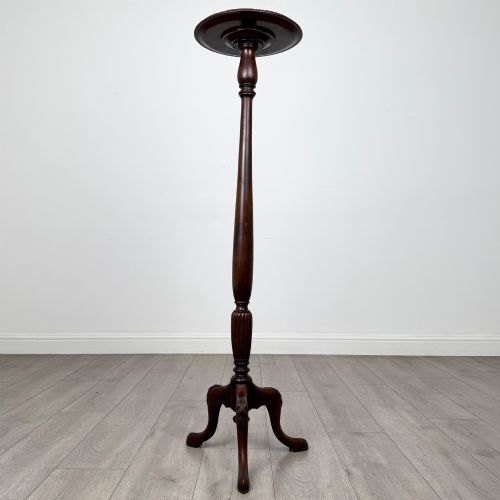
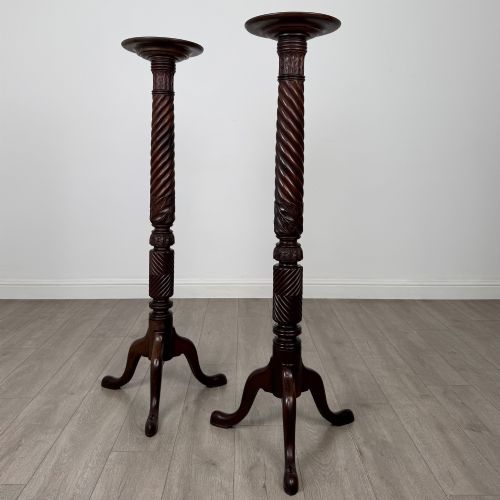
When buyers search for 19th century torchere stands, they encounter tall, slender supports originally designed to hold candles, lamps, or decorative objects. The selections here include pedestals, plant stands, jardiniere stands, and floor-standing lamps.
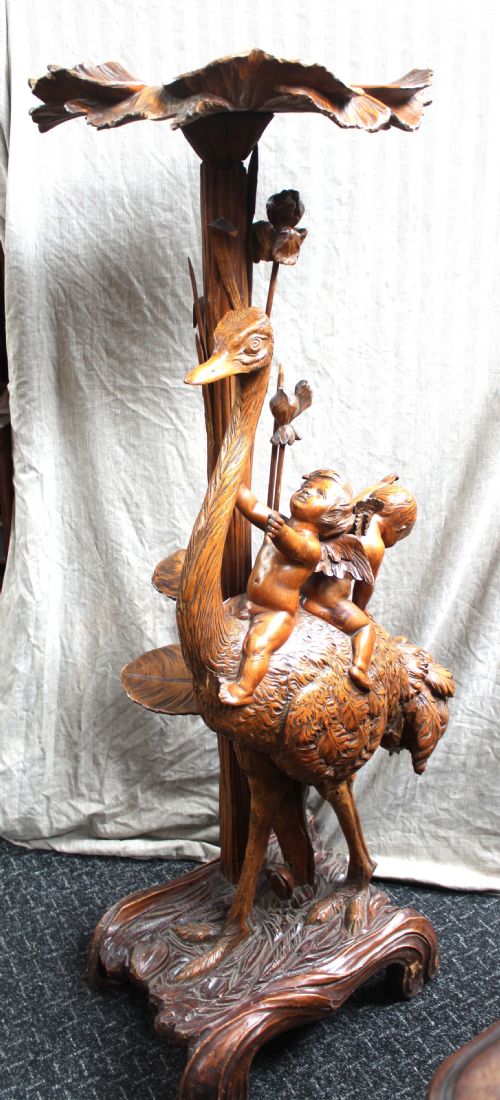
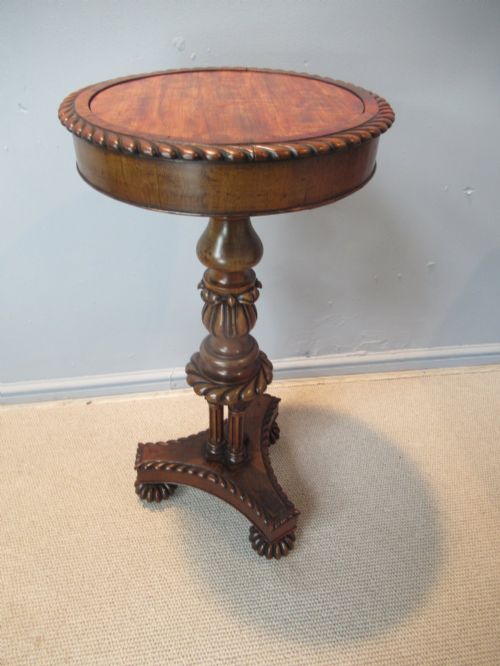
Mahogany and walnut examples dominate the offerings, alongside carved wood, giltwood, and polychrome-painted surfaces. Pieces range from straightforward Georgian and William IV timber designs to elaborate Venetian figural stands.
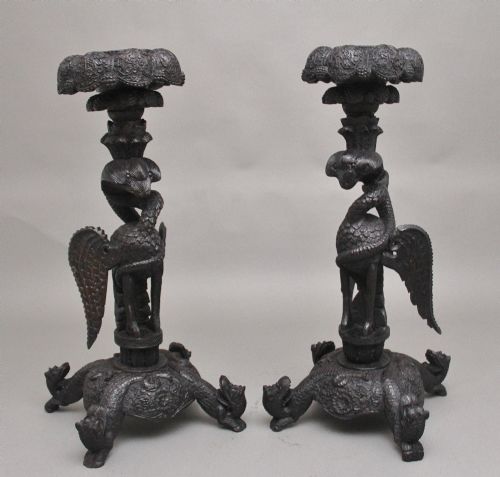
The inventory reflects diverse regional origins and decorative revivals, including Anglo-Indian rosewood stands, Italian giltwood columns, and bronze-mounted classical revival pieces. Figural supports, such as caryatids and gondolier figures, appear frequently among the Italian and Venetian works.
How they were made
Cabinetmakers utilised dense timbers like mahogany, walnut, rosewood, and yew, often shaping them on lathes for turned columns or carving them by hand for figural and floral motifs. Joinery included secure tripod bases and fitted hexagonal tops to support elevated weight safely.
Surface ornamentation involved intricate techniques such as gilding with gold leaf, applying polychrome paint over carved wood, and incorporating bronze patination on cast-iron or bronze elements. Ebonising and faux marbling were also employed to alter the appearance of standard timbers.
Listed periods range from the Georgian and Regency eras through the Victorian period and late nineteenth-century revival styles.
What varies in quality
The degree of detail in the hand-carving distinguishes standard utility stands from exceptional decorative works, particularly on figural supports and acanthus-leaf capitals. Crisp execution in carved wood, bronze, or gilt gesso indicates skilled workshop production.
The choice and preparation of materials influence the overall character, seen in richly figured mahogany veneers, solid rosewood construction, or carefully preserved original polychrome and gilt paint surfaces on Venetian figures.
Shoolbred·Coutan
The 19th Century Torchere Stands Glossary
- Torchere
- A tall stand designed to hold a light source, candle, or decorative object. These pieces lift lighting or plants to eye level.
- Caryatid
- A sculpted female figure serving as an architectural support in place of a column or pillar. They appear frequently on classical pedestals.
- Giltwood
- Timber coated with gold leaf or a thin layer of gold gesso. This technique creates a bright, reflective surface characteristic of ornate Italian stands.
- Polychrome
- Decorated in multiple colours, often applied to carved wood figures. This finish defines many Venetian pieces.
- Jardiniere
- An ornamental pot or stand for holding plants or flowers. These items often share forms with standard torchere columns.
19th Century Torchere Stands: Frequently Asked Questions
What were torchere stands used for?
These tall stands originally held candles or oil lamps to illuminate dark corners of large rooms. Over time, their function expanded to display decorative vases, busts, and indoor plants.
Today, they serve a similar decorative purpose, adding vertical interest and focal points to interior layouts without occupying significant floor space.
How do I style a torchere in a room?
Place a torchere in an empty corner, beside a seating arrangement, or framing a doorway to create height and balance. They work well supporting trailing plants, bronze sculptures, or table lamps.
Ensure the stand's footprint matches the weight of the object placed on top to maintain stability, particularly with taller tripod bases.
What is the difference between a torchere and a pedestal?
Torchere stands traditionally relate to lighting support, whereas pedestals are built to display sculptural busts, urns, or art objects. In nineteenth-century design, the terms frequently overlap.
Many listings combine these definitions, offering versatile surfaces suitable for plants, lamps, or decorative figures alike.
How do I identify a Venetian torchere?
Venetian stands often feature carved figural elements, such as gondoliers or figures in historical dress, finished with original polychrome paint and gilt decoration. These pieces lean towards theatrical and exotic aesthetics.
In contrast, English Regency and Georgian pieces tend to rely on classical architectural forms, turned columns, and rich timber grains like mahogany and walnut.