



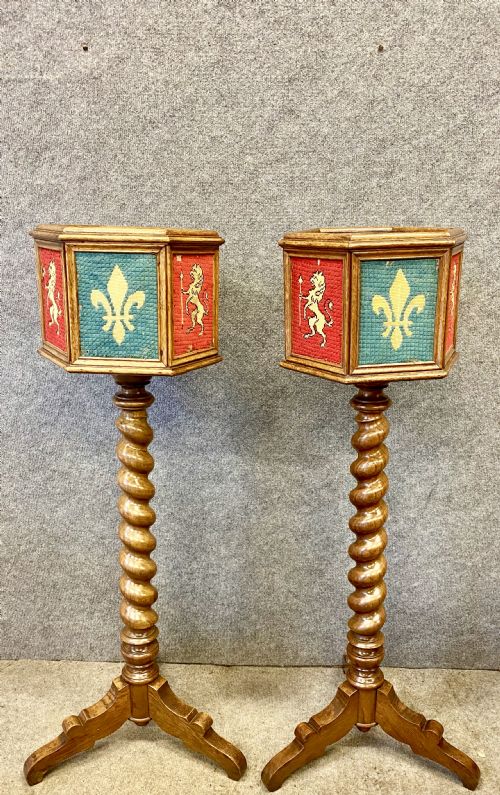

Carved Wooden Torcheres Pair
These carved wooden torcheres pair listings bring tall, sculptural height to a room, holding light or displays with distinct architectural presence.
Carved Wooden Torcheres Pair
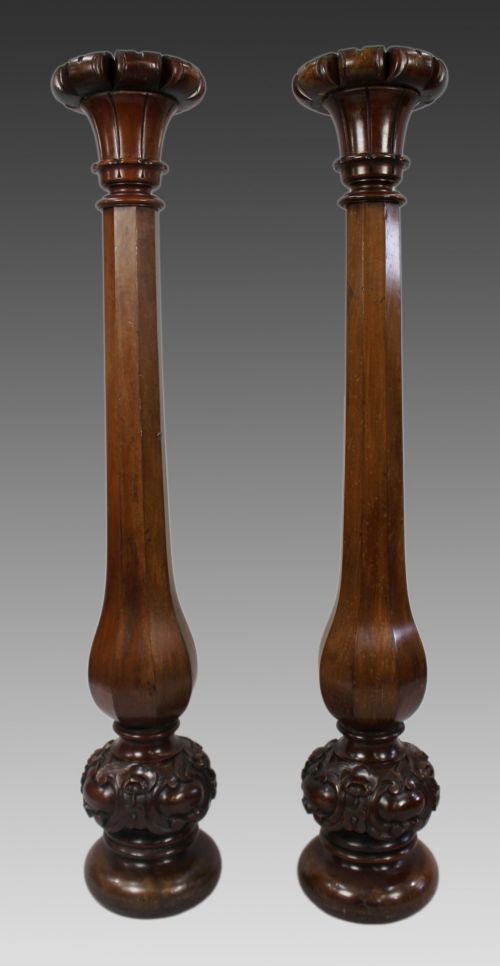
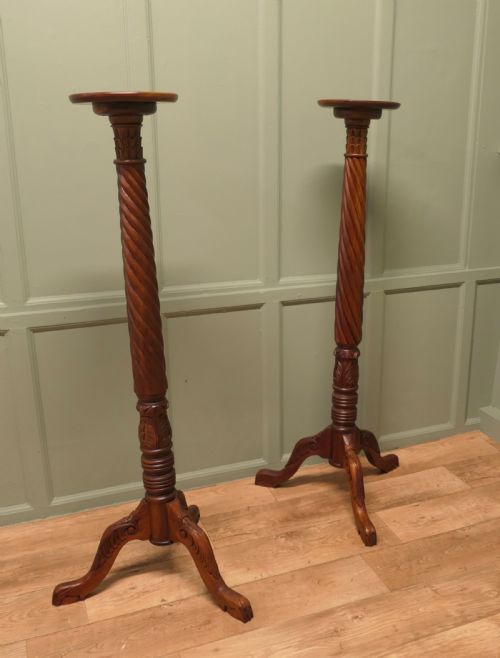
When you search for carved wooden torcheres pair, you are looking at tall stands designed to elevate lamps, plants, or candleholders. The forms on this page span several centuries and originate from various design traditions.
You are most likely to meet Victorian and nineteenth-century examples alongside eighteenth-century Italian pieces and twentieth-century adaptations. These tall supports serve multiple domestic functions, functioning variously as plant stands, lamp standards, and bust stands.
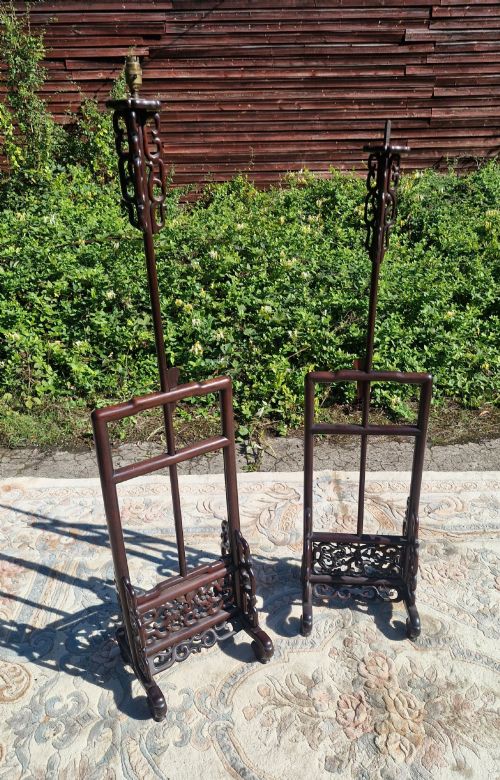
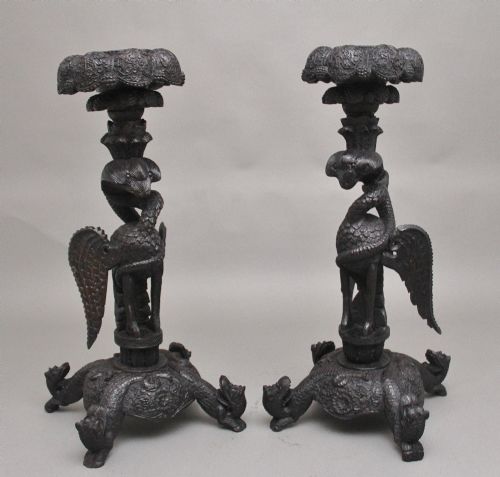
The styles range from traditional Chinese and Anglo-Indian carving to Italian Baroque, French influences, and Georgian forms. They stand as prominent vertical elements within traditional and country house interiors.
How they were made
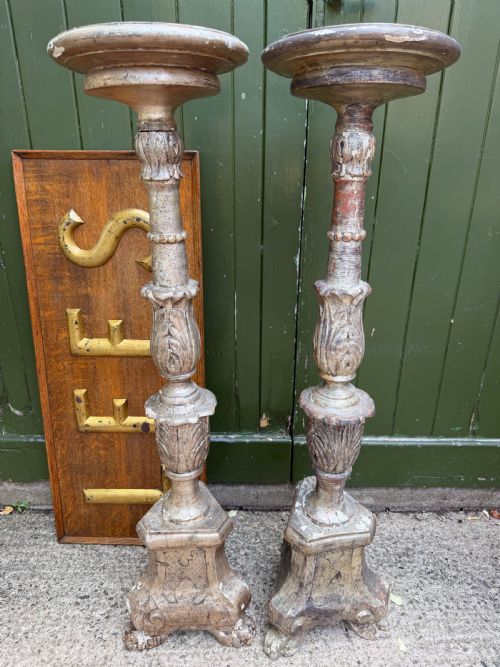
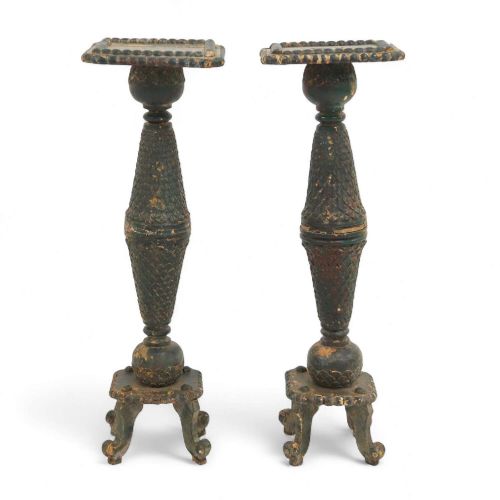
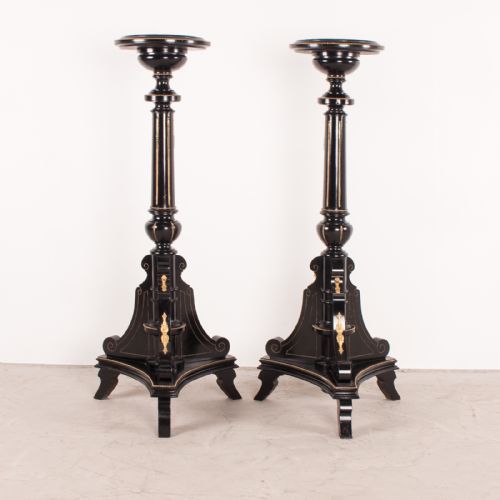
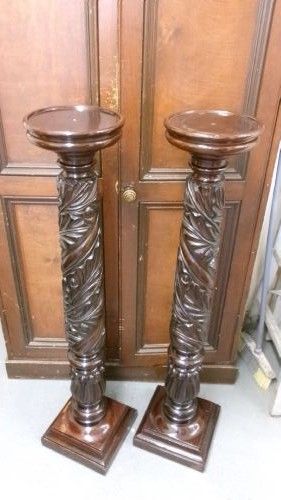
Maker's hands shaped these pieces primarily from mahogany, hardwood, and ebonised wood, sometimes applying silver leaf or gesso over the carved wooden structure. Original surface treatments such as green paint also survive on certain nineteenth-century examples.
Detailing relies on deep carving, with regional workshops employing distinct regional motifs from Anglo-Indian plant forms to Italian Baroque scrollwork. Brass elements occasionally appear alongside the timber framework to provide functional adjustment or structural support.
Carved Wooden Torcheres Pair Retail Price Guide 2026
Typical asking prices for carved wooden torcheres pair among the pieces listed under this phrase on Sellingantiques today, from the lower quarter to the upper quarter. They describe what is for sale here now, not the wider market.
Forms recorded here range from Italian Baroque candle stands and Anglo-Indian carvings to Georgian floor lamps and medieval style plant stands.
What varies in quality
Quality rests in the depth and sharpness of the carved detail, distinguishing fluid, hand-chiseled botanical and architectural motifs from softer, repetitive moulding. The integrity of the timber and the preservation of original finishes like silver leaf or historic paint dictate the piece's visual weight.
Proportion and stability separate standard production from superior examples, as taller stands require precise balance and sound joinery to support lamps or heavy decorative objects safely at height.
The Carved Wooden Torcheres Pair Glossary
- Torchere
- A tall stand originally designed to carry a torch or candle, now commonly used for lamps and plants. These slender pieces provide vertical focal points in room corners.
- Gesso
- A plaster-like mixture applied to wood as a smooth base for gilding or painting. It allows intricate relief decoration to be built up before finishing.
- Ebonised
- Wood finished to resemble ebony through staining or painting black. This technique creates a dramatic, formal appearance popular in nineteenth-century decorative pieces.
- Anglo-Indian
- Descriptive of furniture made in India by local craftsmen for British colonial residents, often featuring dense, intricate carving. These items combine British forms with traditional Eastern motifs.
Carved Wooden Torcheres Pair: Frequently Asked Questions
What were torcheres originally used for?
These tall stands were originally created to hold candles or torches, providing elevated light in large rooms before the advent of electricity.
Over time, their primary function shifted to display, carrying decorative urns, busts, and floral arrangements rather than naked flames.
How do I place torcheres in a room?
Torcheres work best in empty corners, framing doorways, or flanking large pieces of furniture where their height can break up flat wall expanses.
Because they have a small footprint, they add vertical interest without taking up valuable floor space in a hallway or drawing room.
Can I use modern lamps on antique torcheres?
Many examples are sturdy enough to support modern lighting fixtures, and some historical pieces were already adapted as standard lamps.
Ensure the base remains stable and balanced when placing a lamp on top, particularly with taller or more slender stands.
How do I identify eighteenth-century Italian torcheres?
Eighteenth-century Italian examples frequently display dramatic Baroque carving, often enhanced with silver leaf rather than standard gilding.
They tend to feature heavier, more sculptural wooden forms compared to the later, slender Victorian plant stands.