



Tall Wooden Candlesticks
Tall wooden candlesticks bring genuine architectural presence to a room, shifting instantly from simple lighting to sculptural focal points through their height and material weight.
Tall Wooden Candlesticks
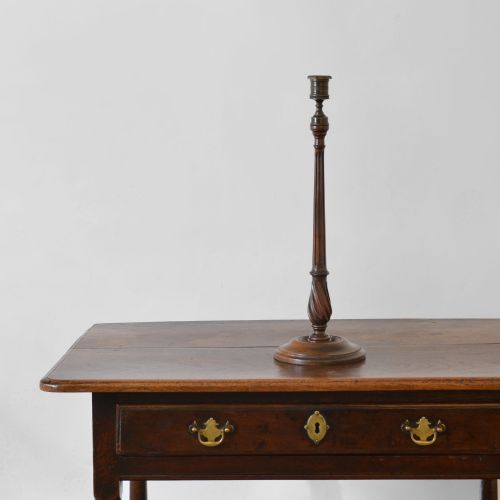
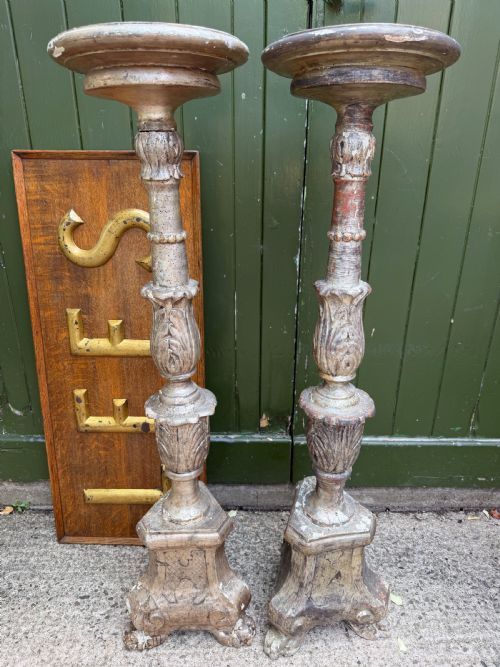
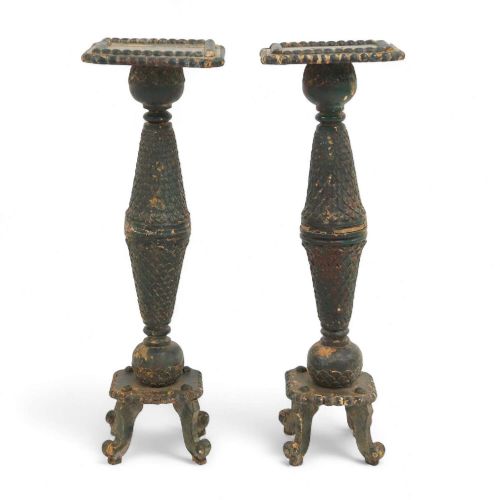
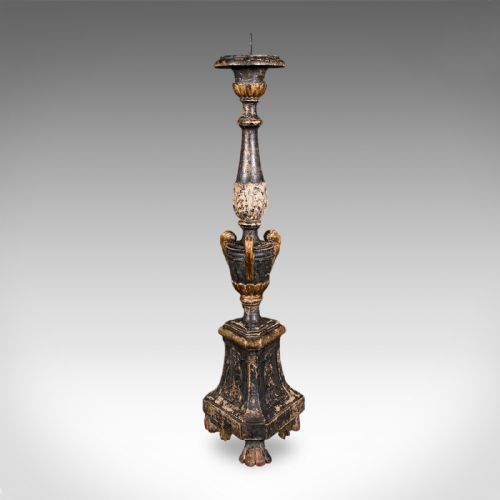
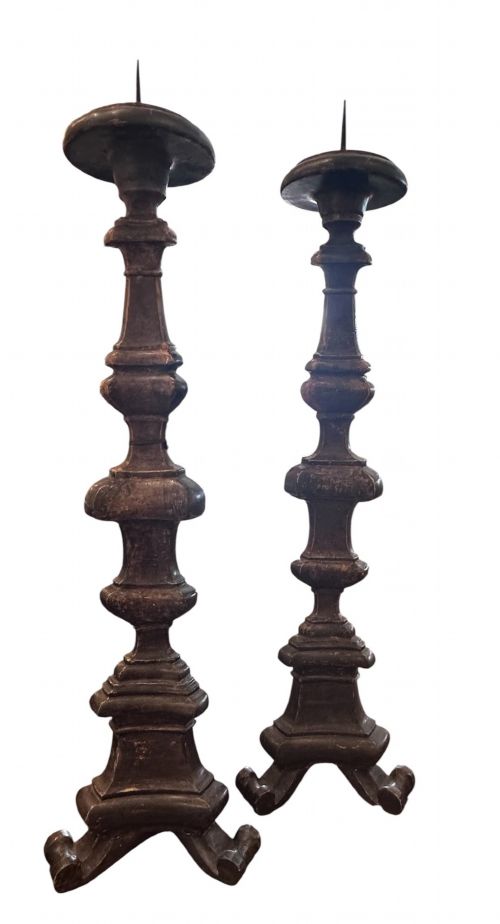
When you search for tall wooden candlesticks, you encounter an array of stately forms including altar sticks, torcheres, and turned table pieces. These items span periods from the eighteenth century to the early twentieth century, showing substantial height and sculptural turning or carving.
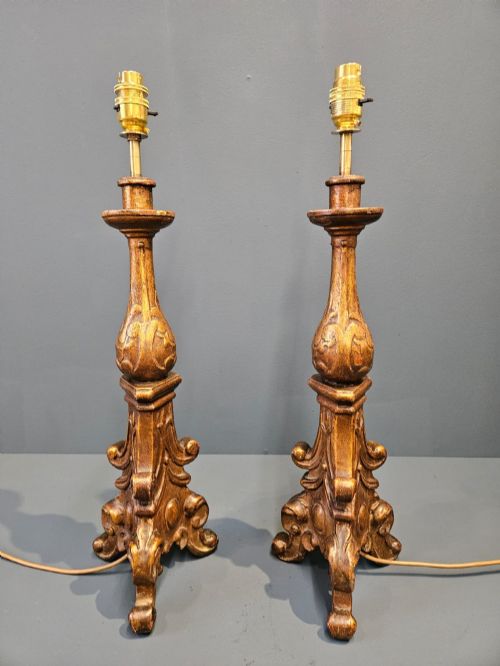
The most common examples on this page are Italian and French altar-style sticks and torcheres, alongside English mahogany and oak columns. Many of these have been wired for electricity as lamps, while others retain their original prickets or sockets for wax candles.
Origins range across Italy, France, Spain, and England, reflecting local workshop traditions in church and domestic lighting. Stylistically, they draw heavily on Baroque, Neoclassical, and Georgian design vocabularies, often rendered in impressive proportions.
How they were made
Carved pinewood, oak, and mahogany form the structural core of these pieces, shaped through hand-carving and lathe-turning. Workshops employed dense hardwoods for stability, ensuring tall shafts could support heavy candle loads without warping.
Surface decoration frequently involves applied gesso, silver leaf, giltwood, and polychrome or green paint. Artisans built up these finishes to mimic solid metal or to provide rich, reflective altar decoration in grand interiors.
Tall Wooden Candlesticks Retail Price Guide 2026
Typical asking prices for tall wooden candlesticks among the pieces listed under this phrase on Sellingantiques today, from the lower quarter to the upper quarter. They describe what is for sale here now, not the wider market.
Listings feature oak, mahogany, and pinewood bodies finished with brass, gesso, giltwood, and silver leaf across various European styles.
What varies in quality
The crispness and depth of the hand-carving separate standard turned items from exceptional sculptural works. Deeply undercut acanthus leaves and finely proportioned barley twists reveal the hand of a skilled artisan rather than a factory lathe.
Originality of surface finish dictates the upper tier of quality. Pieces retaining their authentic giltwood, silver leaf, or aged paint patination hold far more visual integrity than later over-painted or stripped examples.
The Tall Wooden Candlesticks Glossary
- Torchere
- A tall decorative stand or candlestick designed to elevate a light source. They originate from seventeenth-century French and Italian interiors where additional height was required for illumination.
- Pricket
- A sharp metal spike atop a candlestick designed to impale a large wax candle or taper. This form is common in church altar pieces and liturgical furnishings.
- Giltwood
- Timber coated with a thin layer of gold leaf or gold paint over a prepared gesso ground. It provides a luminous surface that reflects candlelight effectively.
- Mecca
- A warm translucent varnish applied over silver leaf to simulate the appearance of gold. It gives eighteenth-century Italian candlesticks their distinctive aged metallic warmth.
- Sconce
- The metal pan or cup fitted to the top of a candlestick to catch melting wax. In many antique conversions, this holds the modern lamp fitting.
Tall Wooden Candlesticks: Frequently Asked Questions
Are these candlesticks wired for electricity?
Many of these pieces have been converted into table lamps over time, accommodating electrical fittings while preserving the original wooden shaft.
Others remain in their original configuration with prickets or sockets intended solely for traditional wax candles.
How do I distinguish eighteenth-century pieces from later revivals?
Eighteenth-century examples typically display hand-carved joinery, heavier patination, and construction methods appropriate to period workshops.
Later nineteenth-century revival pieces often mimic these forms but utilise machine-turned elements or standardised hardware.
What maintenance do silver leaf and gilt surfaces require?
Giltwood and silver leaf surfaces require gentle dusting with a soft, dry cloth to prevent abrasion of the delicate metal layer.
Moisture and harsh chemical cleaners must be avoided entirely to preserve the original finish and gesso ground.