

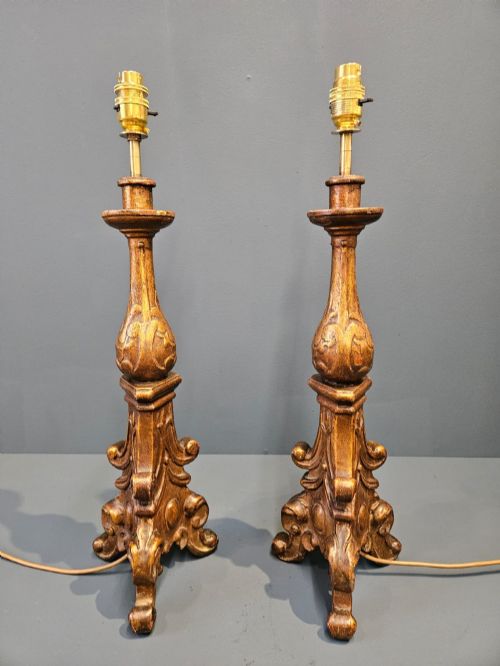


Tall Wooden Candlestick Lamps
Tall wooden candlestick lamps bring substantial presence and height to a room, offering warm light through adapted historic forms.
Tall Wooden Candlestick Lamps
Tall wooden candlestick lamps emerge from the adaptation of historic candle holders and standard lamps into electrical lighting. Buyers seeking tall wooden candlestick lamps will encounter forms ranging from imposing standard lamps to substantial table models derived from prickets and altar sticks.
The pieces on this page span several centuries and styles, drawing heavily on Italian, Spanish and English Baroque traditions alongside Victorian and later interpretations. Italian and Florentine Baroque designs appear frequently, often featuring turned timber enriched with gilding or gesso.
Makers and workshops across different eras adapted these tall wooden supports, resulting in near pairs and matched sets intended for functional illumination. The integration of electrical fittings onto antique timber bases creates striking focal points for traditional and eclectic interiors alike.
How they were made
Carved timber forms the foundational structure of these pieces, utilising solid woods such as oak alongside softer timbers shaped on a lathe or carved by hand. Artisans built up surface decoration using gesso to create smooth grounds for subsequent gilding with gold or silver leaf.
Many surfaces display marbleised paint effects or layers of gold leaf applied over carved wood to imitate heavier metals or solid stone. Metal components such as brass fittings and prickets integrate with the wooden bodies to support the conversion into functional lamps.
Tall Wooden Candlestick Lamps Retail Price Guide 2026
Typical asking prices for tall wooden candlestick lamps among the pieces listed under this phrase on Sellingantiques today, from the lower quarter to the upper quarter. They describe what is for sale here now, not the wider market.
Current listings feature pieces spanning the eighteenth century through to the 1920s, utilising materials including carved timber, gesso, brass and silver leaf.
What varies in quality
The depth and crispness of the hand carving distinguish finer examples from simpler turned pieces, reflecting the skill of the original workshop. Deeply undercut foliage and well-proportioned architectural details indicate higher craftsmanship in Baroque and Neoclassical designs.
The preservation of original surface treatments, including aged giltwood, silver leaf and hand-applied gesso, determines the visual integrity of the piece. Subtle variations in the application of marbleised finishes and the patination of exposed timber reveal the care taken in finishing.
The Tall Wooden Candlestick Lamps Glossary
- Giltwood
- Wood that has been coated with a thin layer of gold leaf. This technique provides a luminous surface finish characteristic of Baroque furnishings.
- Pricket stick
- A candlestick featuring a central spike upon which a candle is mounted. These forms frequently serve as the basis for tall converted lamp bases.
- Gesso
- A plaster-like mixture applied to wood surfaces as a preparation for painting or gilding. It allows artisans to carve intricate details before applying leaf.
- Standard lamp
- A tall freestanding floor lamp designed to illuminate a room from a vertical position. These substantial pieces anchor lighting schemes in larger spaces.
- Baroque Revival
- A nineteenth-century stylistic movement that resurrected the theatrical forms and rich ornamentation of the seventeenth century. Furniture and lighting from this period emulate earlier grandeur.
Tall Wooden Candlestick Lamps: Frequently Asked Questions
How do I choose the right height?
Consider the scale of your room and the furniture placement when selecting a tall lamp. Standard lamps suit open floor spaces, while table-height versions require substantial sideboards or pedestals.
Ensure the vertical proportions complement the surrounding ceiling height and existing decorative elements in the space.
Are these lamps converted from old candlesticks?
Many examples originate as historic altar sticks, prickets or candlesticks adapted for electrical use over time. This conversion process preserves the antique timber body while adding modern wiring.
Makers integrate electrical components carefully to maintain the visual dignity of the original wooden supports.
How do I care for giltwood finishes?
Dust surfaces gently with a soft, dry cloth to prevent accumulation without disturbing delicate gold leaf. Avoid liquid cleaners, modern polishes and abrasive materials that can strip historic finishes.
Keep these lamps away from direct sunlight and excessive moisture to protect the underlying gesso and timber.
What defines the Baroque style?
Baroque design emphasises dynamic movement, dramatic ornamentation and rich surface decoration such as gilding and deep carving. Pieces from this tradition command attention through their theatrical presence.
Revival periods in the nineteenth and twentieth centuries continued utilising these exuberant forms.