


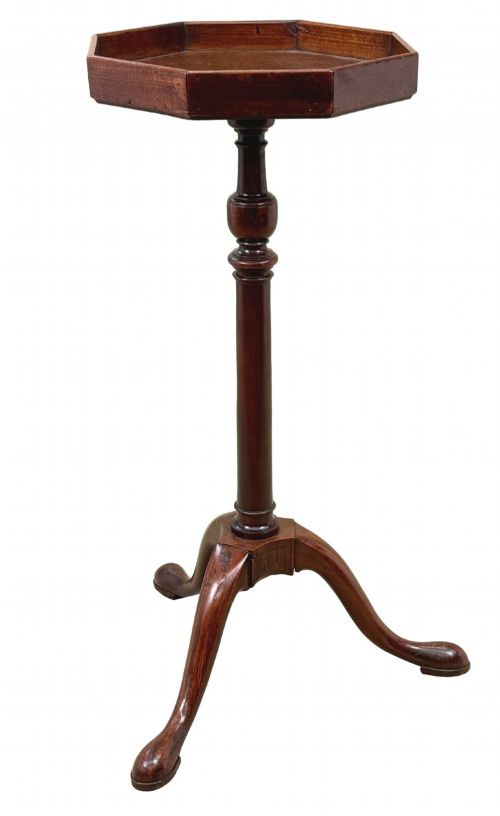


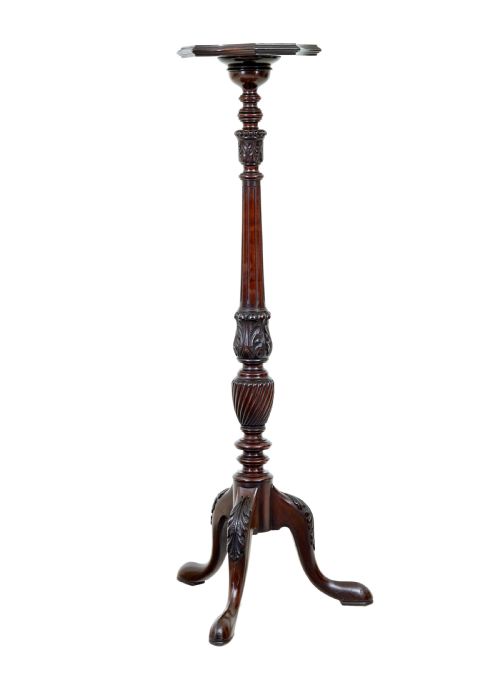
Tall Tripod Candle Pedestal
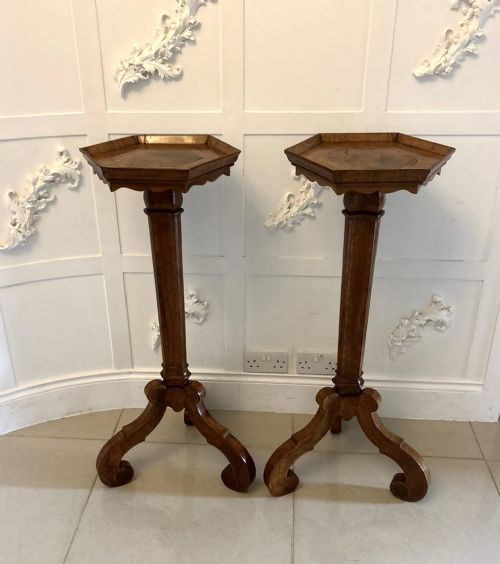
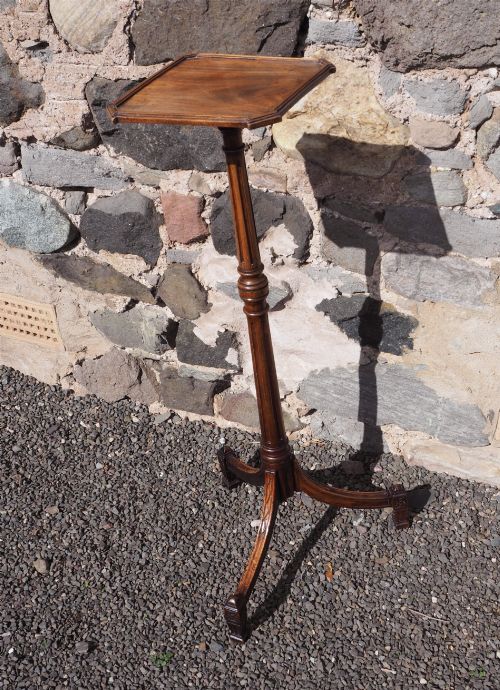
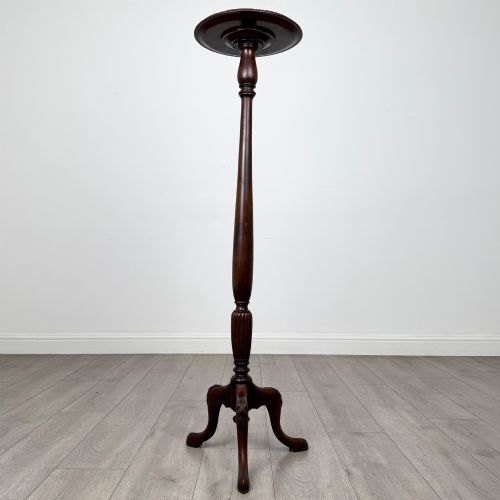
A tall tripod candle pedestal lifts a light source or plant to eye level on a slender column supported by three steady feet.
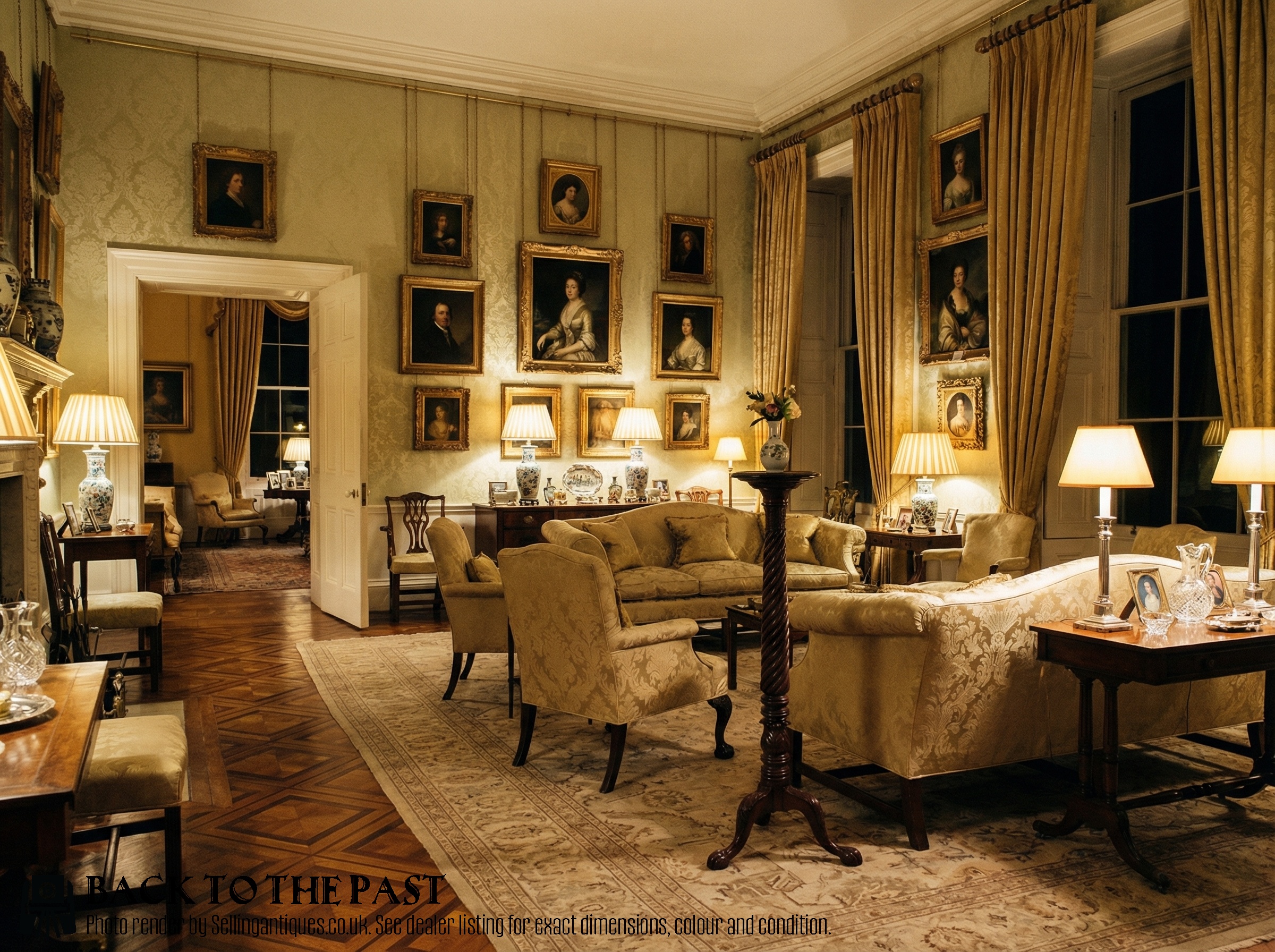
Tall Tripod Candle Pedestal
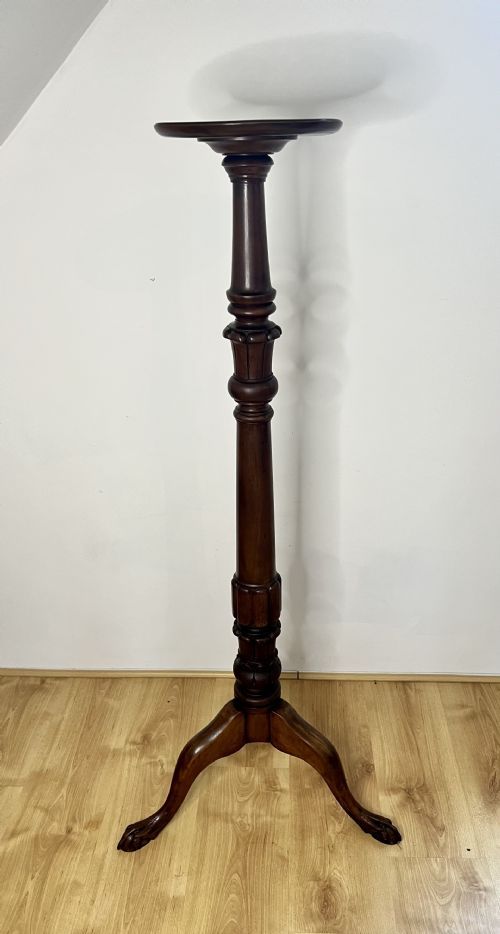
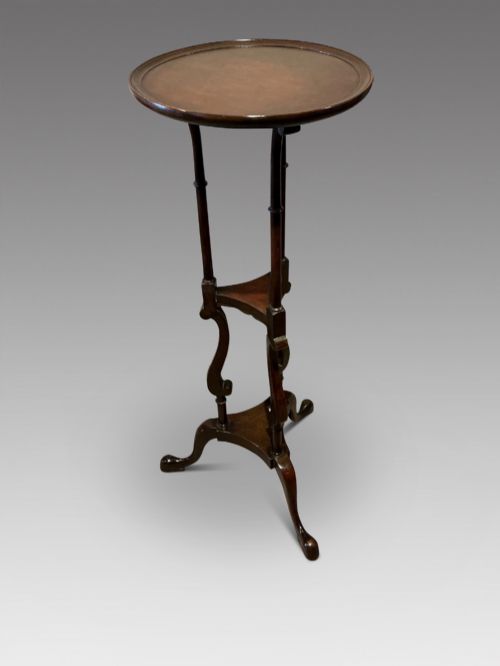
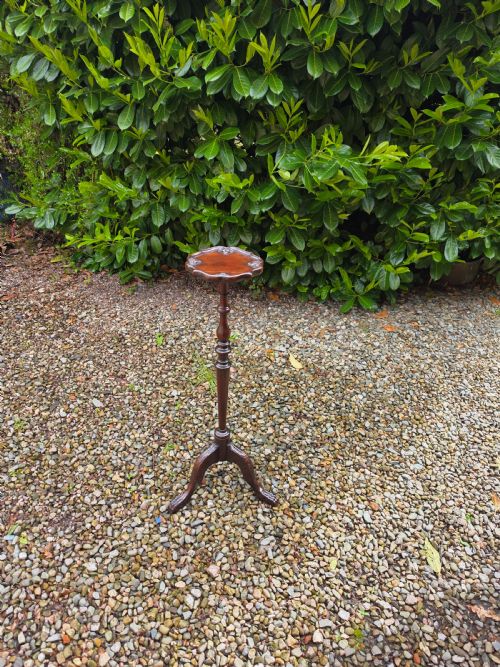
A tall tripod candle pedestal serves primarily as a torchere, plant stand, or candle stand designed to elevate decorative objects within a room. When you examine a tall tripod candle pedestal, you encounter slender upright forms intended to occupy corners or narrow spaces without crowding the floor.
The pieces appearing here span the eighteenth, nineteenth, and early twentieth centuries, drawing on Georgian, Victorian, and Edwardian design idioms. Mahogany dominates the selection, accompanied by walnut, fruitwood marquetry, brass, and gilt wood.
Makers and manufacturers through these periods produced both functional candle holders and decorative display furniture. You find simpler plant stands alongside highly carved examples finished in the Neoclassical or Hepplewhite style.
Materials and construction methods
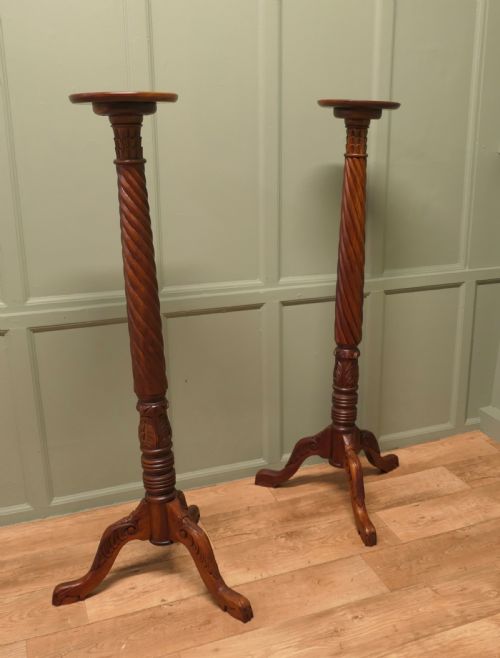
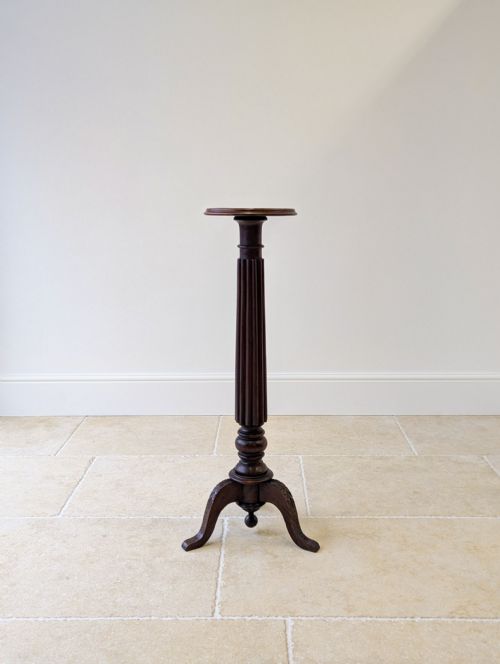
Cabinetmakers constructed these stands predominantly using solid mahogany and walnut, selected for their grain and structural strength. Turning lathes shaped the central columns, sometimes incorporating rope twist details or fluting, while joiners fitted three splayed legs to form the stable tripod base.
Surface decoration involved carving, brass fittings, and fruitwood marquetry inlay. Artisans applied gesso and gold leaf to specific decorative stands, while others relied on polished timber surfaces to showcase the natural figure of the wood.
Tall Tripod Candle Pedestal Retail Price Guide 2026
Typical asking prices for tall tripod candle pedestal among the pieces listed under this phrase on Sellingantiques today, from the lower quarter to the upper quarter. They describe what is for sale here now, not the wider market.
Several stands double as resting places for stubborn houseplants that refuse to thrive anywhere else in the room.
Distinctions in quality
Quality rests upon the crispness of the carving on the column and the stability of the tripod joint. Stands that retain well-defined acanthus leaves, reeding, or floral marquetry demonstrate superior craftsmanship compared to plain or heavily worn alternatives.
Proportion and weight distribution also determine the merit of a piece. A well-balanced shaft and securely fitted top plate ensure the stand supports a heavy plant or candlestick without leaning.
The Tall Tripod Candle Pedestal Glossary
- Torchere
- A tall ornamental stand originally designed to carry a torch or candle. These pieces now frequently function as plant stands or display pedestals.
- Tripod
- A three-legged base providing stability on uneven floors. This configuration allows the legs to rest firmly without rocking.
- Marquetry
- Decorative veneer work using contrasting woods to create pictorial patterns. Cabinetmakers applied this technique to tabletop surfaces and columns.
- Gesso
- A plaster-like material applied to wood surfaces as a base for gilding. Artisans carved intricate details into this layer before applying gold leaf.
- Column
- The vertical shaft supporting the upper platform of the stand. Turners shaped these elements with varying profiles including rope twist and fluting.
Tall Tripod Candle Pedestal: Frequently Asked Questions
What is a tall tripod candle pedestal used for?
These stands hold candles, decorative urns, or potted plants to bring specific objects into view at standing height. They occupy minimal floor space while adding vertical interest to empty corners.
Historically, they illuminated dark rooms by positioning wax lights higher off the floor. Today, collectors utilise them primarily for display purposes in domestic interiors.
How do I identify a Georgian style stand?
Georgian and Georgian revival stands often feature classical motifs such as acanthus carving, fluted columns, and tripod bases ending in pad or claw feet. Mahogany is the primary timber associated with this aesthetic.
Proportions tend to be graceful and balanced, reflecting eighteenth-century design principles. Later revival pieces from the Victorian and Edwardian eras emulate these same architectural characteristics.
Are these stands stable enough for plants?
The three splayed legs of a tripod base provide natural stability on flat surfaces. The weight of the central column helps keep the centre of gravity low.
Heavier marble or pottery planters require careful centring on the top plate. Most antique stands easily accommodate standard house plants when placed out of high-traffic areas.
What is the difference between a torchere and a plant stand?
Torcheres originated specifically to support lighting devices such as candles or lamps. Plant stands share identical forms and were often adapted interchangeably over time.
Many listings use both terms to describe the same tall column structure. The primary distinction lies in the intended original function rather than the physical construction.