

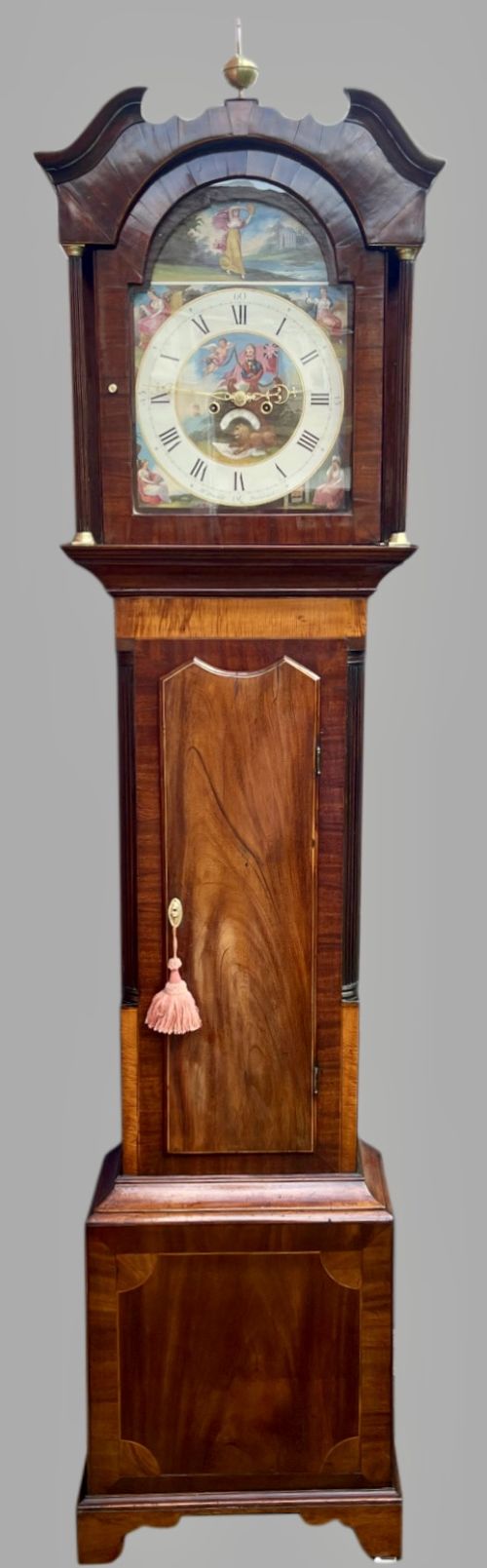
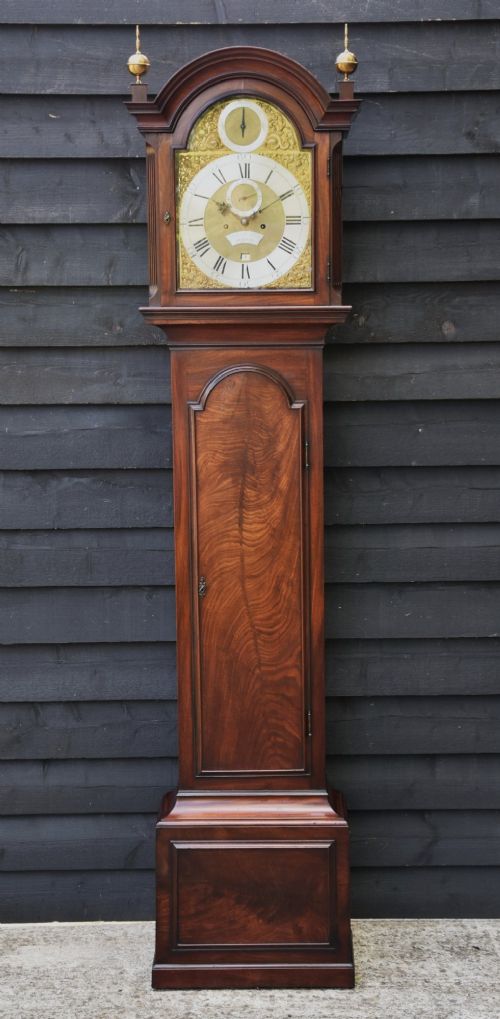
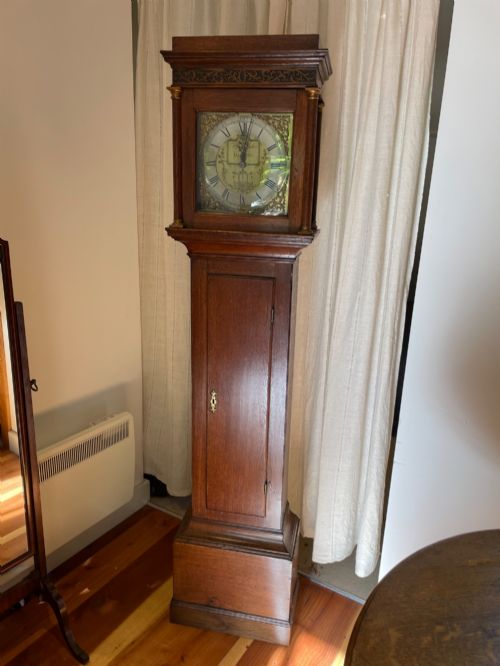
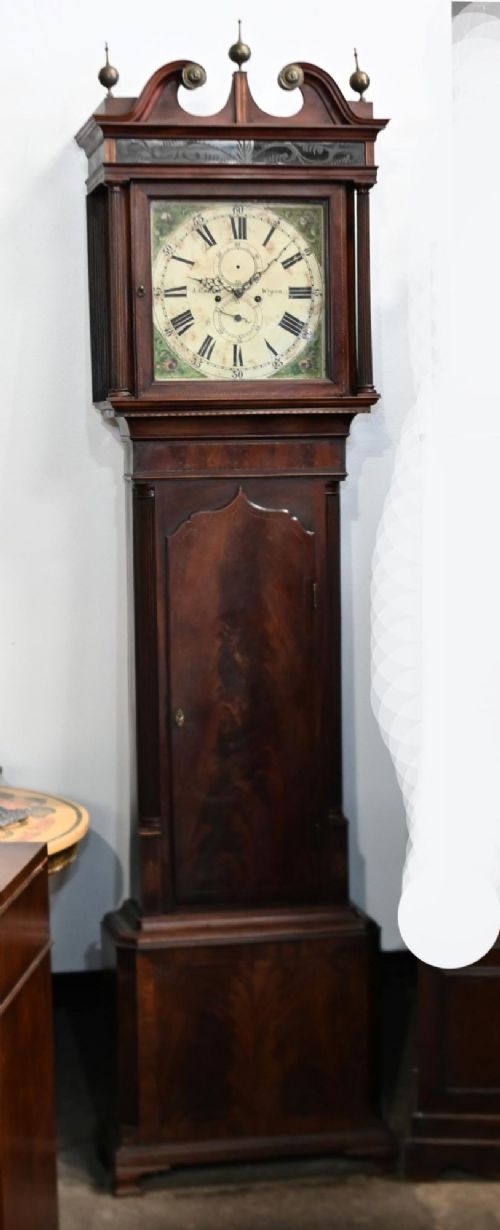
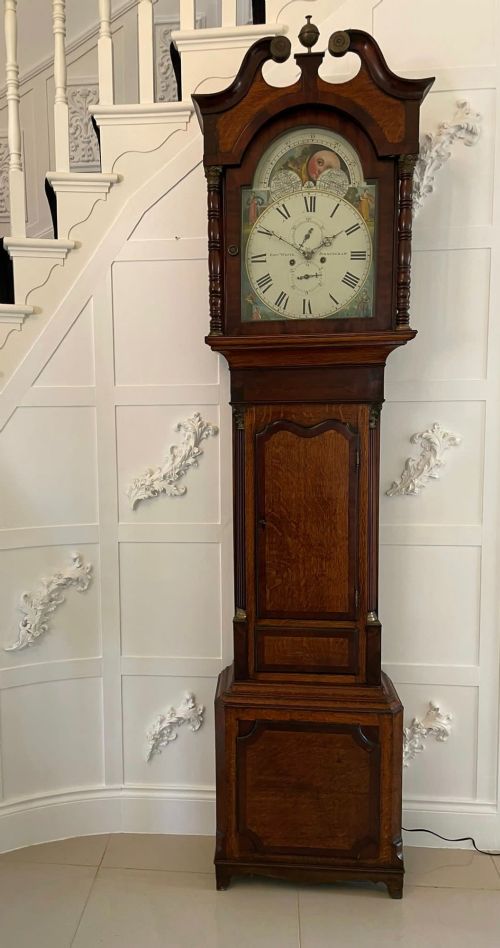
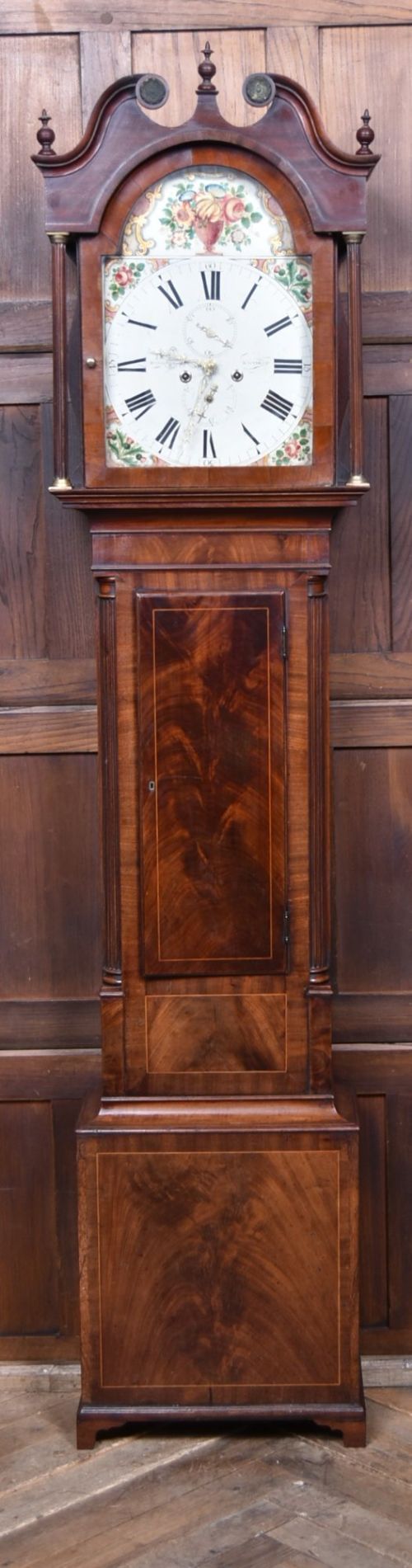
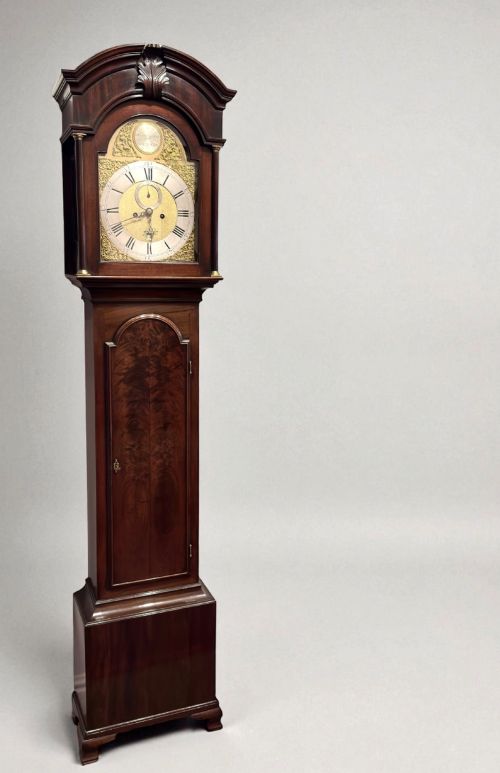
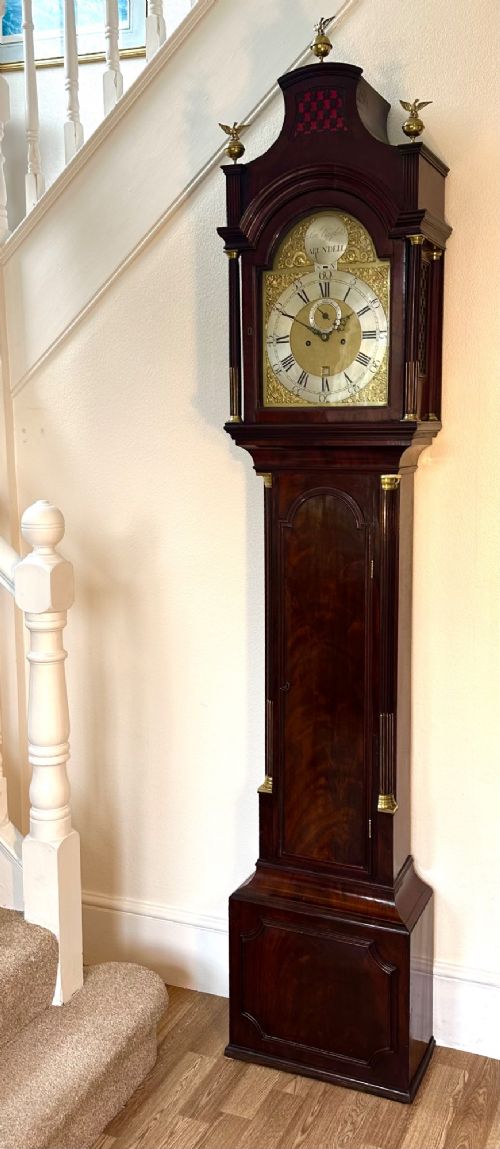
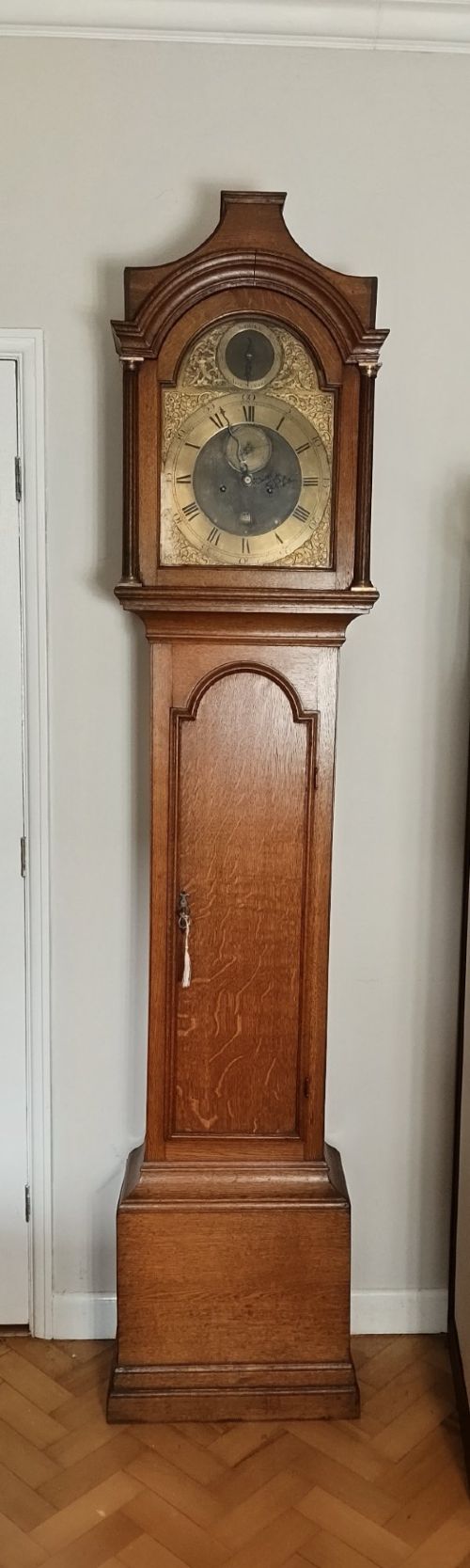
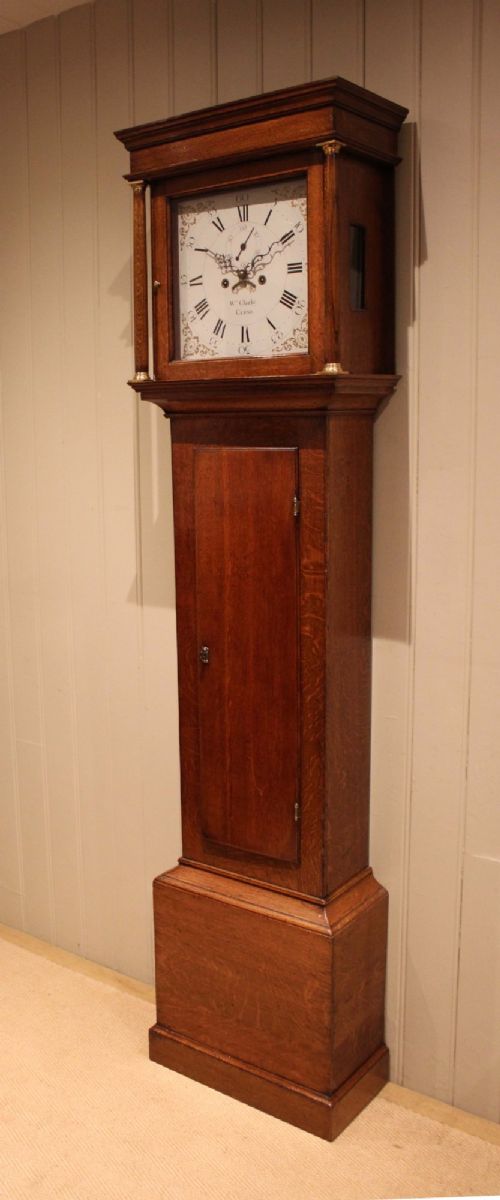
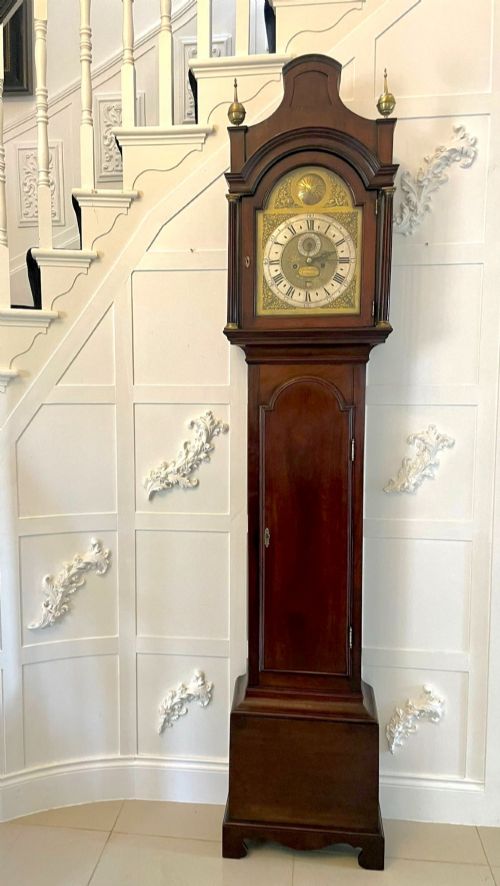
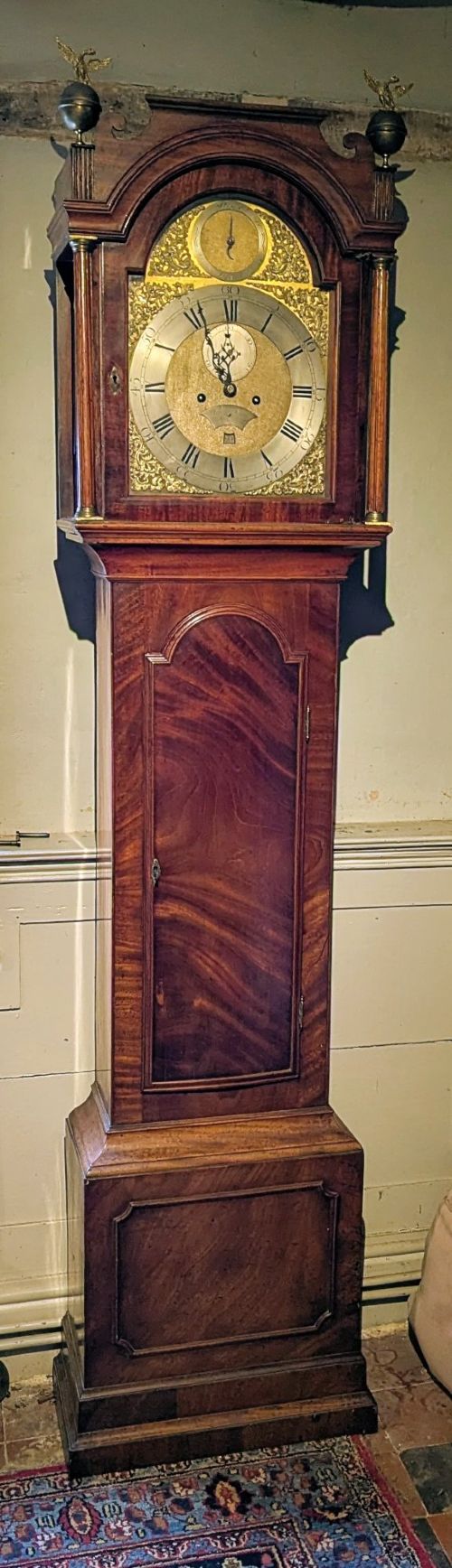
Tall Standing Clock
A tall standing clock anchors a room with its height and the steady sweep of a brass face.
Tall Standing Clock
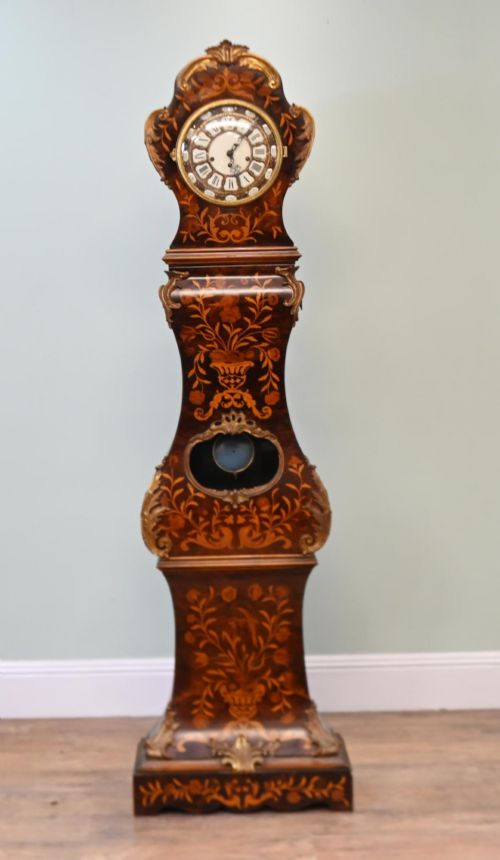
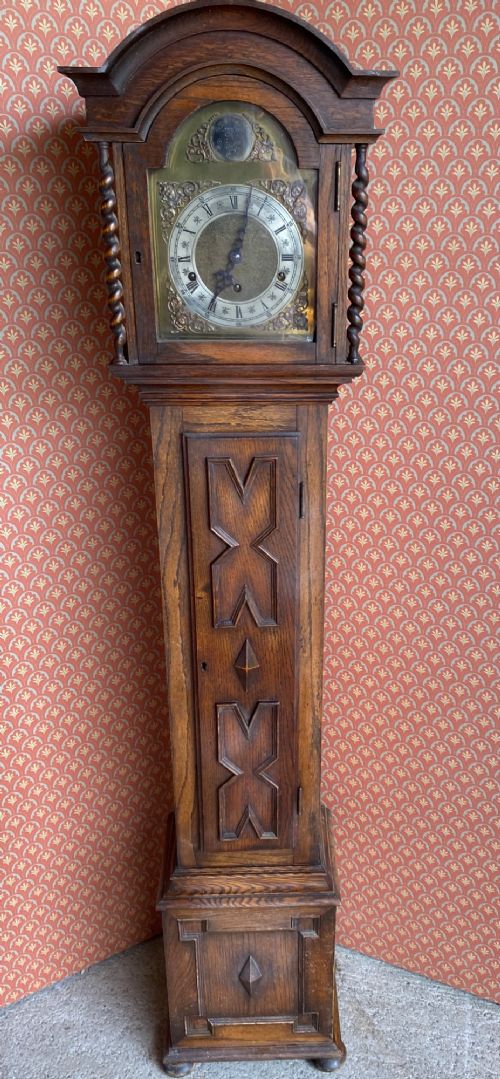
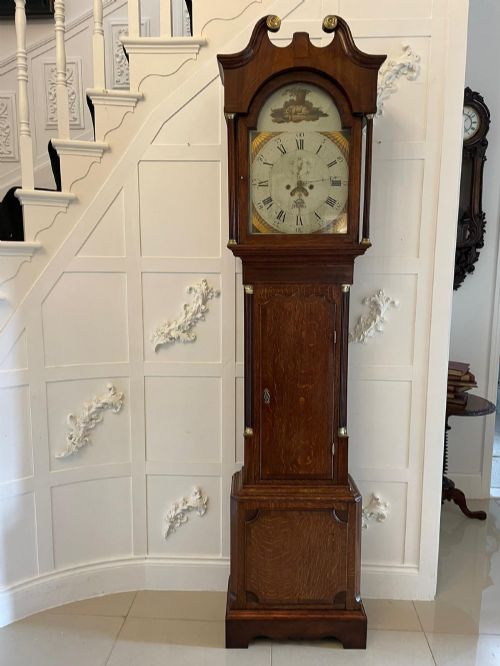
A tall standing clock, known in the listings as a longcase or grandfather clock, stands upright on the floor to house a weighted movement and pendulum. These architectural timepieces appear in forms from the 18th century onward, shaped by regional English, Scottish and London makers.
The version most commonly met on this page is the mahogany or oak longcase from the Georgian period, often housing an eight-day movement. Shorter grandmother clocks and later walnut or Chinoiserie examples also emerge across the centuries.
Makers housed these movements in tall timber trunks designed to protect the pendulum and weights while serving as formal furniture. Provincial workshops and London makers alike stamped their names upon brass dials that register seconds, dates and lunar cycles.
Materials and Construction
Cabinetmakers constructed the tall cases in solid timbers such as mahogany, oak and walnut, occasionally applying floral inlay or carved details. Timber selection dictated the presence of rich grain figures, particularly in Georgian and Victorian examples.
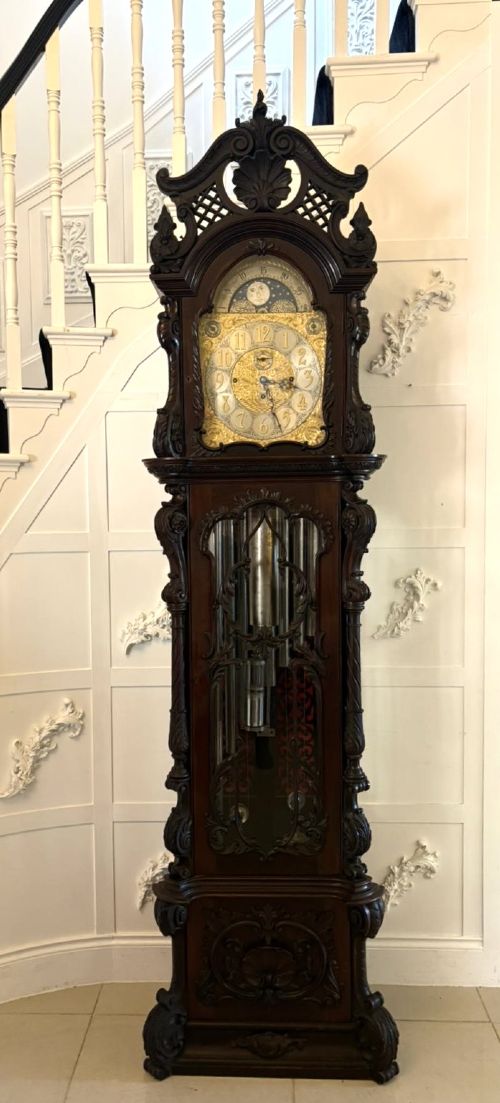
Clockmakers fitted brass or painted iron dials into the hood above steel movements driven by lead or iron weights. Complex mechanisms incorporated moon roller phases, strike and silent functions, and multiple chime tubes.
Tall Standing Clock Retail Price Guide 2026
Typical asking prices for tall standing clock among the pieces listed under this phrase on Sellingantiques today, from the lower quarter to the upper quarter. They describe what is for sale here now, not the wider market.
Some provincial makers misspelled their own names on the dial, leaving permanent puzzles for future collectors.
Quality and Craftsmanship
The distinction between standard provincial pieces and top-tier examples rests in the depth of the cabinetwork and the sophistication of the movement. London makers and specialist regional horologists produced dials with engraved detail and precise strike-silent mechanisms.
Proportion and timber figure separate the ordinary from the exhibition quality. Finely figured mahogany and burr walnut veneers, paired with signed brass dials and moon phase indicators, denote a higher grade of manufacture.
Coats of Wigan·Walker of Nantwich·Edward White Birmingham·Charles Shuckburgh London·Hendrie Ogg Dunfermline·Gordon of Aberdeen·Lee of Great Marlow·D Straiton Montrose·Richard Corless Stockport·James McCabe·Windmills and Wightman·Wotton Under Edge·D Williams Crickhowell·Lenzkirch·Henry Weedon London
The Tall Standing Clock Glossary
- Longcase clock
- A tall pendulum clock enclosed in a wooden case resting on the floor. These pieces are frequently called grandfather clocks.
- Grandmother clock
- A smaller, scaled-down version of the traditional longcase clock. They generally date from the 20th century.
- Moon phase
- A dial mechanism showing the phases of the moon through a rotating disc. This complication appears on many 18th-century and Georgian dials.
- Strike and silent
- A mechanism that allows the striking train to be silenced at night. This function indicates a more complex movement.
- Paterae
- Small circular or oval ornamental motifs carved or inlaid into furniture. They appear frequently on Georgian and 19th-century mahogany cases.
Tall Standing Clock: Frequently Asked Questions
What is a grandfather clock?
A grandfather clock is a tall standing timepiece that encloses its weights and pendulum within a vertical wooden trunk. The term is synonymous with the longcase clock.
These pieces rose in popularity during the Georgian era and remained staples of domestic interiors through the Victorian period and into the 20th century.
How do 30 hour and eight day clocks differ?
A thirty-hour clock requires winding once a day using a single cord or chain mechanism. They tend to be earlier provincial pieces.
An eight-day clock requires winding only once a week and typically utilises two separate weights and trains for timekeeping and striking.
Where should I place a longcase clock?
A tall standing clock requires a stable, vibration-free wall and a level floor to keep the pendulum swinging truly. Hallways and landings provide traditional placement.
Keep the timber case away from direct sunlight and sudden changes in central heating to protect the polish and veneer.
How do I date a tall standing clock?
Dating relies on the style of the wood case, the shape of the dial, and the signature of the maker inscribed on the brass or painted face. Georgian cases show different proportions from Victorian or Edwardian examples.
Movement construction also evolved from early anchor escapements to later precision regulators and chime mechanisms.