

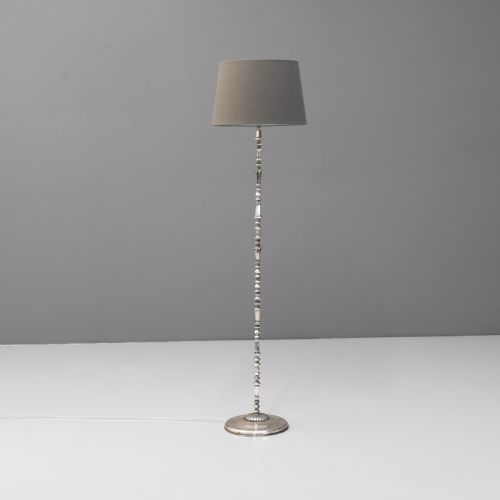
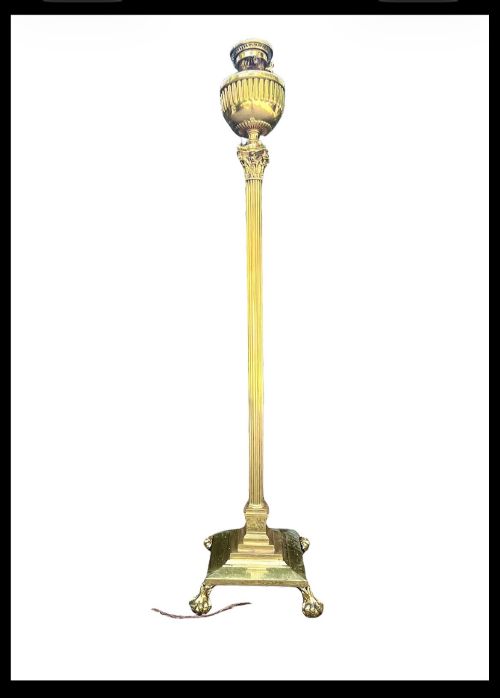
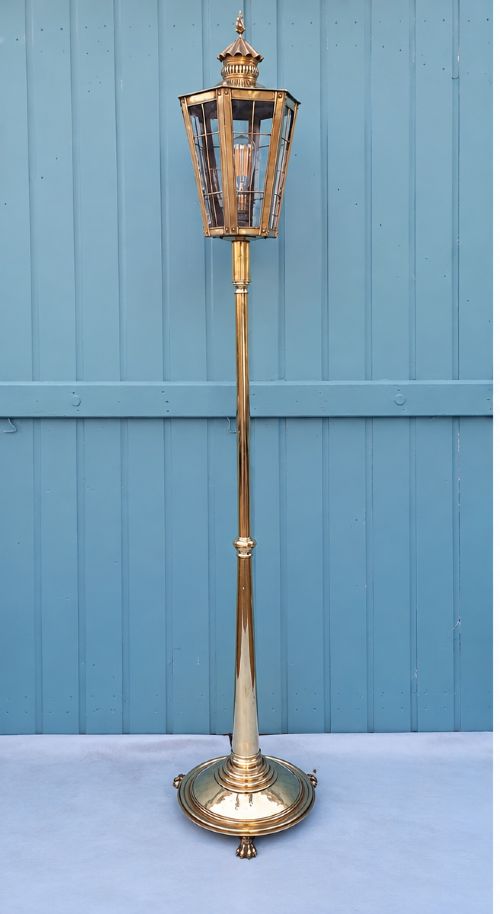
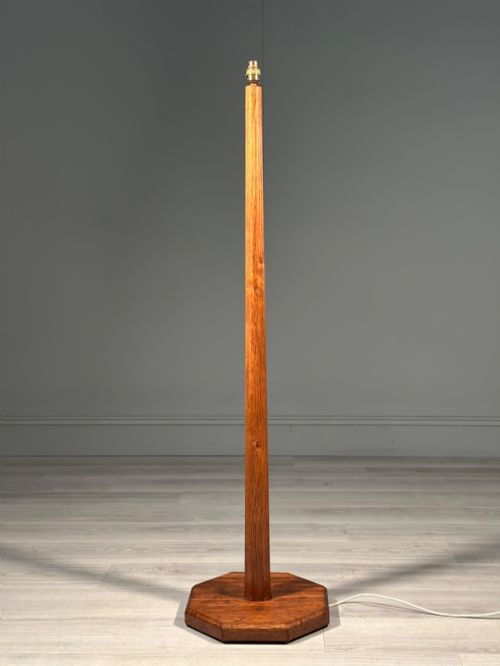
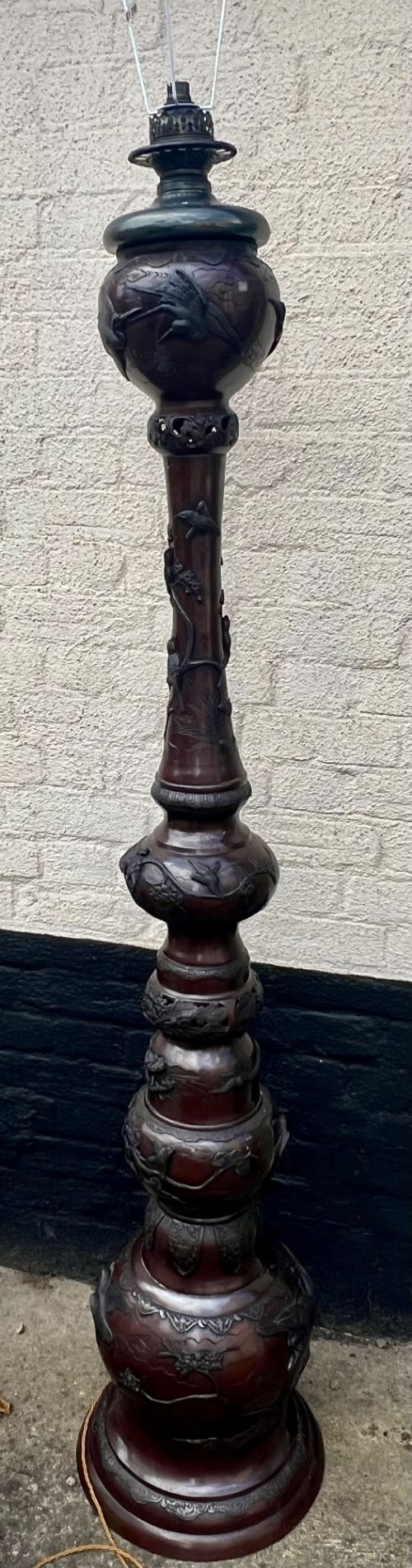
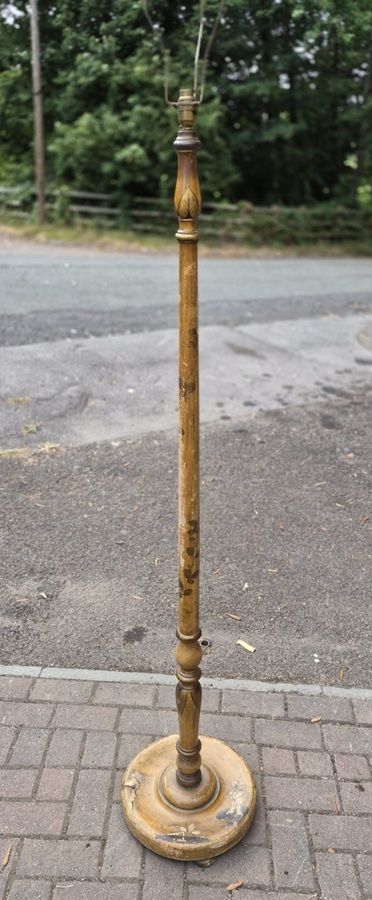
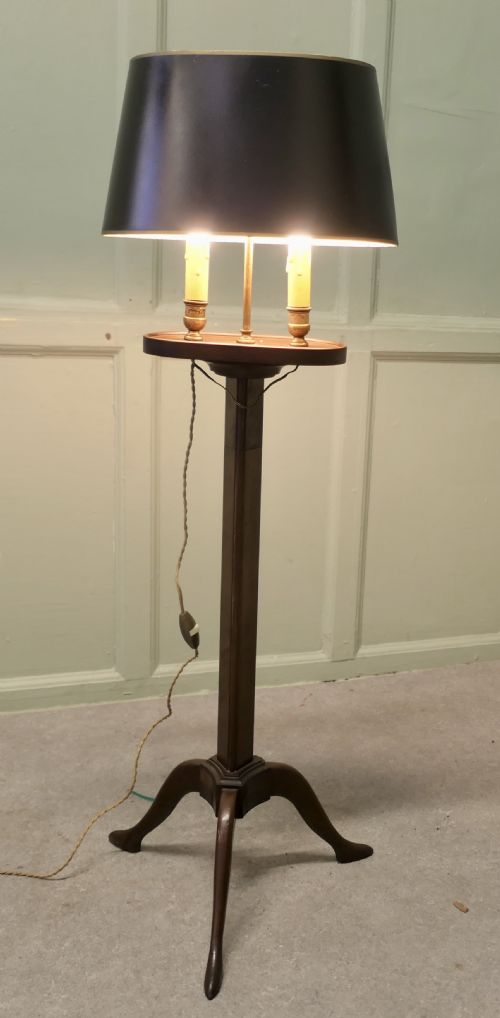
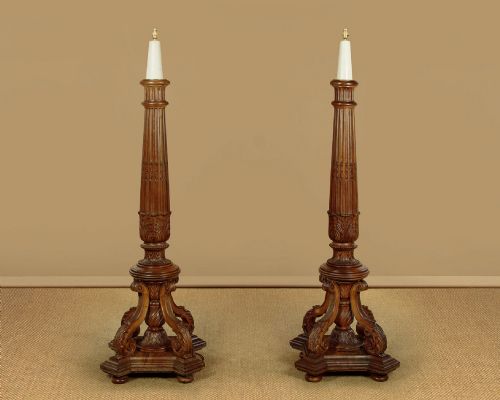
Tall Standard Lamps
Tall standard lamps deliver upright illumination and height through brass, wood, and bronze.
Tall Standard Lamps
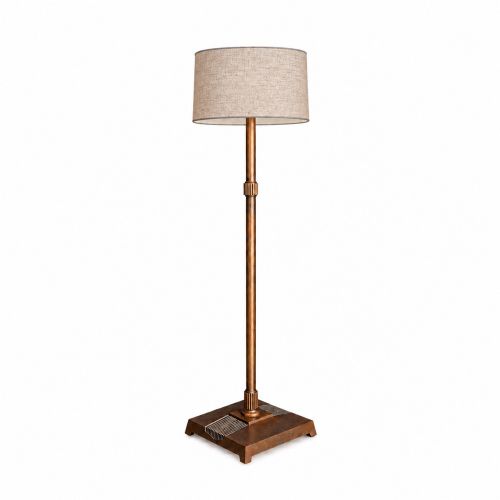
When you search for tall standard lamps, you encounter vertical lighting fixtures designed to stand directly on the floor rather than upon tables or cabinetry. These pieces supply ambient or reading illumination in principal rooms through adjustable stems, fixed columns, and tripod bases.
The selections span the Victorian, Edwardian, and Art Deco eras, alongside specimens from the nineteenth and early twentieth centuries. You find standard lamps, floor lamps, floor candle holders, and lantern stands executed in various regional styles.
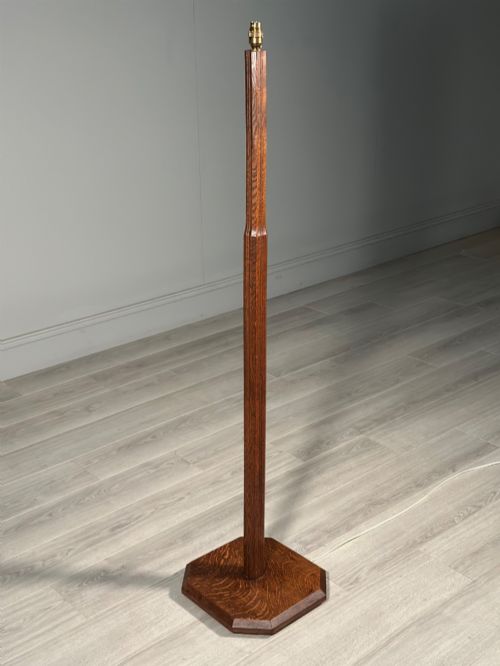
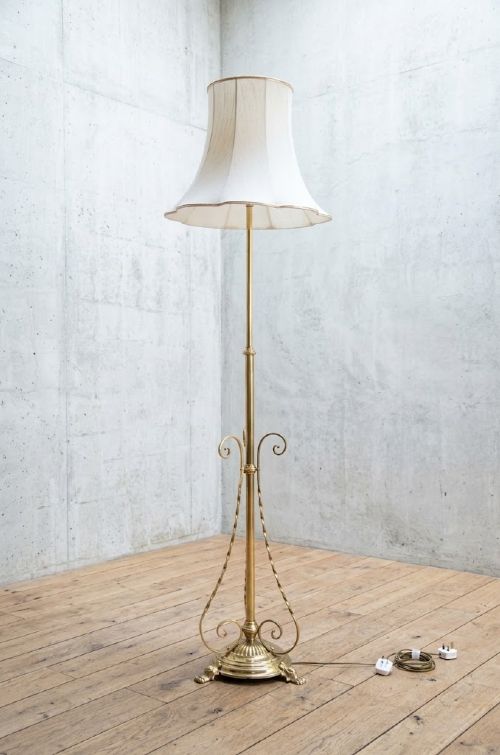
The forms encompass straightforward turned wooden columns, telescopic brass mechanisms, and elaborate Chinoiserie lacquered bodies. Many incorporate functional adjustments for height or dual lighting configurations.
Construction and materials
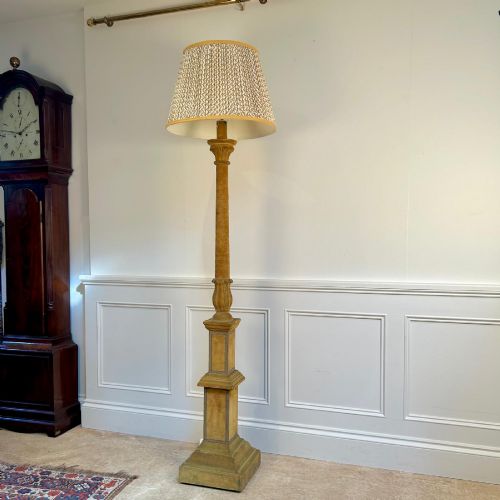
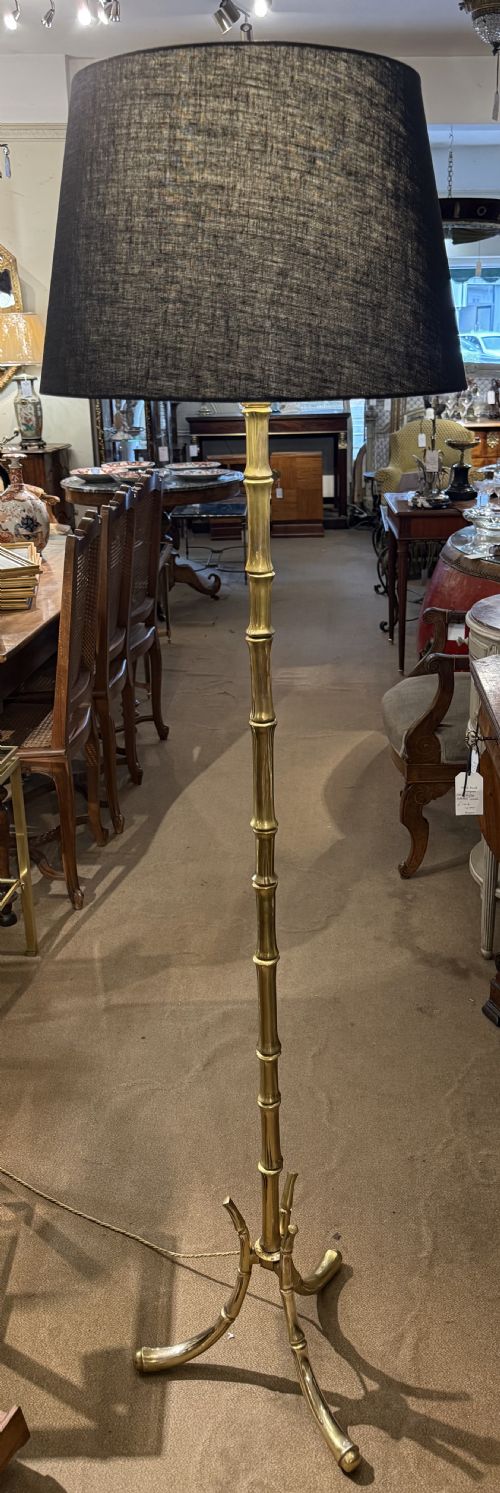
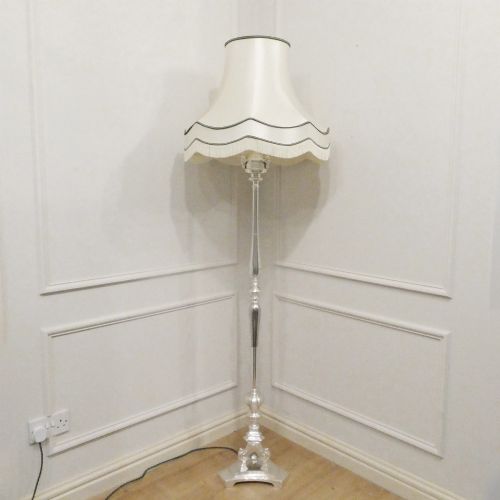
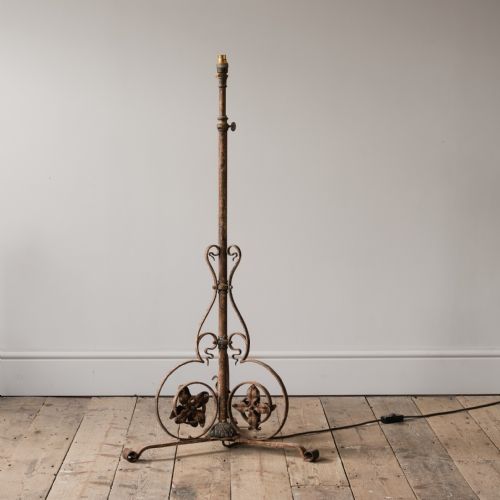
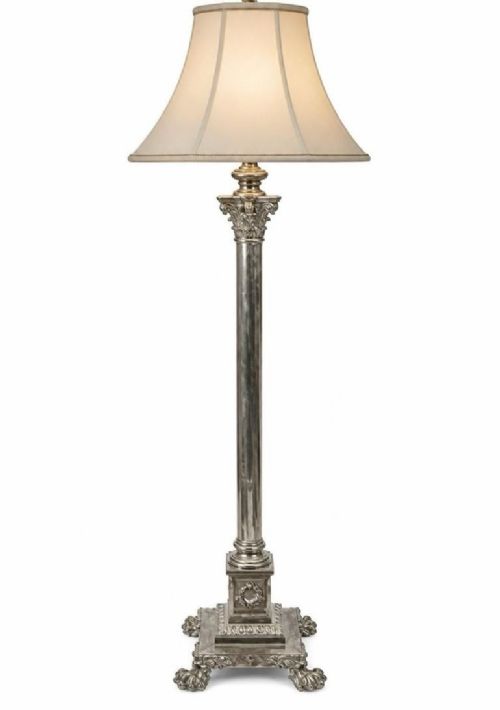
Makers utilised metals such as brass, bronze, silver plating, wrought iron, and cast iron to build durable upright shafts and heavy weighted bases. Brass examples often feature Corinthian capitals or telescopic mechanisms that permit height alteration.
Wooden variants employ mahogany, walnut, and giltwood, frequently shaped by turning or carved with decorative motifs. Certain pieces combine painted finishes, black lacquer, and parcel gilding.
Fabric shades complete the composition, paired with electrical wiring or adapted from earlier candle-burning and gas-lighting formats.
Tall Standard Lamps Retail Price Guide 2026
Typical asking prices for tall standard lamps among the pieces listed under this phrase on Sellingantiques today, from the lower quarter to the upper quarter. They describe what is for sale here now, not the wider market.
Listings feature standard lamps spanning the Victorian and Edwardian periods, alongside Art Deco and Arts and Crafts examples.
Distinctions in quality
Quality rests upon the integrity of the materials and the precision of the mechanics, particularly in adjustable or telescopic designs. Solid brass and substantial hardwoods demonstrate greater stability than lighter, composite constructions.
The refinement of surface decoration distinguishes standard production from exceptional pieces. Hand-carved mahogany details, precise parcel gilding, and specialist lacquer work in Chinoiserie or Italian Florentine styles indicate superior craftsmanship.
Maison Bagues·Harry and Lou Epstein·Hinks
The Tall Standard Lamps Glossary
- Telescopic
- A design incorporating a sliding inner shaft that permits the overall height of the lamp to be adjusted.
- Chinoiserie
- European decorative style reflecting Chinese artistic influences, frequently seen in lacquered and painted finishes.
- Corinthian Column
- An architectural column style featuring an ornate capital decorated with acanthus leaves, often utilised on brass lamp standards.
- Bouillotte
- A candle lamp or standard equipped with an adjustable shade to direct light downward onto a surface.
Tall Standard Lamps: Frequently Asked Questions
Where should I place a standard lamp?
These upright lamps suit corners of reception rooms, beside reading chairs, or flanking sideboards where vertical illumination is required.
Ensure the height matches the scale of the room and the surrounding furniture to maintain visual balance.
How do I operate adjustable standard lamps?
Adjustable models utilise keys, screw pins, or internal telescopic mechanisms to alter the height of the stem safely.
Take care to support the upper section firmly while adjusting the height to prevent sudden drops.
Are these lamps converted from gas?
Certain nineteenth-century and early twentieth-century examples began as gas light candelabras or oil burners before later conversion to electricity.
Such pieces retain original metalwork and valve keys that evidence their initial method of illumination.
How do I identify Edwardian standard lamps?
Edwardian examples often feature slender brass columns, polished mahogany shafts, or decorative Chinoiserie lacquer work dating around nineteen hundred to nineteen ten.
Compare the turned woodwork and base construction against dated stylistic conventions of the period.