
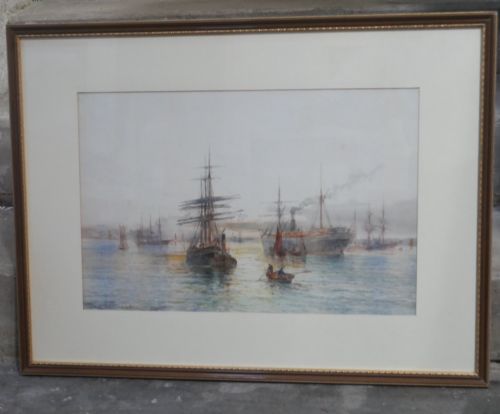


Tall Ship Marine Art
Tall ship marine art captures the drama of historical sailing vessels across canvas and paper through nineteenth and early twentieth century works.
Tall Ship Marine Art
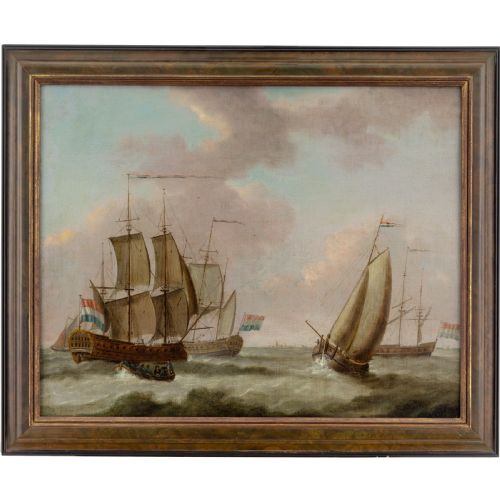
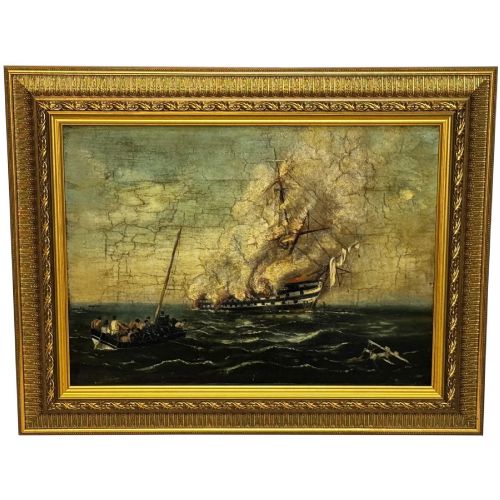
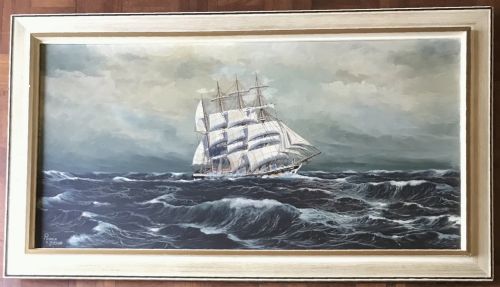
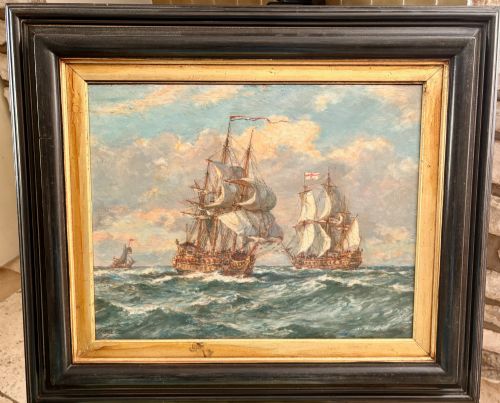
Tall ship marine art encompasses paintings and watercolours depicting large sailing vessels, clippers, and harbour scenes from the nineteenth and early twentieth centuries. These works range from detailed port portraits to stormy seascapes executed in oils or watercolour.
The pieces appearing here lean heavily into Victorian maritime traditions and Edwardian interpretations of historic naval actions. Buyers encounter everything from small oil panels to substantial canvases framed in period giltwood.
Representations span specific vessels like the Cutty Sark alongside anonymous shipping scenes set off British coasts or foreign harbours. The focus remains on the rigging, hulls, and movement of sail against water.
Assessing quality in marine works
Quality rests upon the artist's technical command of maritime architecture and rigging accuracy, distinguishing proficient ship portraits from generic depictions. Skilled hands convey weight, scale, and the precise mechanical interaction between wind, sail, and hull.
The handling of water and sky creates further distinction, where fluid brushwork or layered watercolour washes impart true atmospheric tension. Condition of the original paint layer and the presence of a period frame also influence the overall standing of a piece.
Materials in these listings include oil on canvas, watercolour on paper, wood panels, and giltwood framing.
Bernard Gribble·William Frederick Settle·Dion Pears·John Callow·Frank Wood·Joseph Heard·Henry Scott Tuke
The Tall Ship Marine Art Glossary
- Marine art
- Artwork focusing on ships, harbours, coastal views, and naval engagements. This genre developed significantly during the nineteenth century alongside international trade.
- Barque
- A sailing vessel with three or more masts where the aft mast is rigged fore-and-aft and the others are square-rigged. These steel or wooden hulls feature frequently in later nineteenth century paintings.
- Giltwood
- Wood carved and coated with gold leaf or gold paint. Many traditional frames for these paintings use this finish to enhance the artwork.
- Seascape
- A painting, photograph, or other work of art which depicts the sea. Such pieces form a core subset of marine art.
- Watercolour
- A paint wherein the colour pigments are suspended in a water-soluble vehicle. Artists used this medium extensively for lighter coastal studies and detailed port scenes.
Tall Ship Marine Art: Frequently Asked Questions
What periods do these paintings cover?
The works span from the early nineteenth century through to the Edwardian era and the 1930s. Styles range from Georgian maritime depictions to Victorian marine realism and later twentieth century interpretations.
Most pieces date from the Victorian period, reflecting the height of British maritime dominance and global trade under sail.
How do I care for an oil painting on canvas?
Keep paintings away from direct sunlight and steady humidity levels to prevent cracking in the paint layer. Avoid using water or chemical cleaners on the surface.
Dust the frame and canvas gently with a dry, soft brush when necessary. Professional cleaning should be left to conservators.
What is the difference between an oil and a watercolour?
Oils use pigment suspended in drying oil applied to canvas or wood, offering rich texture and deep colour saturation. Watercolours use water-soluble pigments on paper, presenting a lighter, more transparent finish.
Watercolours require glass protection when framed, whereas oil paintings on canvas remain open to the air.