
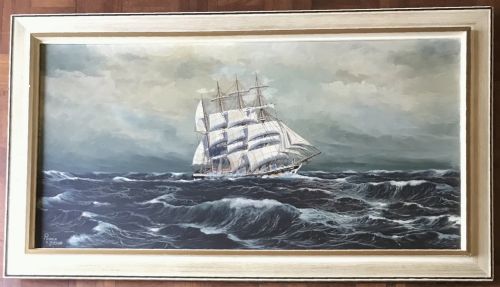
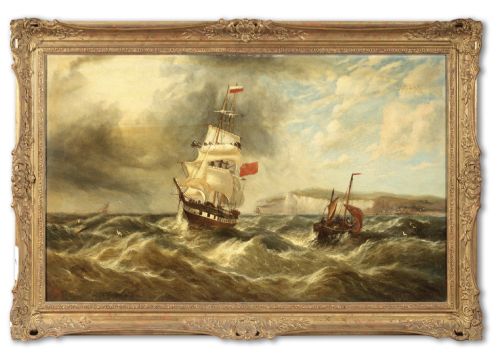
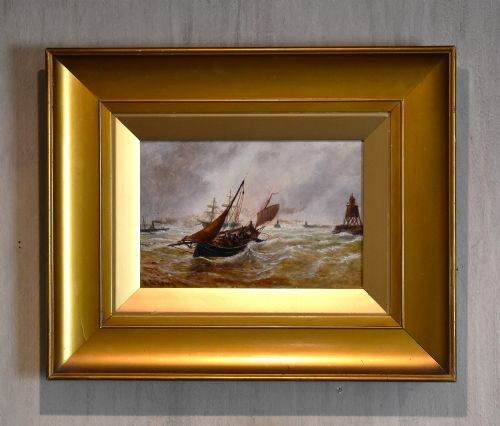


Stormy Sea Seascape Painting
These stormy sea seascape painting examples capture turbulent coastal drama and battling vessels through enduring brushwork.
Stormy Sea Seascape Painting
A stormy sea seascape painting depicts the raw power of the ocean, often featuring ships navigating heavy gales or striking coastal cliffs. These works translate maritime danger onto canvas, paper, or board through dramatic handling of water and sky.
The selection ranges widely across eras, from seventeenth-century Dutch interpretations to nineteenth-century British school compositions and early twentieth-century coastal watercolours. Most examples you encounter stem from the Victorian period, capturing the era's fascination with maritime trade and naval peril.
Smaller cabinet works sit alongside substantial framed oils depicting lighthouses, tall-masted ships, and fishing boats caught in choppy waters. Every piece records a specific moment of atmospheric intensity rather than a calm coastal view.
Assessing quality and execution
Quality rests upon the artist's ability to convey the weight of water, the resistance of timber vessels, and the shifting light of an overcast gale. Superior works demonstrate confident draftsmanship in the rigging of ships and the natural movement of breaking surf, avoiding stiff or static waves.
The handling of atmosphere separates standard topographical records from masterworks that evoke the physical chill and salt spray of the scene. Frame integrity and original mounting further distinguish pieces that retain their historical context.
Even the sturdiest clipper ships recorded in these works seem ready to spring right off the cardboard and soak the drawing room rug.
John Rose Miles·Bonaventura Peeters·Bernard Benedict Hemy·Percy Brooke·William Kay Blacklock·William Boyce·R Thomas·David Horatio Winder·Henry Redmore·William Daniel Penny
The Stormy Sea Seascape Painting Glossary
- Seascape
- A work of art depicting the sea, ships, or coastal views. These subjects gained immense popularity during the nineteenth century.
- Giltwood
- Wood carved and coated with a thin layer of gold leaf or gold paint. Period frames of this type complement maritime oil paintings.
- Marine art
- Artistic representation of maritime subjects, including naval battles, shipping, and coastal storms. It encompasses both oil paintings and works on paper.
- Staithes School
- A group of northern English artists inspired by French Impressionism who painted coastal scenes and fishing communities. Their works often capture atmospheric coastal light and local maritime life.
Stormy Sea Seascape Painting: Frequently Asked Questions
How do I date a stormy sea painting?
Dating relies on stylistic clues, framing methods, and the signatures or documentation accompanying the piece. Nineteenth-century works often employ specific canvas preparations and Victorian framing styles that distinguish them from earlier Dutch Golden Age examples.
Examining the vessel types depicted also helps narrow the timeline, as clipper ships, lighthouses, and steam vessels correspond to distinct eras of maritime history.
Where should I hang a maritime painting?
These works demand spaces with good ambient lighting to properly reveal the dark tones and textural brushwork of rough water. Placing them away from direct sunlight protects the oil paint, watercolour pigments, and vintage frames from fading.
Because of their dramatic subject matter, they often serve as striking focal points in studies, hallways, or living rooms with traditional decor.
What is the difference between oil and watercolour storm scenes?
Oil paintings on canvas or board allow for heavy impasto technique, where thick layers of pigment physically recreate the churning texture of high waves. Watercolour works on paper tend to rely on washes and paper reserve to capture the fleeting light of coastal storms.
Oils generally offer deeper saturation and durability, whereas watercolours present a more delicate, immediate atmospheric impression.
Are these paintings based on real shipwrecks?
Many nineteenth-century maritime paintings record actual coastal perils, treacherous local headlands, or famous vessel types like the Cutty Sark battling gales. Other compositions are artistic interpretations designed to showcase the raw power of nature rather than document a specific disaster.
Inscriptions on the reverse or framing often provide clues if the artist intended to record a specific location or event.