



Tall French Bedside Cabinet
A tall french bedside cabinet offers slender proportions and practical bedside storage rooted in continental tradition.
Tall French Bedside Cabinet
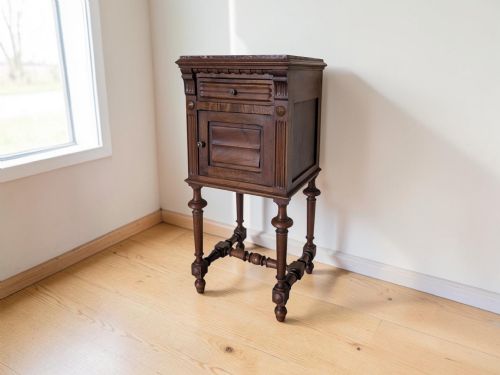
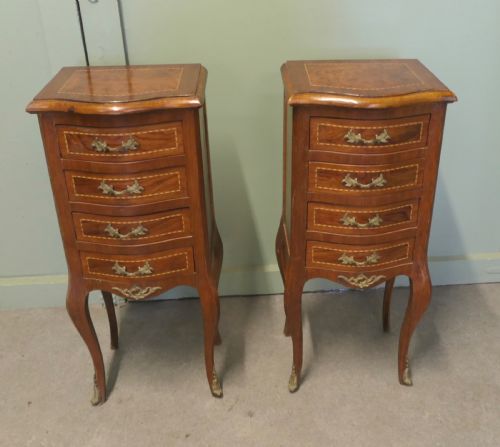
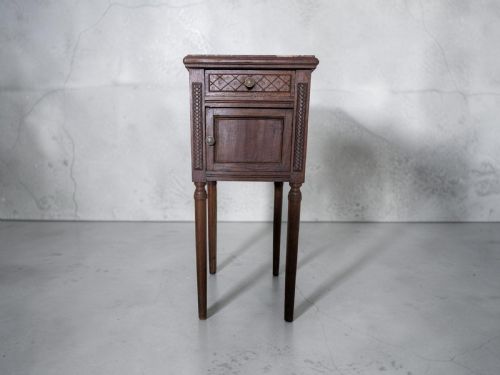
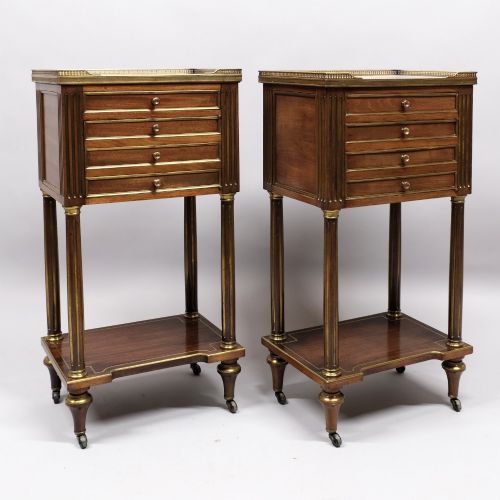
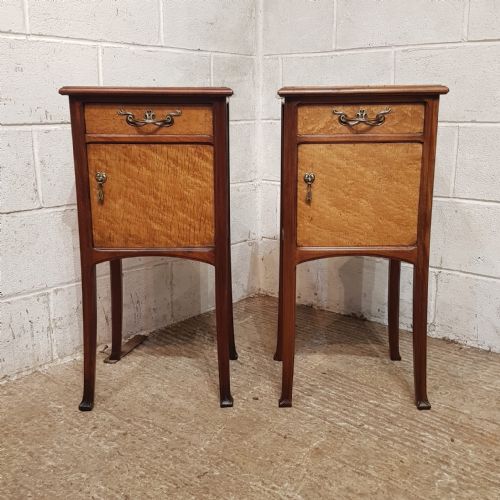
A tall french bedside cabinet provides elevated storage next to a bed, combining deep drawers or cupboards with a narrow footprint. These pieces emerge in styles ranging from nineteenth century designs to the cleaner lines of the 1920s and 1930s.
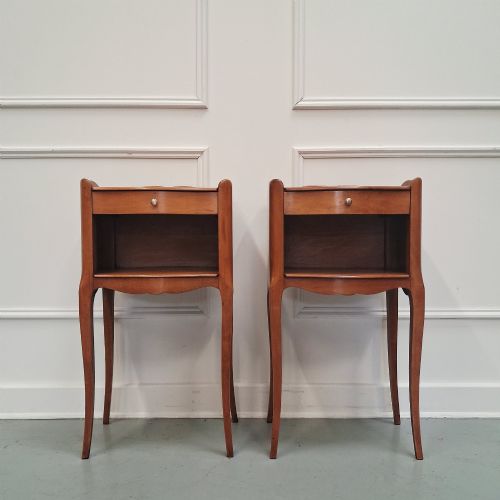
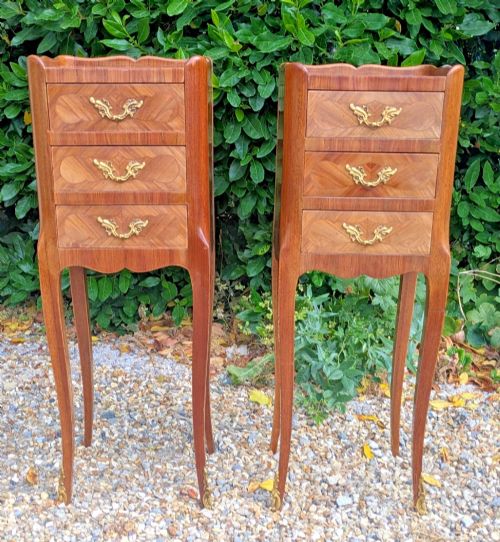
Buyers encounter forms described as bedside tables, side cabinets, and nightstands. Many examples appear in pairs, dressed in French Provincial, Louis XV, or Empire influences.
How they were made
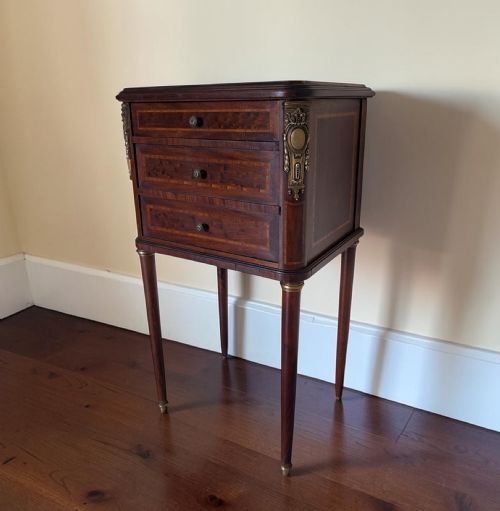
Cabinetmakers constructed these frames using dense timbers like mahogany, walnut, kingwood, and rosewood, frequently applying burr walnut or parquetry veneers to the surfaces. Floral marquetry details add intricate wood patterns across drawer fronts and doors.
Mounts in brass and ormolu accent corners and key escutcheons, while inset marble tops provide durable working surfaces. Tambour fronts and side lockers demonstrate complex joinery suited to narrow spaces.
The available selection spans the nineteenth century up to 1930, utilising walnut, mahogany, kingwood, and marble.
What varies in quality
Quality rests in the precision of the veneer work and the crispness of the floral marquetry. Superior examples show seamless alignment across grain patterns and tightly fitted tambour doors.
The weight and finish of the brass and ormolu mounts dictate the calibre of the piece. Better cabinets utilise solid marble slabs and substantial hardwood carcases rather than lighter secondary woods.
The Tall French Bedside Cabinet Glossary
- Parquetry
- Geometric wood veneer patterns arranged in repetitive motifs. This technique creates patterned surfaces across the top and sides of the cabinet.
- Ormolu
- Gilded bronze mounts applied to furniture corners and handles. It provides ornamental contrast against dark timbers like mahogany and walnut.
- Tambour
- A flexible shutter formed of narrow wooden slats glued to a canvas backing. It slides smoothly within grooved tracks to conceal interior storage.
- Marquetry
- Decorative veneer work forming pictorial designs using various coloured woods. Floral compositions frequently adorn the drawer faces.
- Kingwood
- A dense, heavily figured exotic timber utilised in fine cabinetmaking. Its rich grain appearance defines high status pieces.
Tall French Bedside Cabinet: Frequently Asked Questions
How do I use a tall french bedside cabinet?
These cabinets suit bedrooms where extra height matches tall mattresses or raised bed frames. The enclosed cupboards and multiple drawers hide personal items while keeping lamps and books within reach on top.
Their narrow footprints also allow them to function as side tables or lamp stands in hallways and sitting rooms. The marble tops provide a sturdy surface for water jugs or small decorative objects.
What periods do these cabinets come from?
The pieces span from the nineteenth century through the early decades of the twentieth century. Examples include nineteenth century Empire designs alongside 1920 and 1930 productions.
Stylistic influences reach back further into French Provincial and Louis XV aesthetics. Makers adapted these historical forms to suit the domestic requirements of later periods.
Are these cabinets usually found in pairs?
Many listings feature matched pairs designed to sit on either side of a bed. Symmetrical pairs maintain balanced proportions in larger bedrooms.
Single cabinets also appear frequently for individual bedside use or alternative placement in smaller rooms. Matching an orphan piece requires careful attention to wood tone and height.
How do I identify different wood types?
Mahogany presents a straight, reddish brown grain that darkens gracefully over time. Walnut displays a rich brown tone often enhanced by swirling burr patterns.
Kingwood and rosewood exhibit distinct contrasting stripes and deep figures. Parquetry and marquetry combine these various timbers to create decorative surface patterns.