

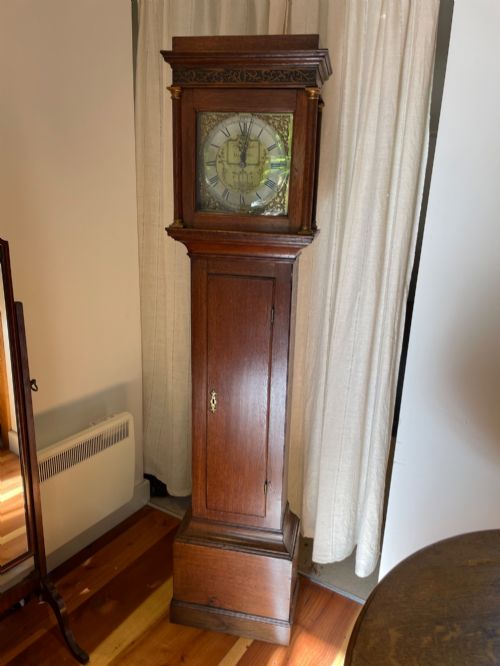
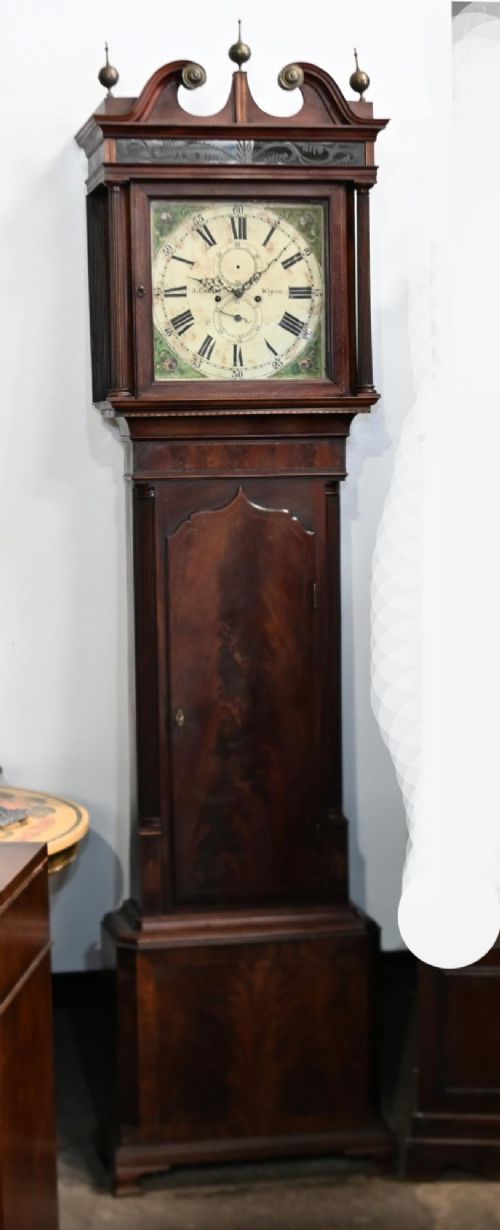
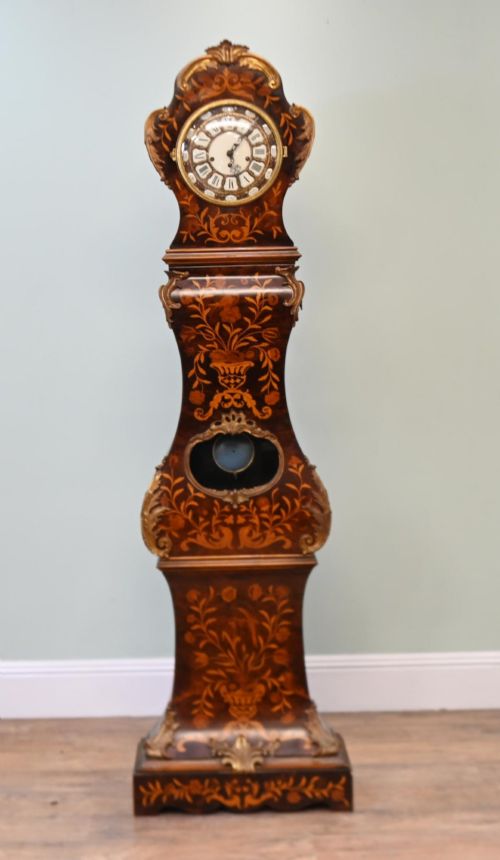
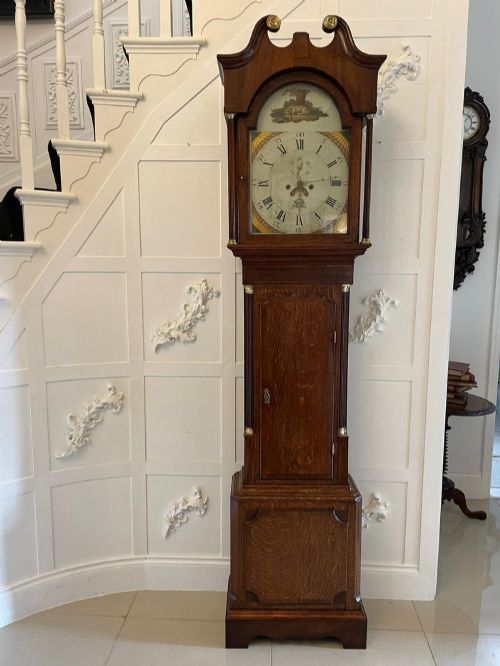
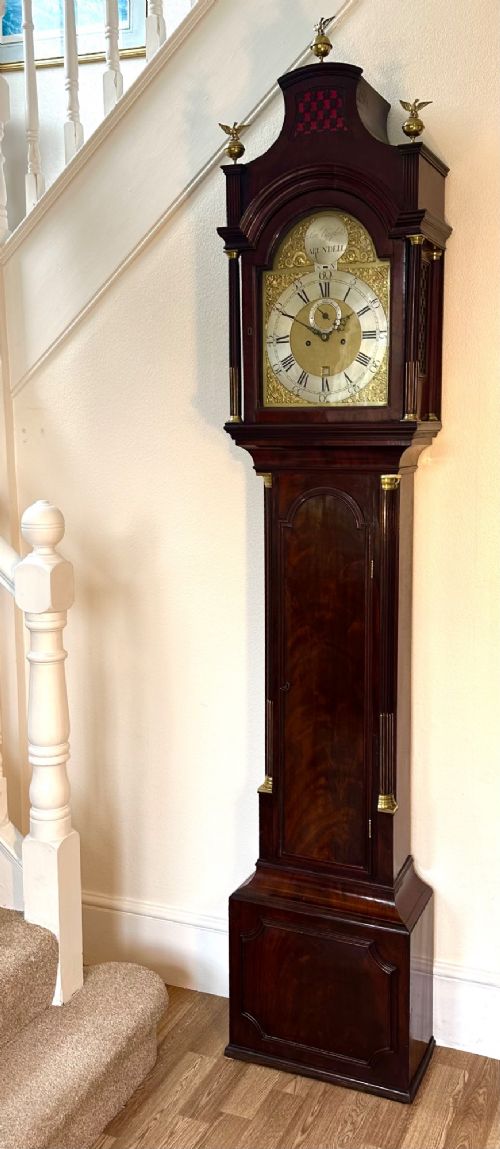
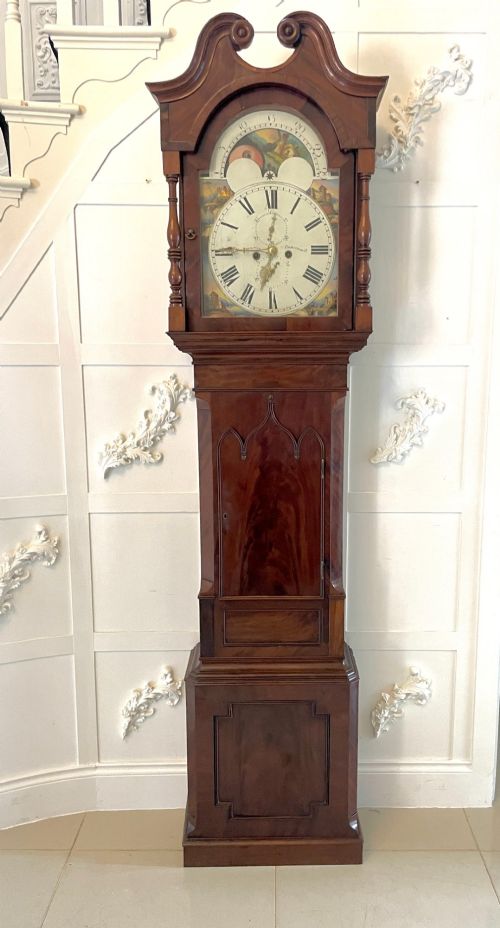
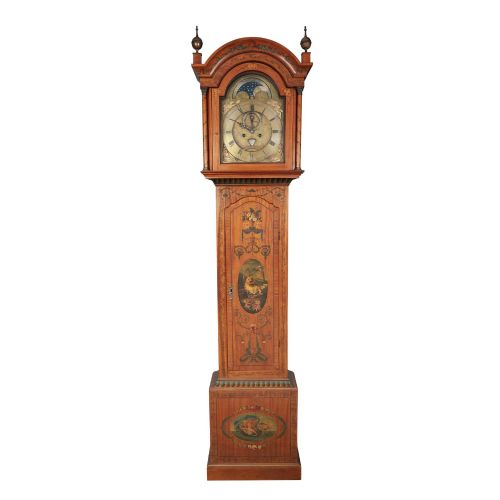
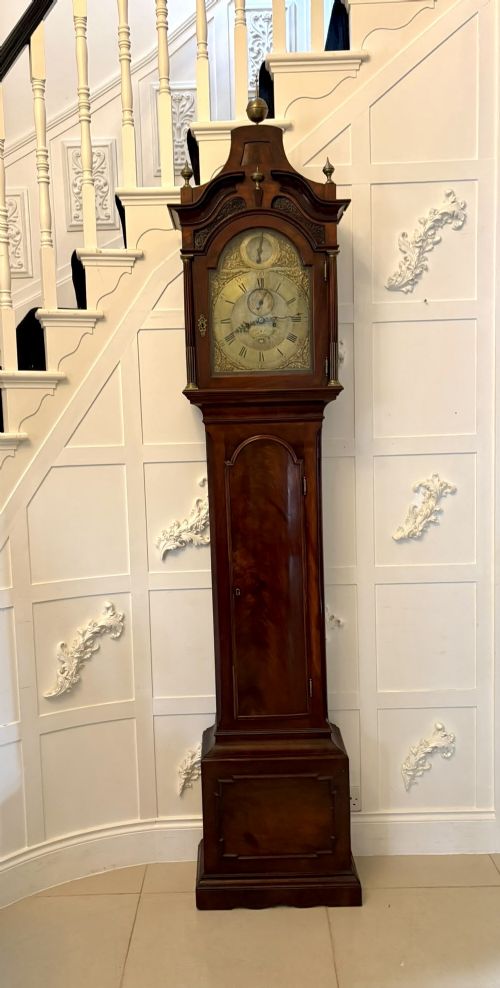
Tall Floor Clock
A tall floor clock anchors a room with mechanical rhythm, marking time in timber cases from the Georgian and Victorian eras.
Tall Floor Clock
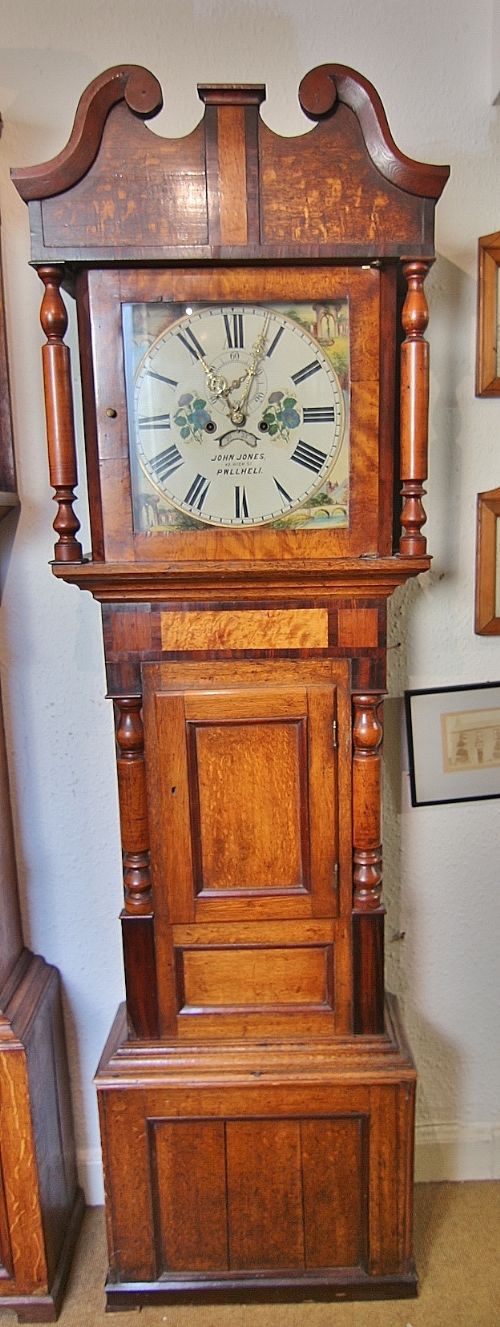
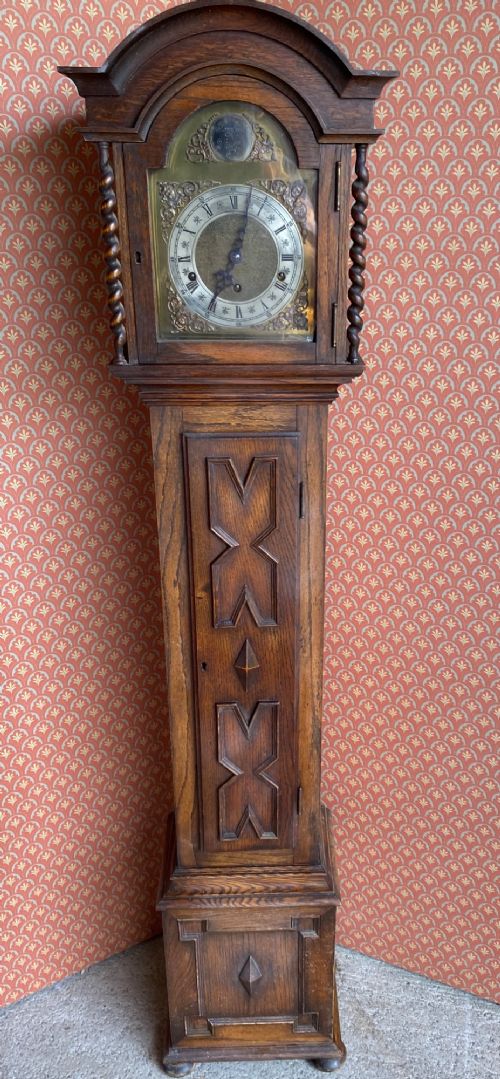
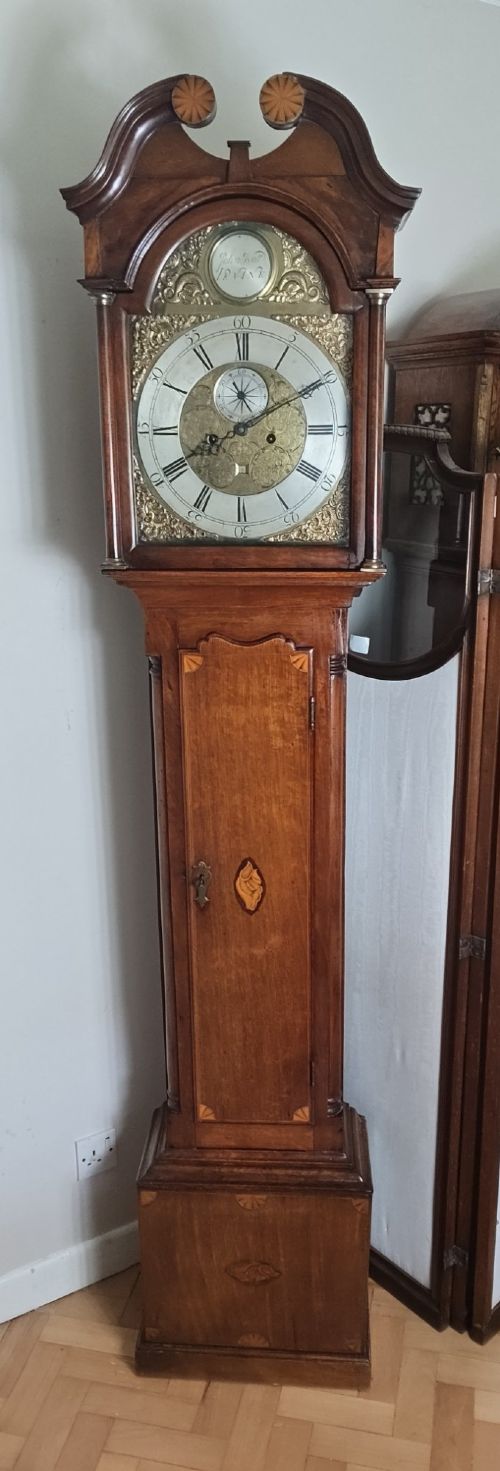
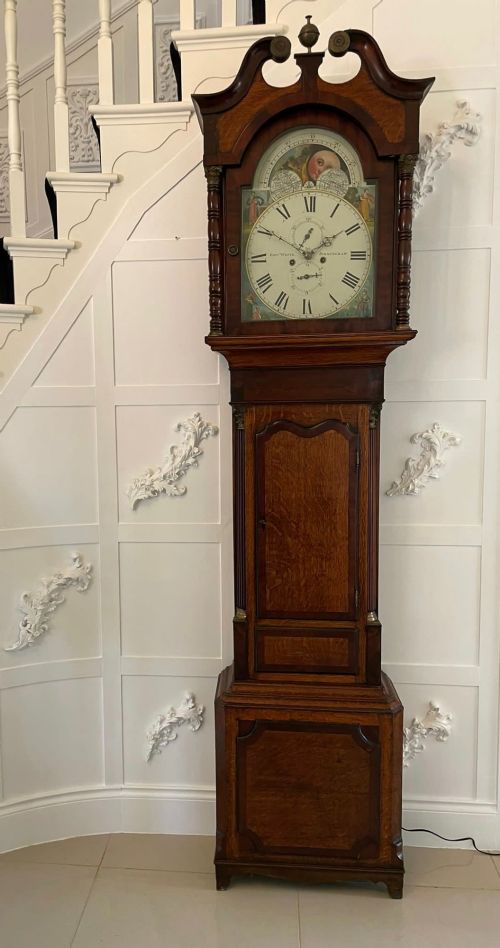
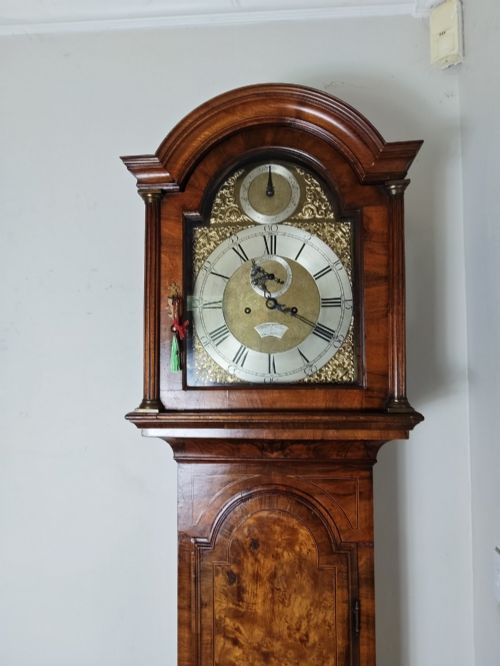
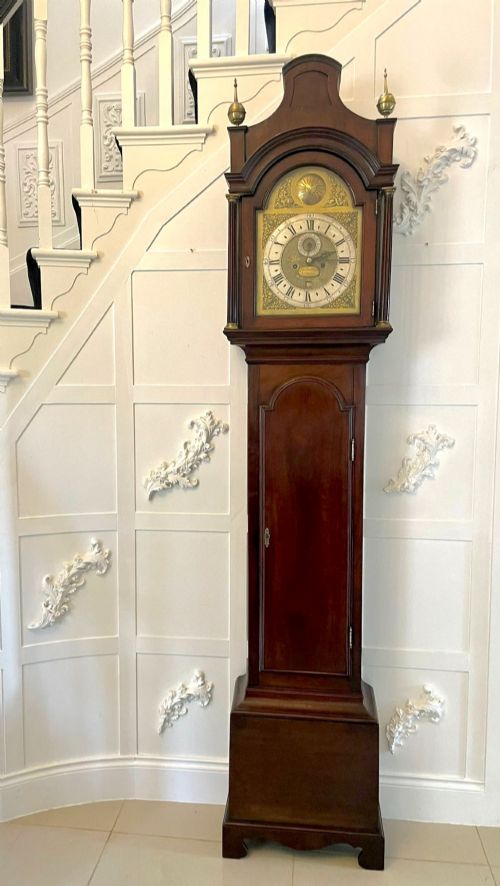
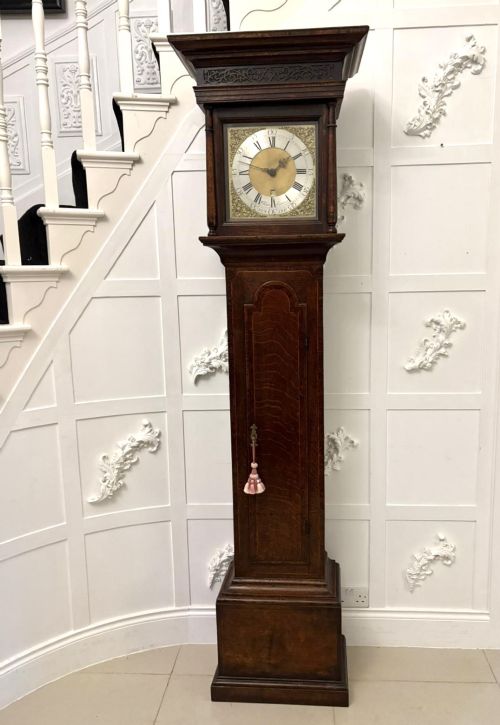
A tall floor clock encompasses longcase clocks, grandfather clocks, and smaller grandmother clocks encountered across this page. These vertical timepieces trace their lineage primarily through the Georgian, 18th Century, and 19th Century periods, stretching into Edwardian and 1930 examples.
The dominant forms on this page take the guise of traditional longcases housing complex movements, alongside diminutive variants scaled for smaller rooms. Regional variations from Scotland, Wales, and English towns appear alongside London creations.
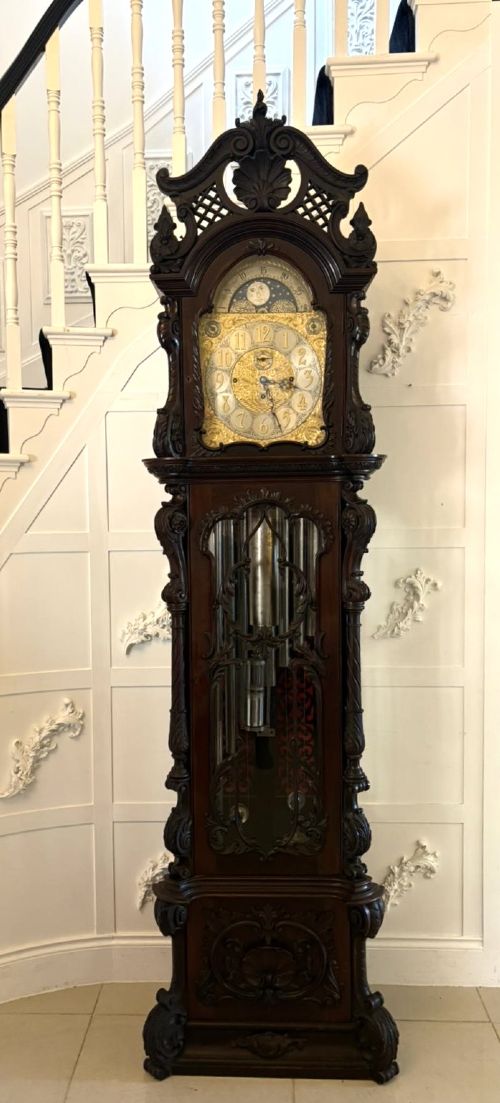
Makers housed these movements in tall wooden vertical cases, creating an architectural presence that dominated domestic interiors for centuries. Cabinets span straightforward provincial builds to elaborate exhibition pieces fitted with nine-tube chimes or moonphase dials.
Materials and construction
Cabinet makers utilised dense timber stocks, predominantly mahogany, oak, and walnut, frequently selecting figured burr veneers or inlay to enrich the primary surfaces. Glass panels protect the dial face while permitting a view of the swinging pendulum within the trunk.
Interior mechanical assemblies combine brass gears, steel arbours, and enamel or brass dial faces, often inscribed with the maker's name and location. Movements range from thirty-hour weight-driven trains to eight-day chiming mechanisms and domestic regulators.
Tall Floor Clock Retail Price Guide 2026
Typical asking prices for tall floor clock among the pieces listed under this phrase on Sellingantiques today, from the lower quarter to the upper quarter. They describe what is for sale here now, not the wider market.
One cheerful variation paints a duck egg blue finish across a small Georgian oak case, proving ancestors also favoured colour.
Distinctions in standard
Quality rests in the crispness of the cabinet joinery, the selection of timber grain, and the sophistication of the dial work. Pierced brass spandrels, finely engraved silvered chapter rings, and painted moon rollers separate provincial utility pieces from metropolitan workshop output.
The complexity and finish of the internal movement dictate the tier of the piece, from standard rack-striking trains to multi-train chiming cylinders and subsidiary seconds dials.
Walker of Nantwich·John Taylor London·Edward White Birmingham·Charles Shuckburgh London·Hendrie Ogg Dunfermline·Gordon of Aberdeen·Gillett and Johnston of Croydon·Lee of Great Marlow·Jn Smith Macclesfield·Tait Peebles·James Field of Hempstead·Richard Corless of Stockport·James McCabe·Handley and Moore London·Samuel Kellett of Bredbury
The Tall Floor Clock Glossary
- Longcase clock
- A tall pendulum clock enclosed in a wooden case standing directly on the floor. These pieces became popular during the late 17th century and continued through the Georgian and Victorian eras.
- Grandmother clock
- A scaled-down version of the traditional longcase clock, typically produced during the 20th century. These smaller floor clocks suit restricted ceiling heights and compact rooms.
- Moonphase
- A dial mechanism displaying the lunar phases through a rotating disc painted with two moons. This complication tracked tides and lunar cycles alongside standard hours.
- Spandrel
- The triangular corner ornament set between a square clock dial and its circular chapter ring. Cast brass spandrels evolved in style from floral scrolls to rococo motifs.
- Regulator
- A high-precision clock designed to maintain exceptional timekeeping accuracy. These movements typically feature deadbeat escapements and heavy gridiron pendulums.
Tall Floor Clock: Frequently Asked Questions
How do I wind a tall floor clock?
Most eight-day movements require the weights to be drawn up using a crank key inserted into winding holes on the dial face once a week. Thirty-hour variants generally require pulling the chains directly.
Care must be taken not to overwind the mechanism, stopping firmly when resistance meets the hand.
Where should I place a floor clock?
Select an interior wall away from direct sunlight, central heating vents, and exterior doors where temperature fluctuations might warp the wooden case. A stable, level floor ensures the pendulum swings evenly without catching.
Fixing the upper trunk to the wall with a discreet bracket prevents accidental tipping in busy hallways.
How do I tell an 18th-century clock from a 19th-century one?
Eighteenth-century examples often feature square brass dials with cast spandrels and simpler proportioned oak or mahogany hoods. Nineteenth-century variants frequently introduce arched painted dials, mahogany veneers, and dampening or chiming complications.
Secondary woods inside the case and the style of the cabinet mouldings offer further clues to the decade of manufacture.
Why does my clock go out of beat?
Floorboards settle over time, altering the plumb of the heavy wooden case and causing the escapement anchor to strike the escape wheel unevenly. Adjusting the crutch wire behind the dial restores the balanced tick.
Moving the entire clock to a new position also requires resetting the beat and checking the pendulum suspension spring.