






Tall Display Plinth
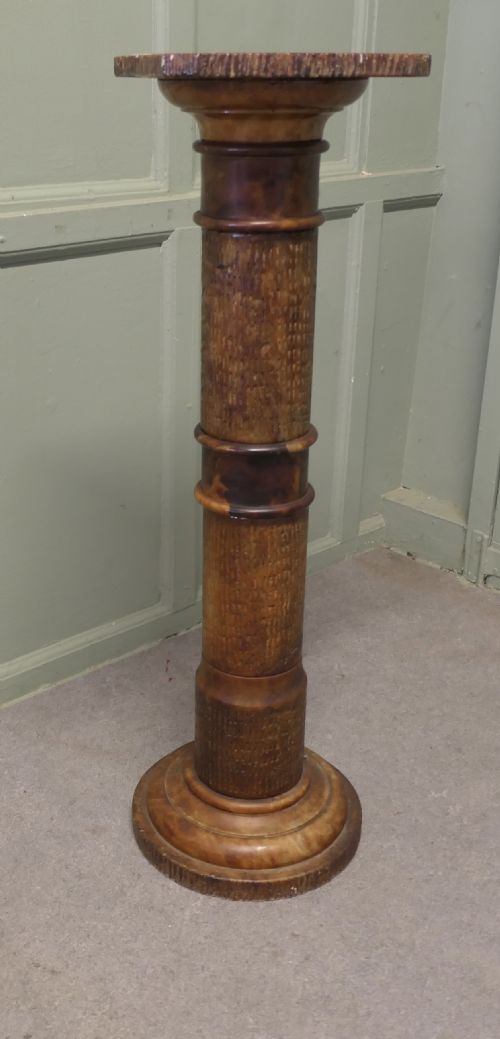
A tall display plinth raises a sculpture or urn above the floor, bringing a piece of classical architecture into domestic rooms.
Tall Display Plinth
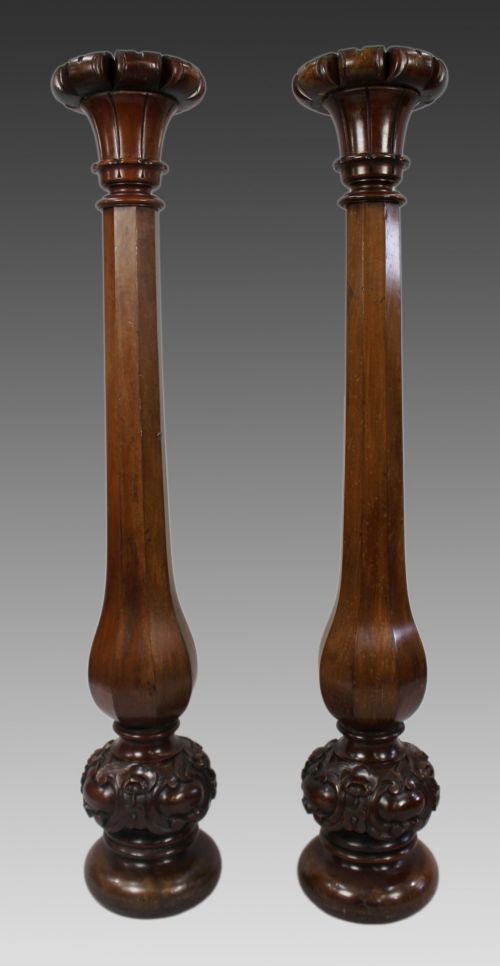
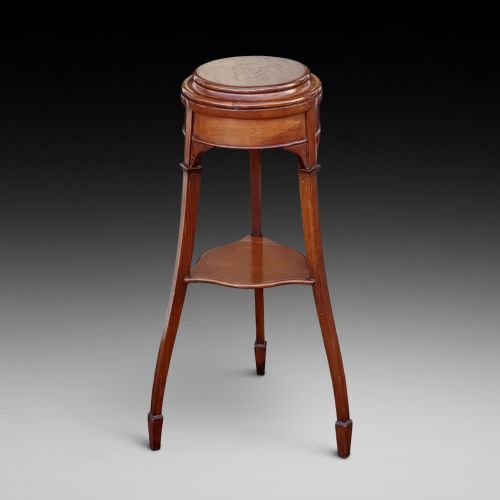
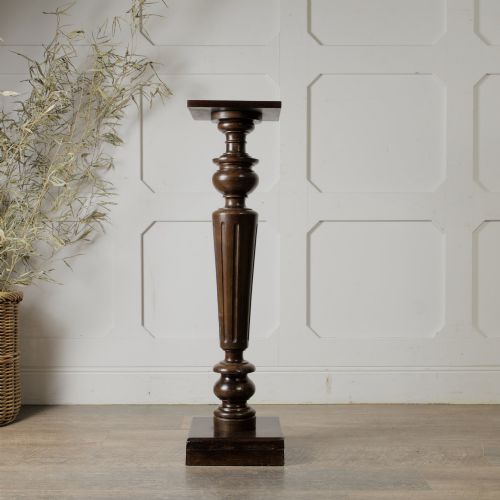
When you search for a tall display plinth, you encounter architectural columns, pedestals, and torchere stands designed to elevate decorative objects within a room. These pieces originate from the nineteenth century through to the early twentieth century, spanning Victorian, Edwardian, and various revival styles including Neoclassical and French Renaissance.
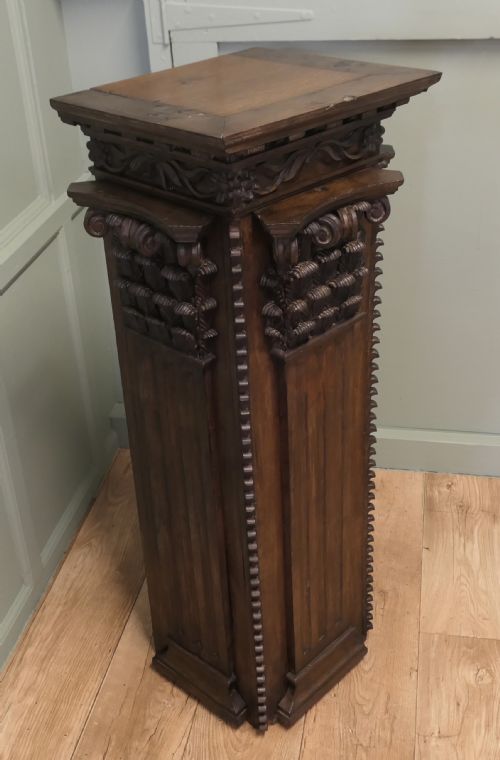
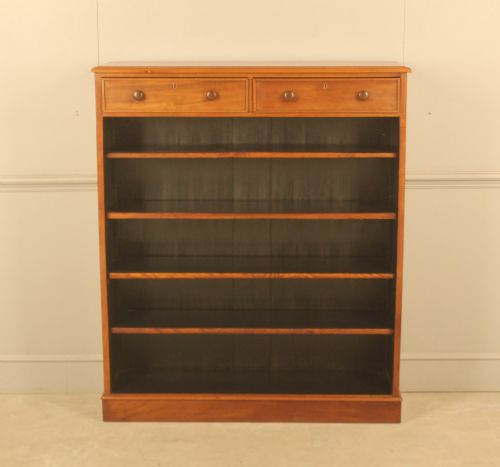
The selection here encompasses solid mahogany columns, honey-coloured and Arabescato marble shafts, painted and parcel-gilt timber, and rustic oak stands. Alongside traditional pedestals, you find tall open bookcases and faux marble painted columns serving the same vertical display function.
Most examples date from the nineteenth century and the early decades of the twentieth century, constructed as single columns, pairs, or cabinets with classical proportions. They function to display art, plants, or lighting while introducing distinct period character to an interior space.
How they were made
Cabinetmakers and stone masons utilised dense hardwoods such as mahogany and oak alongside natural stones including marble and onyx to build weight and stability into each tall display plinth. Wood sections were turned on lathes or hand-carved with classical motifs, while marble and stone columns required precise cutting and polishing to reveal natural veining.
Surface finishes involved traditional polishing, ebonising, staining, or applying paint and parcel-gilt details over timber and plaster bases. These techniques created either the rich grain of solid mahogany or the convincing appearance of classical stone through faux marble painting.
Tall Display Plinth Retail Price Guide 2026
Typical asking prices for tall display plinth among the pieces listed under this phrase on Sellingantiques today, from the lower quarter to the upper quarter. They describe what is for sale here now, not the wider market.
Listings feature nineteen-century and early twentieth-century examples in mahogany, marble, painted wood, and oak.
What varies in quality
The distinction between standard examples and the finest pieces lies in the choice of materials and the depth of craftsmanship. Solid mahogany, heavy statuary marble, and genuine onyx command greater presence than painted plaster or softer secondary timbers.
Execution of detail separates ordinary production from superior work. Crisp hand-carving on wood capitals and bases, balanced proportions in turned columns, and well-matched marble veining indicate skilled workmanship from nineteenth-century workshops.
The Tall Display Plinth Glossary
- Neoclassical
- A style drawing on classical Greek and Roman antiquity, frequently seen in the clean lines and formal proportions of columns and pedestals from the nineteenth century.
- Torchere
- A tall stand designed specifically to hold a light or a decorative urn, often featuring slender proportions.
- Parcel Gilt
- A surface treatment where parts of a wooden or plaster object are selectively covered in thin gold leaf to highlight carved details.
- Capital
- The uppermost member of a column or pedestal, sitting between the shaft and the load above, frequently carved with classical acanthus leaves or scrolls.
- Ebonised
- Wood treated with a chemical stain or finish to imitate expensive ebony, popular for nineteenth-century display pieces.
Tall Display Plinth: Frequently Asked Questions
What fits on a tall display plinth?
These vertical stands suit heavy bronze sculptures, ceramic urns, glass domes, and large table lamps.
The top surface area dictates the base dimension of the object you place upon it, while the solid construction of marble or mahogany supports substantial weight safely.
How do I choose between wood and marble?
Mahogany and oak bring warmth and visible wood grain to domestic interiors, whereas marble and onyx offer cool surfaces and striking natural veining.
Consider the surrounding furniture and the weight of the object you intend to display when selecting your material.
Are these pedestals sold as pairs?
Many nineteenth-century architectural columns and stands were produced as matching pairs to frame doorways, fireplaces, or focal points in a room.
Single pedestals appear frequently as standalone accent pieces in corners or hallways.
How do I date a plinth?
Dating relies on identifying the timber species, the turning techniques used on the column shaft, and stylistic cues from periods like the Victorian era or Edwardian epoch.
Revival styles such as Neoclassical or Jacobean often borrow historical motifs while retaining nineteenth or early twentieth-century construction methods.