


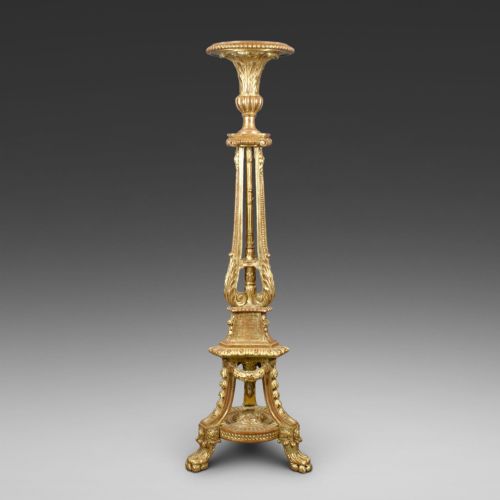


Tall Decorative Plant Pedestals
Tall decorative plant pedestals elevate flora and sculpture, bringing classical proportion and architectural height to any room.
Tall Decorative Plant Pedestals
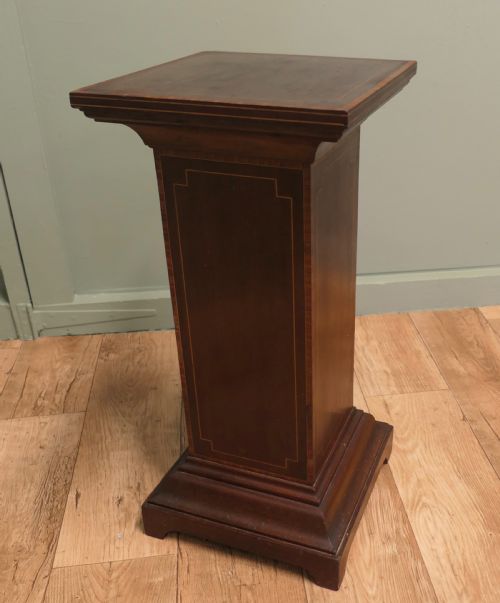
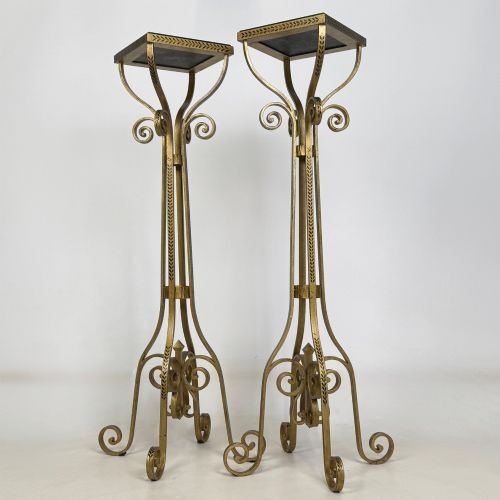
Tall decorative plant pedestals serve to elevate greenery, urns, and sculptural forms within an interior space. When examining tall decorative plant pedestals on this page, a buyer encounters forms that range from slender torcheres to sturdy columns and coopered planters.
The selection encompasses periods stretching from the Regency era through to the 1930s. Pieces appear in various stylistic interpretations including Neoclassical, Art Nouveau, and Art Deco.
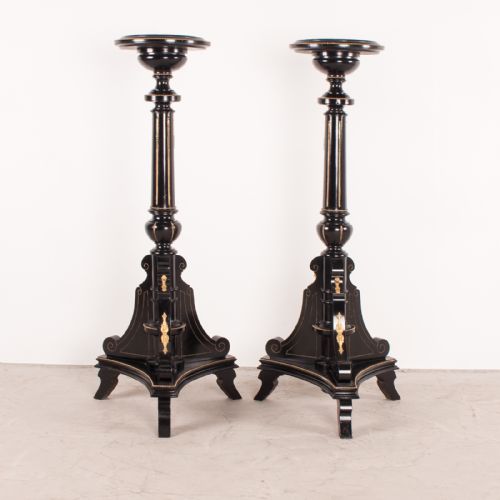
Makers utilised diverse construction formats, from pairs of ebonised torchieres to single walnut stands. The forms function equally well as plant stands, lamp tables, or independent decorative columns.
How they were made
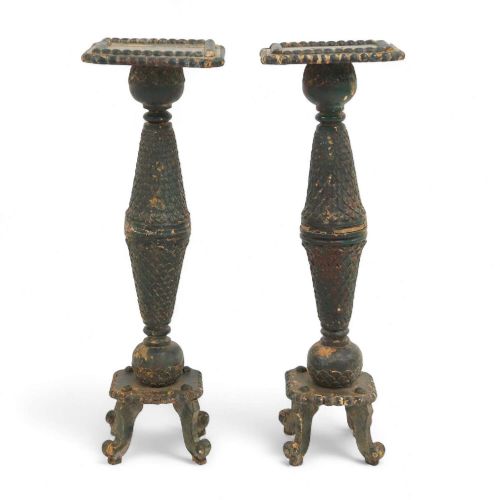
Makers fashioned these pieces from solid hardwoods such as oak and walnut, alongside ebonised wood and carved gilt wood. Surfaces often received finishes of gold leaf, gesso, or original green paint.
Many examples incorporate contrasting materials, pairing marble tops with brass, cast brass, or gilded iron structures. Coopered construction appears in specific planter forms, utilising wooden staves bound together.
Two blackamoor figures stand ready from the nineteenth century, holding their ground among the wooden columns and marble tops.
What varies in quality
The standard of carving and surface finish determines the standing of an individual piece. Crisply carved wooden details and well-preserved original paint or gilding distinguish finer examples.
The integration of materials such as inset marble tops and cast brass elements affects the overall weight and structural harmony of the pedestal. Coherence between the chosen style, whether Neoclassical or Art Deco, and the execution of the form defines the upper tier.
The Tall Decorative Plant Pedestals Glossary
- Torchere
- A tall stand or ornamental candlestick designed to hold a light source or decorative object. These slender supports frequently feature carved wood or gilded surfaces.
- Jardiniere
- An ornamental pot or stand specifically made for holding plants or flowers. Coopered oak versions represent a common variation of this form.
- Ebonised
- Wood treated with a finish to imitate ebony. This dark surface treatment appears frequently on nineteenth-century pieces.
- Gesso
- A plaster-like mixture applied to wood surfaces as a base for painting or gilding. It allows for intricate relief decoration before the application of gold leaf.
- Neoclassical
- A style drawing inspiration from the classical art and architecture of ancient Greece and Rome. Pieces in this manner often display symmetrical geometry and formal ornament.
Tall Decorative Plant Pedestals: Frequently Asked Questions
What were tall decorative plant pedestals used for?
These pieces were designed to elevate potted plants, jardiniere stands, and ornamental urns above floor level. By raising greenery and sculptures, interior spaces gained vertical interest and focal points.
They also functioned as torchieres to hold lighting or as display surfaces for decorative objects in reception rooms.
How do I identify the period of a pedestal?
Dating relies on observing the stylistic markers and materials characteristic of specific eras, such as Regency giltwood or Art Deco walnut. Structural methods and surface finishes like original green paint or ebonisation provide further chronological clues.
Comparing the decorative vocabulary against known design movements helps narrow down the decade of manufacture.
Can these stands support heavy plants?
The weight capacity depends on the materials and construction, with solid oak and marble-topped variants offering sturdy support. Slender torcheres and carved gilt wood stands are generally suited for lighter decorative arrangements.
Inspecting the base construction and leg assembly reveals whether a piece is suited for heavier pots or strictly ornamental display.
How do I place them in a modern room?
These pedestals work effectively in corners, empty wall spaces, or framing doorways to introduce architectural height. Pairing them with trailing plants or simple sculptural objects balances the vertical form within the living space.
Matching the wood tone or metallic finish, such as brass or gold leaf, with existing interior elements creates a cohesive arrangement.