


Vintage Brass Torchere
These vintage brass torchere pieces bring vertical elegance and period illumination to a room, offering both decorative presence and functional lighting.
Vintage Brass Torchere
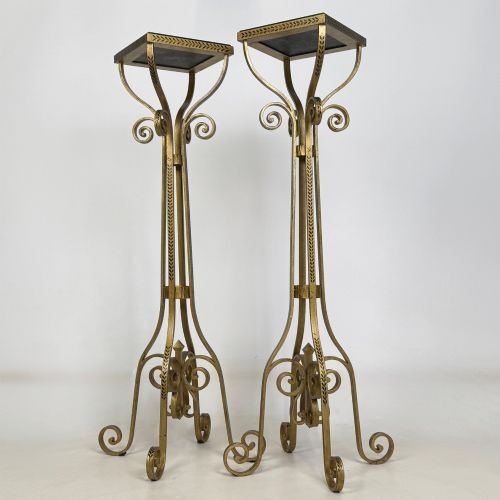
When you search for a vintage brass torchere, you are looking at tall stands, wall lights, and floor lamps designed to elevate candles, bulbs, or plants. The selections here span Victorian, Edwardian, and 1930s periods, incorporating brass alongside mahogany, marble, glass, and ormolu.
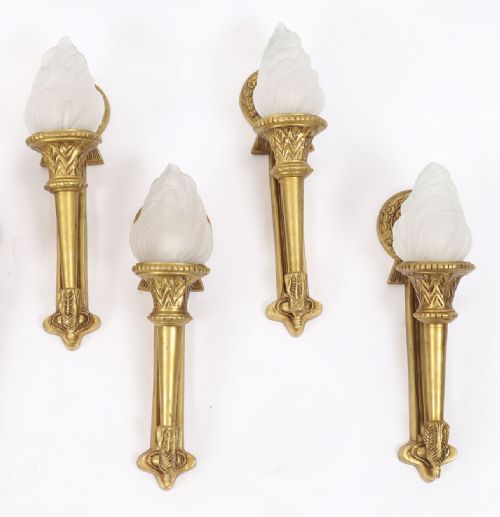
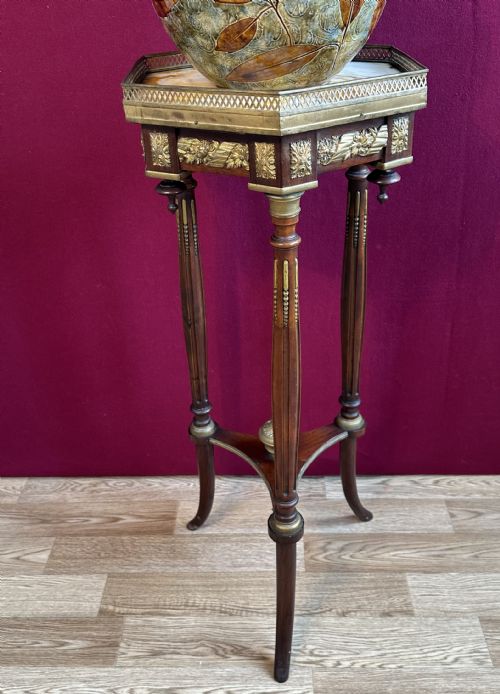
The versions you are most likely to meet on this page include tall floor-standing torchere stands and standard uplighters, as well as paired wall lights and plant stands. Styles lean towards Neo-Classical, Art Nouveau, Arts and Crafts, and Louis XVI Revival.
Origin and form vary across the inventory, mixing floor lamps with wall sconces and occasional plant stands. Each piece utilises brass as a primary or supporting metal, often paired with frosted glass or gilded iron.
How they were made
Makers built these pieces using brass, bronze, and ormolu, frequently combining metalwork with timber such as mahogany or hardwood. Structural stability required weighted bases or sturdy wooden shafts to support the height.
Decorative detailing relies on casting, gilding, and turning, with some pieces incorporating marble tops or frosted glass shades. Methods draw on Neo-Classical and Arts and Crafts traditions, uniting functional engineering with ornamental flourish.
Carriage style wall lights remind us that even domestic illumination once borrowed its rugged engineering from the horse-drawn road.
What varies in quality
Quality separates simple cast components from finely chased ormolu and detailed mountings. The crispness of the Neo-Classical or Art Nouveau ornament dictates the refinement of the piece.
Materials also divide the range, distinguishing solid brass and marble combinations from simpler hardwood and mixed metal constructions. Weight, proportion, and the integrity of the original glass elements determine the standing of each example.
The Vintage Brass Torchere Glossary
- Torchere
- A tall ornamental stand intended for a lamp, candle, or plant. Originating in the seventeenth century, these pieces evolved from lighting supports into versatile display furniture.
- Ormolu
- Gilded bronze or brass applied to furniture and lighting fixtures. This technique produces a rich metallic lustre associated with revivalist decorative arts.
- Uplighter
- A lamp designed to cast light upwards towards the ceiling. These fixtures became popular in the twentieth century for ambient room illumination.
- Neo-Classical
- A style reviving classical Greek and Roman motifs. It appears frequently in torchere design through symmetrical lines and classical ornamentation.
- Arts and Crafts
- A design movement prioritising traditional craftsmanship and honest materials. Pieces from this style often feature robust construction and simplified forms.
Vintage Brass Torchere: Frequently Asked Questions
What is a torchere stand used for?
These tall stands were traditionally designed to hold lighting fixtures, candles, or decorative objects above eye level. Today they function effectively as floor lamps or elevated display pedestals in living spaces.
Their vertical profile makes them useful for illuminating dark corners without taking up substantial floor space. They serve equally well supporting architectural plants or sculptural items.
How do I date a brass torchere?
Dating relies on stylistic clues, manufacturing techniques, and the associated materials found in the piece. Victorian examples often display heavier, ornate casting, while Edwardian and later pieces lean towards refined revival styles.
Examining the fixings, wiring channels if applicable, and secondary woods like mahogany helps narrow the period of manufacture. Comparing the decorative motifs against documented Neo-Classical or Arts and Crafts patterns provides further context.
Where should I place a wall sconce torchere?
Wall-mounted versions suit hallways, flanking fireplaces, or framing architectural doorways where floor space is limited. They project light outward and upward to create ambient illumination.
Matching pairs work well to create symmetry on either side of a mirror or large piece of furniture. Proper placement highlights the metalwork and glass details effectively.
How do I clean antique brass and ormolu?
Careful dusting with a soft, dry cloth preserves the aged patina on vintage brass surfaces. Avoid harsh chemical cleaners that strip the historical finish or damage adjacent marble and wood.
If polishing is necessary, use a mild, non-abrasive metal cleaner approved for antiques. Take care to keep cleaning agents away from fabric cords or delicate glass shades.