



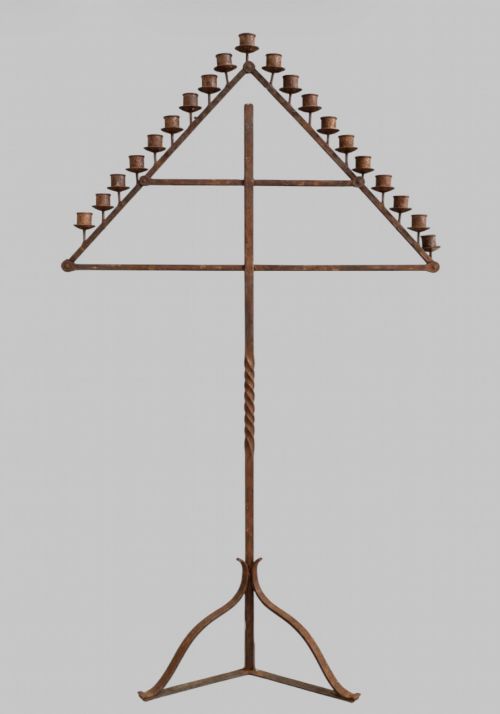


Tall Church Candlestick
A tall church candlestick brings vertical presence and architectural weight to a room, drawing the eye upward with historic ecclesiastical character.
Tall Church Candlestick
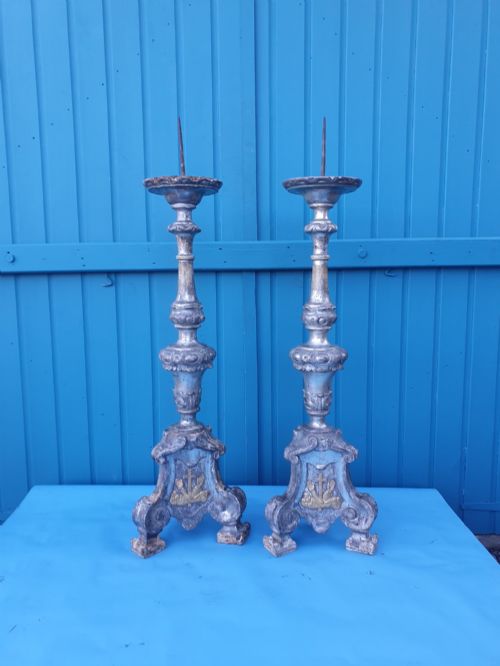
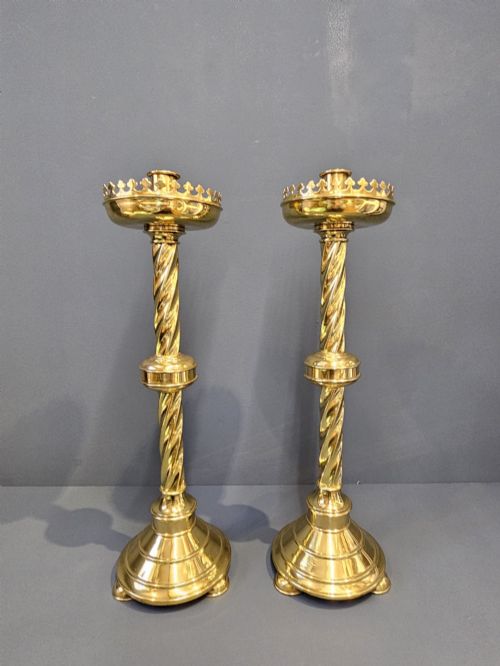
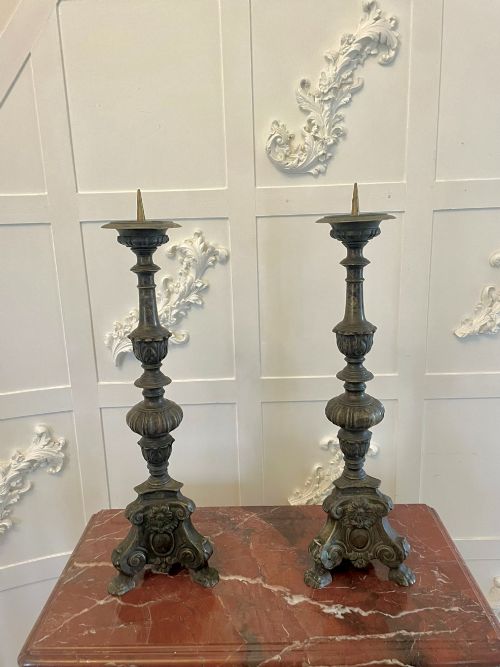
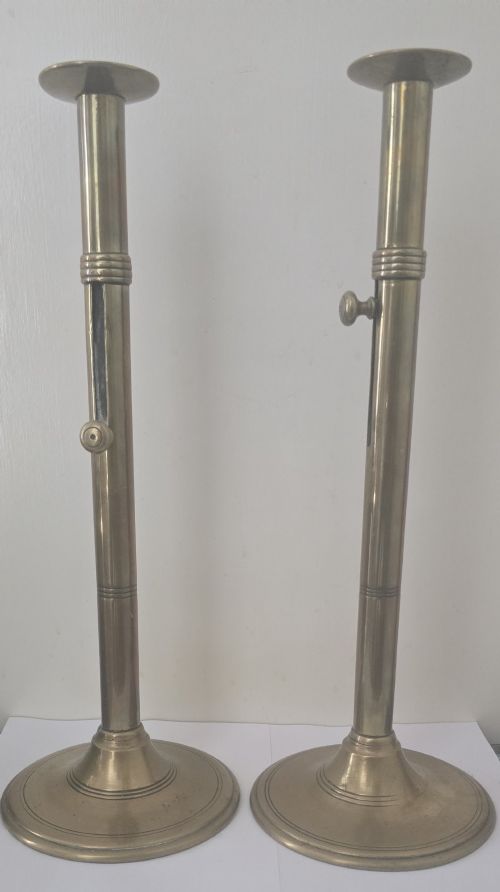
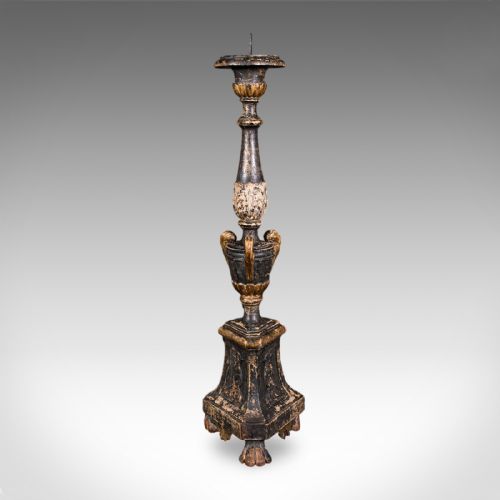
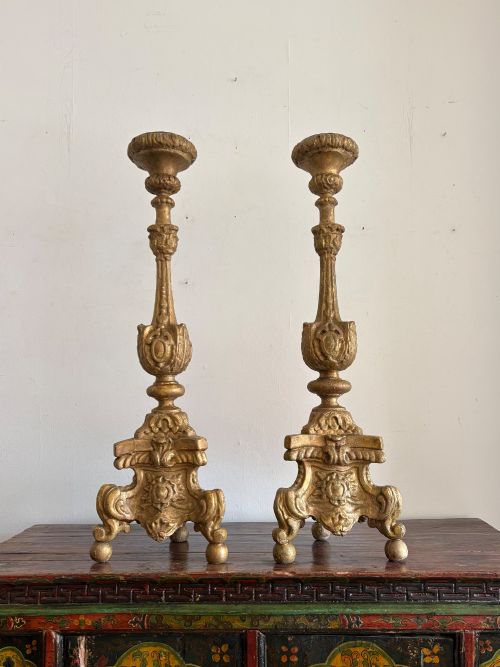
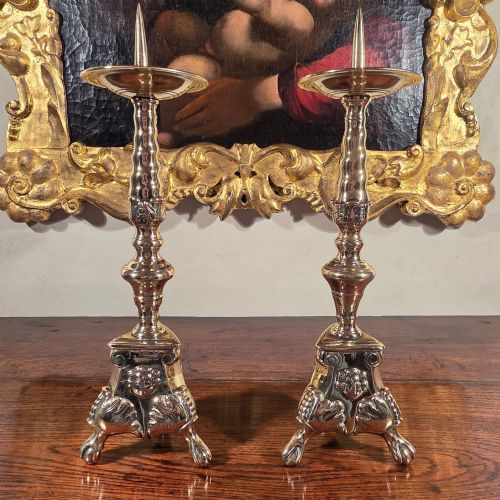
When you search for a tall church candlestick, you encounter stately ecclesiastical furnishings designed for altars and sanctuaries from the eighteenth century onward. These monumental pieces frequently take the form of pricket sticks with sharp spikes for large candles, or socket fittings adapted from older ecclesiastical metalwork. Pairs dominate the selection, spanning styles from austere Gothic Revival designs to elaborate Italian Baroque giltwood creations.
The materials range from heavy cast brass and bronze to carved wood finished with giltwood, gesso, or silver leaf. You will see floor-standing examples alongside substantial table pieces measuring well over half a metre in height. Many retain their original structural form despite conversion into table lamps or wiring for modern interiors.
Materials and construction methods
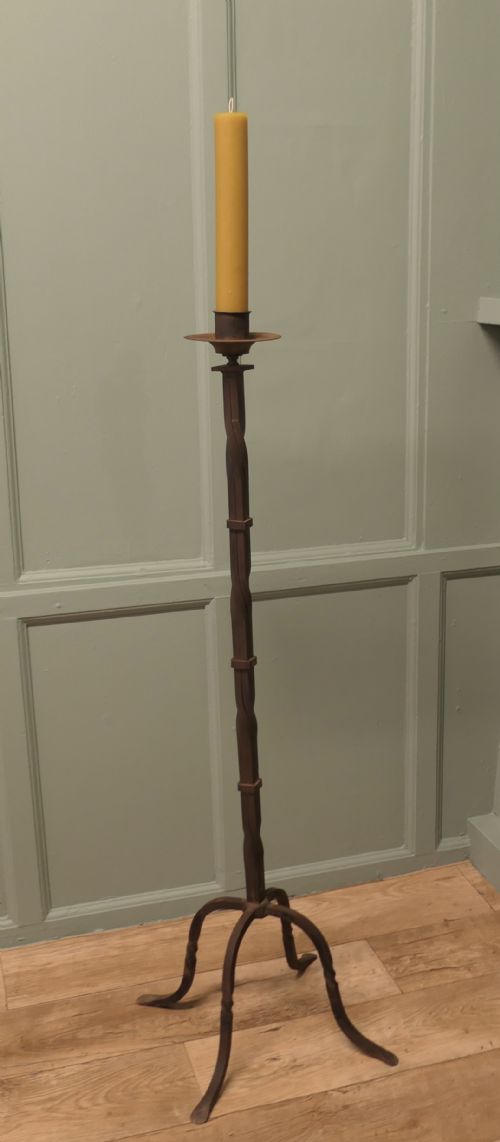
Metal examples rely on heavy brass and bronze castings, often assembled from turned column sections, stepped triangular bases, and cast drip pans. Wrought iron and iron variants utilise forged stems and multi-candle arms fastened with structural rivets and brackets. These metal pieces provide the substantial weight necessary to support towering heights safely.
Wooden alternatives employ carved pinewood or hardwoods shaped into columnar or figural standards. Craftsmen then applied gesso layers before finishing the surfaces with gold leaf, silver leaf, or polychrome paint. These applied finishes catch ambient light and create rich textural depth across the turned mouldings.
Tall Church Candlestick Retail Price Guide 2026
Typical asking prices for tall church candlestick among the pieces listed under this phrase on Sellingantiques today, from the lower quarter to the upper quarter. They describe what is for sale here now, not the wider market.
Listings feature periods spanning from the eighteenth century through the Art Deco era, encompassing both British and Continental workshops.
Distinctions in quality and execution
Quality rests in the crispness of the casting detail and the proportion of the turned elements. Finer brass and bronze examples show sharp chasing along the acanthus leaves and gadrooning, whereas simpler work appears softer and more uniform. Wooden pieces reveal quality through the depth of the hand-carved detail and the integrity of the original gesso and gilding layers beneath later wear.
The architectural harmony between the base, stem, and drip pan dictates the visual success of the piece. Superior examples maintain balanced proportions even at extreme heights, using sturdy three-sided or four-sided bases adorned with scrollwork or paw feet to anchor the vertical mass securely.
The Tall Church Candlestick Glossary
- Pricket
- A metal spike on the top of a candlestick designed to hold a candle securely in place. This spike pierces the base of the wax taper to keep it upright.
- Giltwood
- Timber covered with a thin layer of gold leaf over a prepared gesso ground. This technique creates a radiant, reflective surface on decorative altar furnishings.
- Torchere
- A tall ornamental stand or candlestick designed to support a light source. These floor-standing pieces often feature elaborate carved wooden columns.
- Gesso
- A plaster-like mixture applied to wood surfaces to create a smooth base for gilding or painting. It allows craftsmen to carve intricate relief details before finishing.
- Ecclesiastical
- Pertaining to the Christian church and its clergy, describing items made for liturgical use. These designs often incorporate specific religious motifs and architectural styling.
Tall Church Candlestick: Frequently Asked Questions
How tall are these candlesticks?
Heights vary considerably, ranging from substantial table-standing pieces around forty centimetres to floor-standing standards well over a metre tall.
Most church candlesticks were built to command attention within large spaces, requiring sturdy placement on floors or wide sideboards.
Were they used for church services?
Yes, these items served primarily on altars or within sanctuaries for liturgical ceremonies and vigils.
Many bear the marks of intensive ecclesiastical use, including heavy wax accumulation and period alterations to their mounting hardware.
Can I use modern candles on them?
Pricket sticks require candles with a pre-drilled base to fit securely over the central metal spike.
Socket-type candlesticks accommodate standard tapered candles, though antique dimensions sometimes require minor adjustments for a snug fit.
How do I distinguish brass from bronze?
Brass generally exhibits a brighter, more golden hue and consists primarily of a copper and zinc alloy.
Bronze contains copper and tin, resulting in a deeper, darker metallic tone with a heavier weight and a more resonant feel.
Are these pieces wired for electricity?
Several listings feature examples that have been converted into table lamps or fitted for electrical wiring.
Conversions often preserve the original wooden or metal column while running the cord discreetly through the centre.