

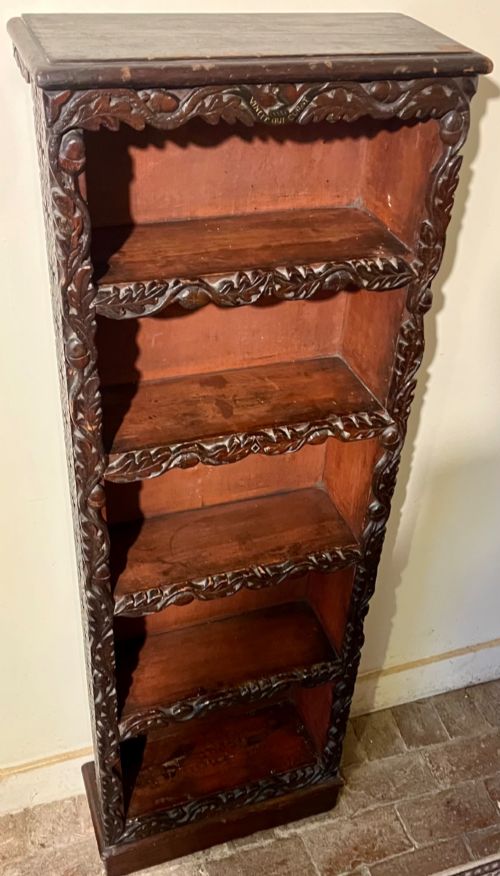

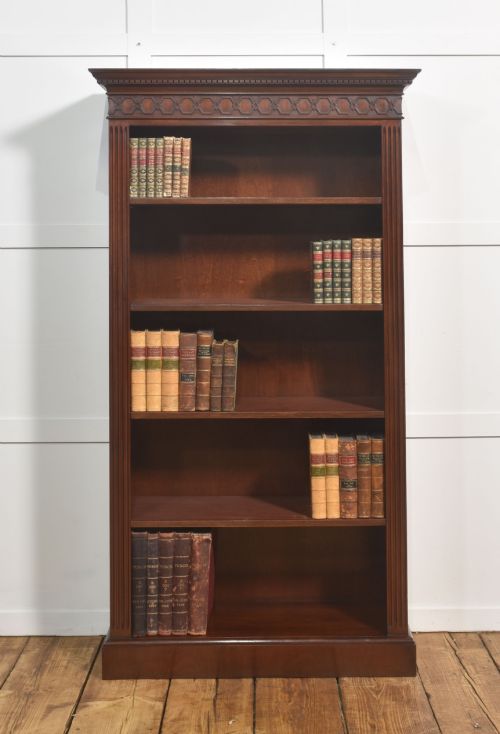
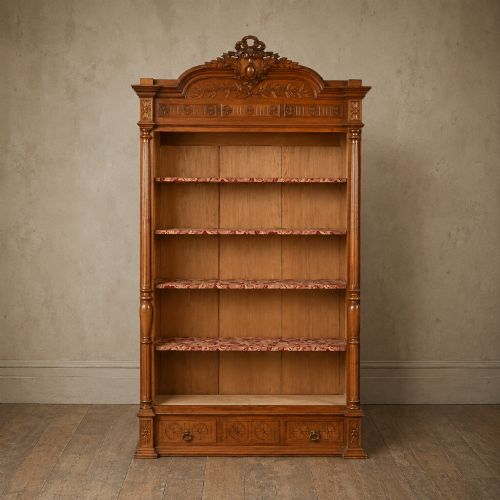
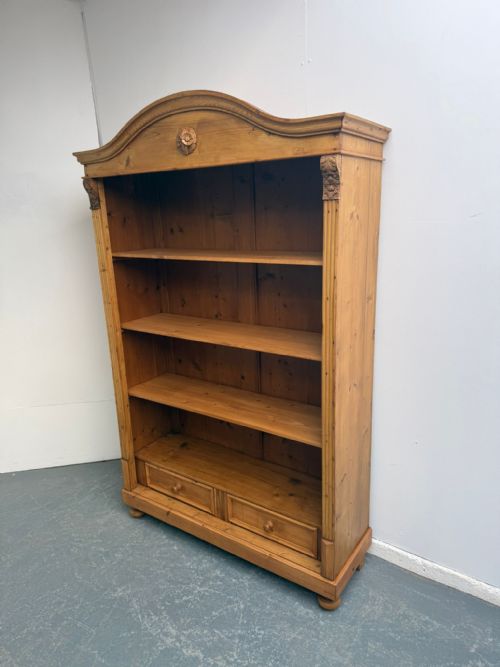


Tall Carved Bookshelf
These tall carved bookshelf examples offer serious timber presence and upright display, holding volumes securely while anchoring a room with period character.
Tall Carved Bookshelf
A tall carved bookshelf brings vertical storage and architectural weight to a room, functioning primarily as an open library bookcase for everyday volumes. When you search for a tall carved bookshelf, you encounter pieces designed to maximise wall height while keeping books accessible on open shelves.
The selections available here span the nineteenth century through to the early decades of the twentieth century. Common formats include solid oak and mahogany structures, often featuring adjustable shelves and carved mouldings that reflect Victorian, Regency, and Renaissance Revival influences.
Originating largely from British and continental workshops, these items range from substantial library pieces to smaller proportioned standing bookcases. Each surviving example demonstrates the utilitarian yet decorative approach previous generations took towards domestic book storage.
How they were made
Construction relies heavily on durable hardwoods and selected softwoods, with solid oak, mahogany, walnut, and pine forming the structural carcasses. Carpenters utilised traditional joinery methods to support heavy shelf loads, often integrating adjustable shelf mechanisms using timber ratchets or metal pins.
Carving and surface enrichment were executed by hand directly into the solid timber or onto applied mouldings. Finish work typically involved wax or polished treatments that preserved the natural grain of woods such as satinwood and mahogany while adding a durable sheen.
Tall Carved Bookshelf Retail Price Guide 2026
Typical asking prices for tall carved bookshelf among the pieces listed under this phrase on Sellingantiques today, from the lower quarter to the upper quarter. They describe what is for sale here now, not the wider market.
Some nineteenth-century pine bookcases retain faint pencil markings left by carpenters who numbered the removable shelves.
What varies in quality
Quality rests principally in the selection of timber and the ambition of the carving. Superior pieces employ dense, well-figured solid woods like mahogany or quarter-sawn oak, whereas simpler utility items rely on plain pine or secondary softwoods.
The crispness of the carved mouldings and the cleverness of the shelving adjustments separate standard workshop production from finer cabinetmaking. Well-proportioned cornices and cleanly executed Renaissance Revival or Art Deco details indicate a higher grade of manufacture from the outset.
The Tall Carved Bookshelf Glossary
- Open bookcase
- A bookcase lacking doors, designed for immediate access to books and display items. These pieces rely on the arrangement of the book spines and the quality of the surrounding timber frame for their visual impact.
- Adjustable shelf
- A bookshelf designed with moveable internal ledges that can be repositioned to accommodate volumes of varying heights. This mechanism often uses vertical wooden slots or metal strips fitted inside the carcass sides.
- Renaissance Revival
- A nineteenth-century architectural and decorative style drawing inspiration from fifteenth- and sixteenth-century Italian and French design. Pieces in this idiom feature bold, sculptural carving, heavy cornices, and classical motifs.
- Cornice
- The decorative horizontal moulding that crowns the top of a large piece of furniture. On bookcases, this element defines the silhouette and provides a visual cap to the vertical lines of the structure.
- Carcass
- The main structural body or shell of a piece of furniture before doors, shelves, or decorative hardware are added. The integrity of this primary framework dictates the long-term stability of taller furniture.
Tall Carved Bookshelf: Frequently Asked Questions
How do I spot a true period bookcase?
Examine the timber shrinkage, tool marks on hidden surfaces, and the consistency of the joinery. Older pieces exhibit hand-cut joints and timber ageing that modern reproductions cannot replicate.
Check the backboards and shelf supports for signs of traditional construction methods appropriate to the nineteenth or early twentieth century.
Are open bookcases strong enough for heavy books?
Period bookcases constructed from solid hardwoods like oak and mahogany possess significant structural load capacity. Many historical examples were built specifically to house heavy reference volumes.
Assess the thickness of the shelves and the condition of the vertical supports to ensure they can manage sustained weight without bowing.
How do I care for antique timber furniture?
Maintain a stable room temperature away from direct heat sources and strong sunlight to prevent the timber from drying out or splitting. Consistent indoor conditions protect the original finish and structural integrity.
Apply a traditional beeswax polish occasionally to nourish the wood and maintain a soft, protective sheen across the carved surfaces.
What does Renaissance Revival mean for furniture?
This nineteenth-century style revives classical motifs, architectural symmetry, and deep sculptural relief carving originating from the European Renaissance. Furniture in this taste often displays substantial proportions and vigorous ornamentation.
Such pieces bring a dramatic, monumental presence to a room compared to the cleaner lines found in later Art Deco or plain utilitarian designs.