
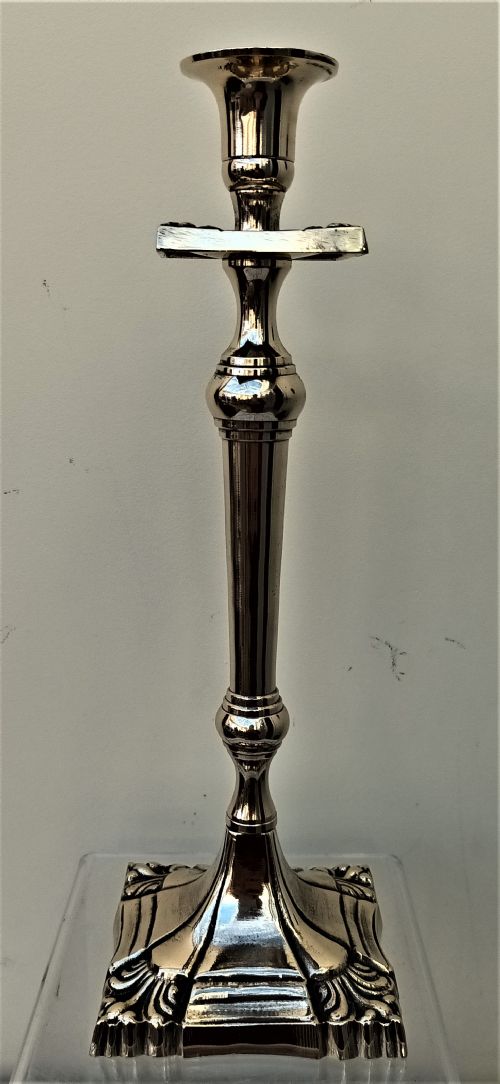

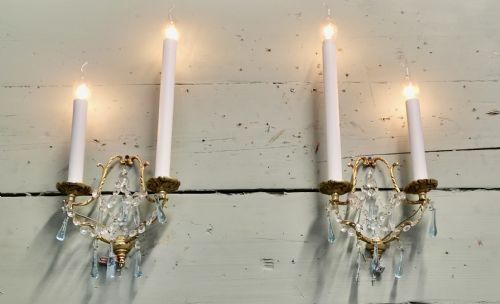


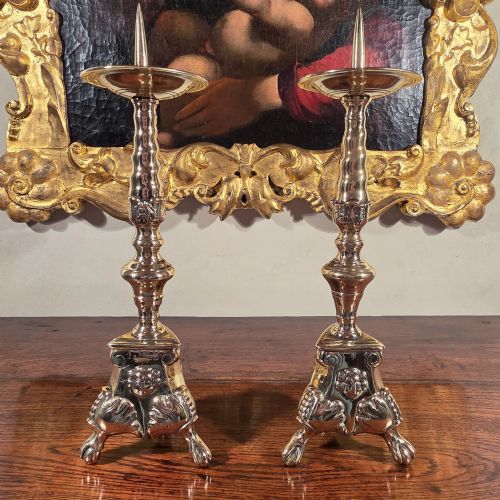


Tall Brass Candle Holders
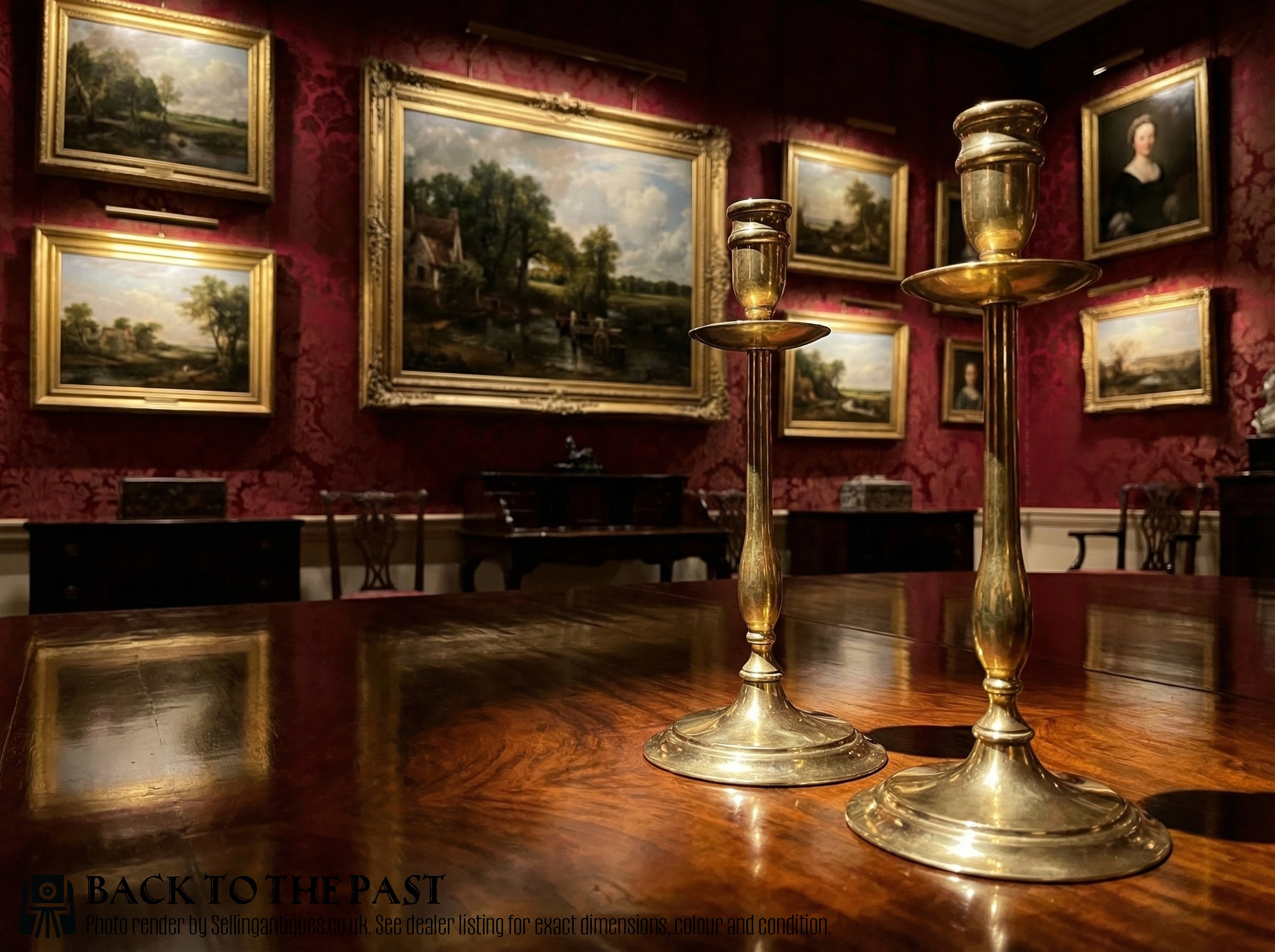
These tall brass candle holders bring vertical presence and warm metal reflection to a room, spanning Victorian church furnishings to Georgian domestic designs.
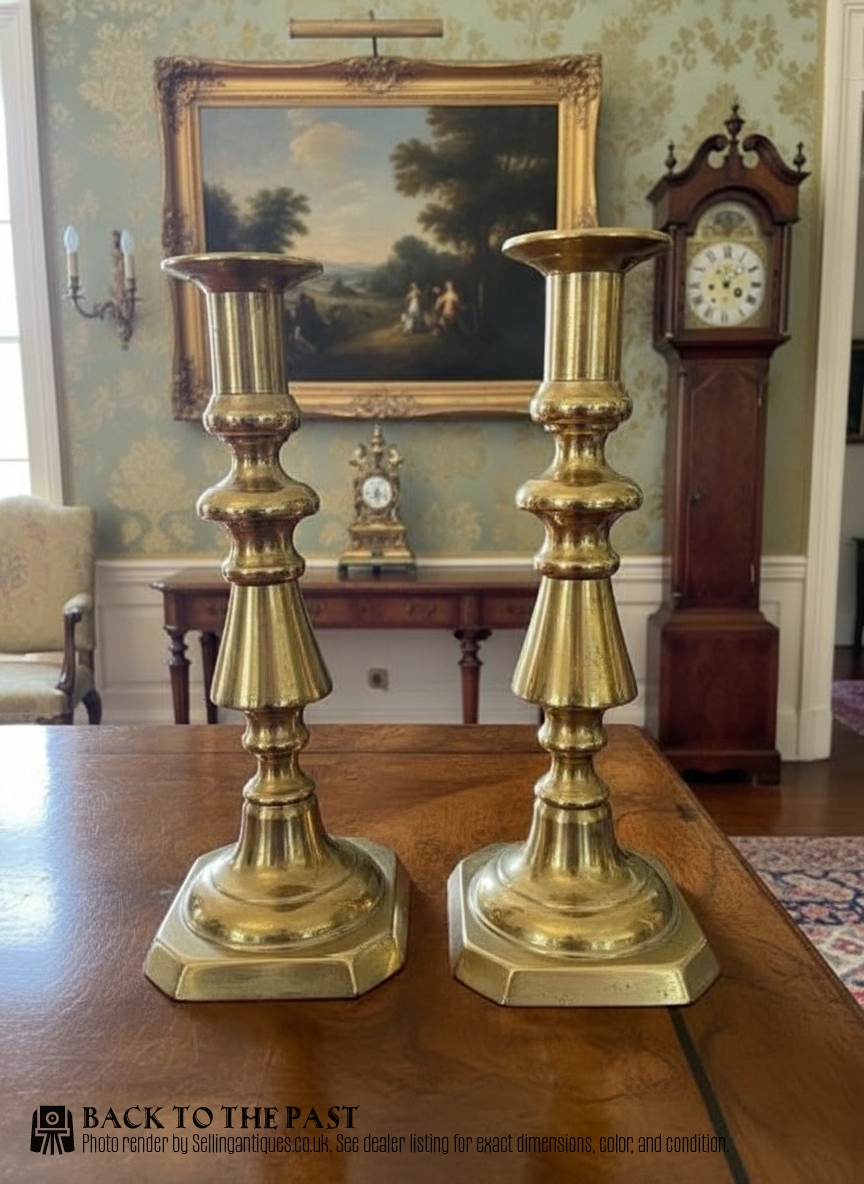
Tall Brass Candle Holders
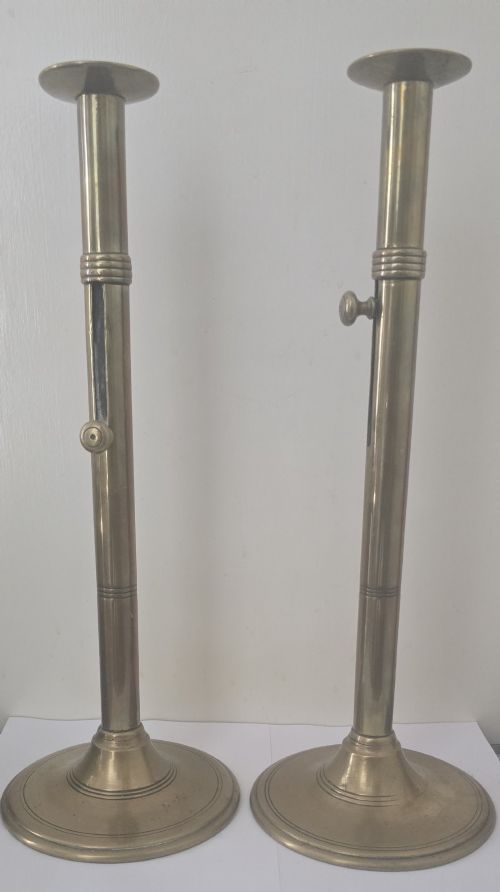
When you search for tall brass candle holders, you encounter items designed to elevate light above table level, including domestic candlesticks, column forms, and substantial church or altar pieces.
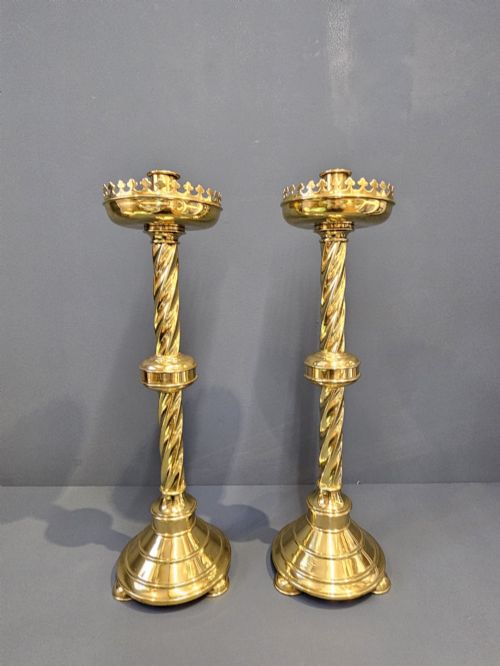
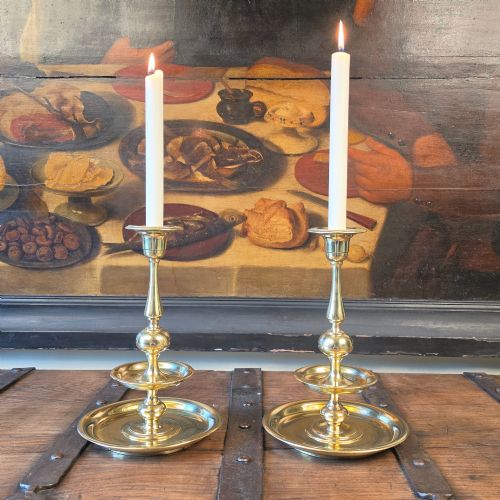
The selections here lean heavily toward Victorian church candlesticks and nineteenth-century domestic pairs, alongside George III style examples and twentieth-century interpretations.
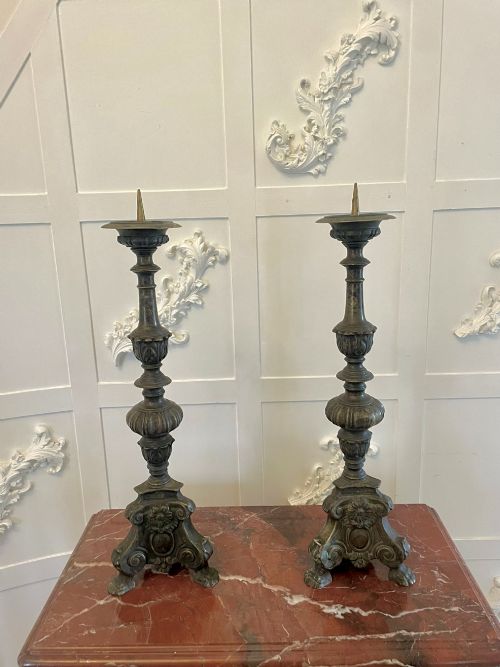
Forms range from simple barley twists and column stems to ornate pricket designs with spikes for large wax pillars rather than sockets for tapers.
How They Were Made
The pieces rely primarily on cast and turned brass, sometimes paired with bronze, gilt bronze, mahogany, oak, or wrought iron elements.
Nineteenth-century examples often utilise seamed construction or heavy cast components, while turned sections create columns, barley twists, and stepped bases.
Tall Brass Candle Holders Retail Price Guide 2026
Typical asking prices for tall brass candle holders among the pieces listed under this phrase on Sellingantiques today, from the lower quarter to the upper quarter. They describe what is for sale here now, not the wider market.
Listings feature items from the eighteenth century through the Edwardian period, incorporating materials like cut glass, oak, and bronze alongside solid brass.
What Varies in Quality
Quality rests in the crispness of the casting and turning, where heavier metal weight and precise detail in collars, bobeches, and bases distinguish superior examples from plain production items.
The integrity of the construction, such as secure threading between sections and stability in tall floor or altar candlesticks, separates robust period workshop pieces from weaker ones.

James Clews
The Tall Brass Candle Holders Glossary
- Pricket
- A sharp metal spike on a candlestick designed to secure a pillar candle rather than a socket holding a taper.
- Bobeche
- A removable disc fitted below the candle nozzle to catch melting wax and protect the stem below.
- Barley twist
- A spiral carving or turning resembling a twisted rope, popular on nineteenth-century wooden and metal shafts.
- Side ejector
- A small lever mechanism fitted to the socket to push up and remove remaining candle stubs.
- Corinthian column
- A classical architectural column style featuring ornate acanthus leaf capitals, adapted frequently for nineteenth-century candlesticks.
Tall Brass Candle Holders: Frequently Asked Questions
How do I clean brass candle holders?
Gentle dusting with a soft cloth preserves the existing metal patina without stripping the surface age. Avoid harsh chemical polishes that remove historic character.
For stubborn wax residue, warm water softens the wax safely so it lifts away without scraping the metal.
What is a pricket candlestick used for?
A pricket candlestick uses an upright spike to impale large pillar or church candles rather than sliding a taper into a cylindrical socket.
This design originated in ecclesiastical settings where heavy wax candles burned during services.
Are these suitable for daily use?
Many tall candlesticks remain sturdy enough to hold tapers or pillars for dining and living spaces, provided the base sits on a stable surface.
Altar pieces require careful placement due to their height and heavy weight.
How do I date a brass candlestick?
Dating relies on manufacturing techniques, such as visible casting seams, base construction, and stylistic clues from periods like the Victorian or Georgian eras.
Comparing turnings, threading, and metal composition against known nineteenth-century examples helps confirm the age.