




Tabletop Showcase Cabinet
A tabletop showcase cabinet sits upon a counter or desk to display small treasures.
Tabletop Showcase Cabinet
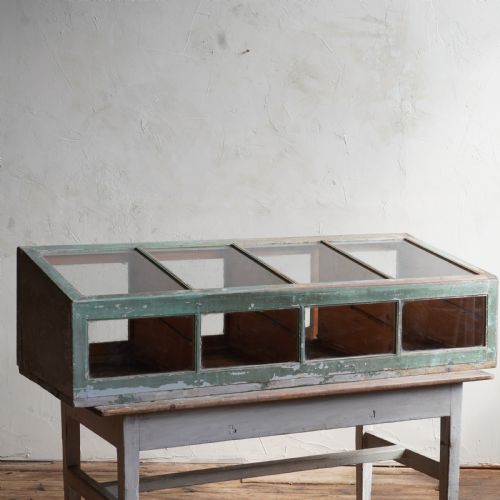
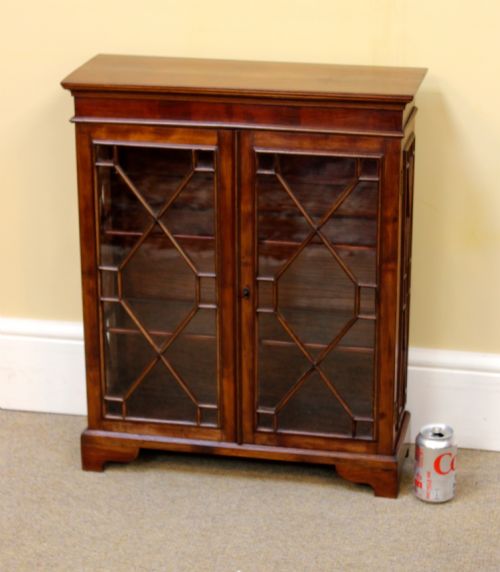
A tabletop showcase cabinet functions as a portable vitrine for small objects, ranging from pocket watches to retail confectionery. These pieces appear in forms such as miniature cabinets, display boxes, and glazed display cases designed for desktop or shop counter placement.
The selection spans several distinct eras, drawing heavily from Victorian, Edwardian, and Art Deco periods, alongside commercial pieces from the 1920s. Buyers encounter domestic desktop versions alongside larger shop display units originating from nineteenth and early twentieth-century merchants.
Materials vary widely across the inventory, reflecting both utilitarian shop use and refined domestic taste. Woods like mahogany, oak, walnut, and kingwood appear alongside brass frameworks and glazed panels, sometimes lined with fabric for velvet jewellery display.
Materials and construction
Cabinet makers utilised dense hardwoods such as mahogany, oak, walnut, and kingwood to construct the structural frames of these tabletop units. Glass panels were fitted into doors and sides to allow maximum visibility, secured by wooden glazing bars or brass mounts.
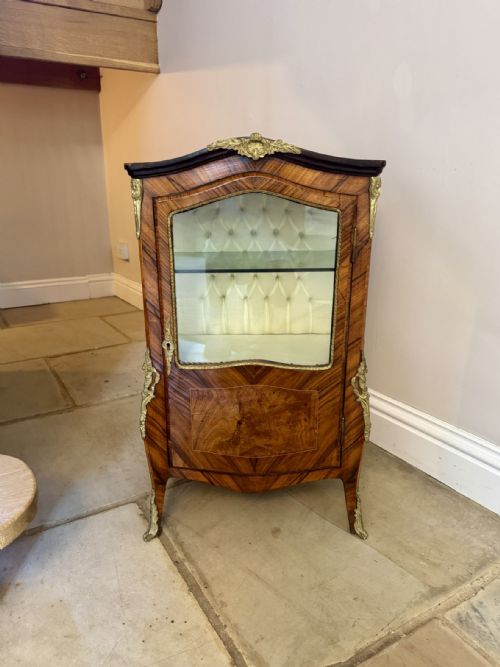
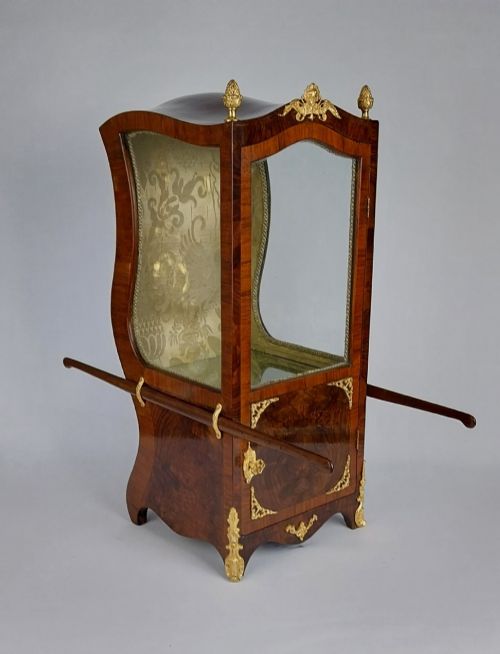
Metal components played a structural and decorative role, with brass hinges, locks, and ormolu mounts appearing on finer pieces. Interiors were frequently lined with fabric or velvet, while commercial shop cabinets incorporated painted timber or stencilled branding for merchants like Cadbury and Fry.
Several cabinets survived decades of bustling sweet shops only to end up guarding modern jewellery collections.
Judging quality in tabletop showcase cabinets
The distinction between standard commercial units and superior domestic pieces lies in the choice of timber and joinery refinement. Fine examples utilise highly figured veneers such as burr walnut or kingwood, paired with substantial brass hardware rather than simple iron or plated steel.
Glazing integrity and the original condition of the timber surfaces dictate the overall calibre of the piece. Cabinets that retain their original fabric linings, working locks, and unblemished glass panels represent the higher tier of surviving examples.
Cadbury·Fry
The Tabletop Showcase Cabinet Glossary
- Vitrine
- A glass-panelled cabinet designed for displaying fine objects or curiosities. These units often feature glazed tops and sides to admit maximum light.
- Ormolu
- Gilded bronze mounting applied to furniture and decorative objects for ornamentation. This technique was frequently utilised during the nineteenth century.
- Ebonized
- Timber treated with a dark finish to imitate expensive ebony. This process was common on Victorian and early twentieth-century display pieces.
Tabletop Showcase Cabinet: Frequently Asked Questions
What were tabletop showcase cabinets used for?
These cabinets served dual purposes in domestic and retail settings. Merchants utilised them on shop counters to merchandise sweets, jewellery, and small goods to customers.
In homes, collectors used miniature versions and vitrines to exhibit delicate ornaments, medals, and pocket watches safely away from dust.
How do I identify an Edwardian cabinet?
Edwardian tabletop cabinets typically display lighter mahogany or oak frames with restrained decorative carving. They often feature clear glass panels and simpler brass hardware than their Victorian predecessors.
Construction from this period tends to balance domestic refinement with the sturdy demands of early twentieth-century retail.
Are shop display cabinets different from domestic ones?
Shop display cabinets are generally built for heavier commercial use, often featuring utilitarian oak or ebonized frames and occasionally original merchant signage. They prioritize robust glazing and practical access for serving customers.
Domestic versions lean towards decorative woods like burr walnut or kingwood, with finer joinery intended for a parlour or study desk.
How should I care for a wood and glass cabinet?
Keep the cabinet away from direct sunlight and sudden temperature changes to protect the wooden frame and historic veneer. Regular dusting with a dry, soft cloth maintains the finish without damaging delicate glass or fabric linings.
Avoid applying harsh chemical polishes, particularly on antique surfaces or painted trade lettering.