


Tabletop Dinner Gong
A tabletop dinner gong summons household guests to the meal with a resonant metallic note, combining functional Victorian ceremony with striking decorative presence.
Tabletop Dinner Gong
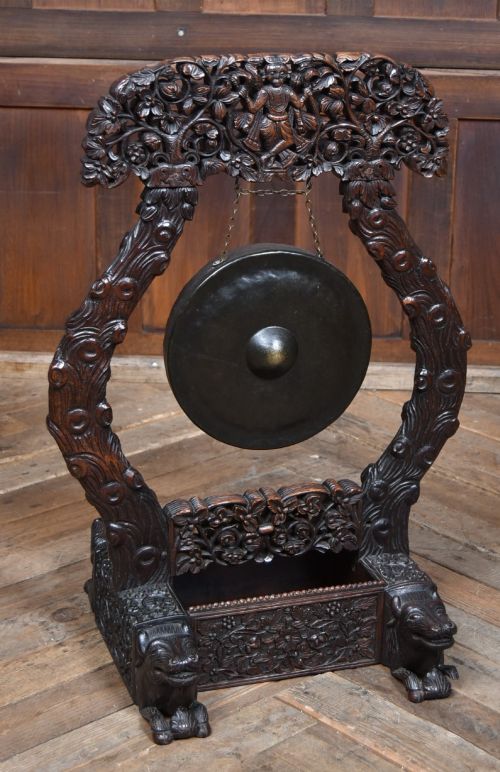
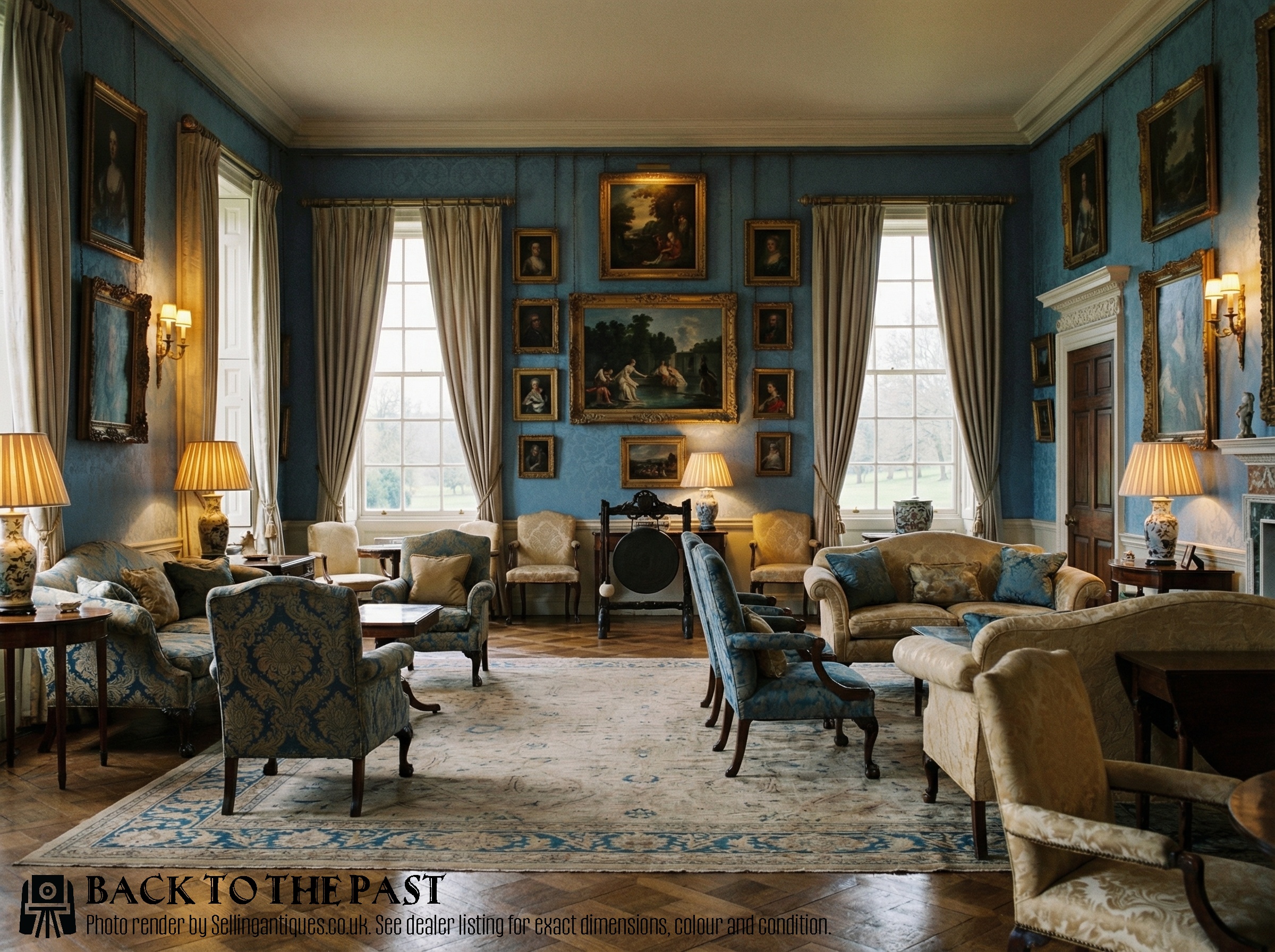
A tabletop dinner gong is a portable percussion instrument designed for domestic service, mounted within a supportive wooden or metal frame intended for placement on a sideboard or table. When you search for a tabletop dinner gong, you encounter pieces spanning the nineteenth century through the early twentieth century, reflecting varied global influences from British domestic life to Anglo-Indian, Japanese, and Chinese aesthetics.
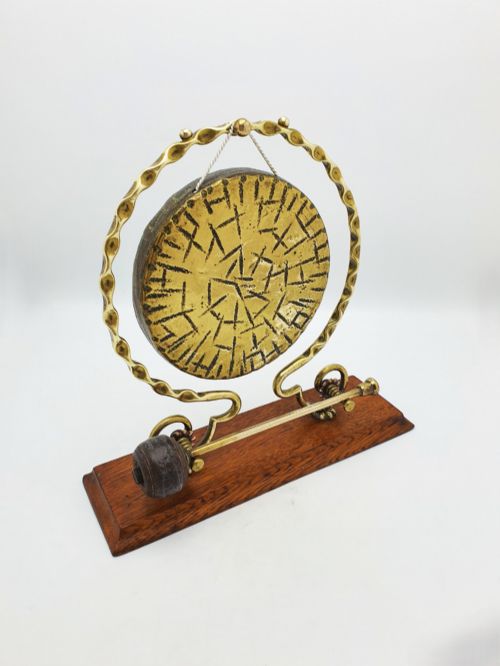
The most common formats on this page pair a suspended metal disc or bell with a dedicated wooden or wrought iron stand accompanied by a handheld striker. These domestic instruments frequently incorporate regional decorative elements such as carved hardwood, bamboo, or animal horn frames, demonstrating how Victorian and Edwardian households embraced exotic craft traditions for everyday dining rituals.
Materials and Construction
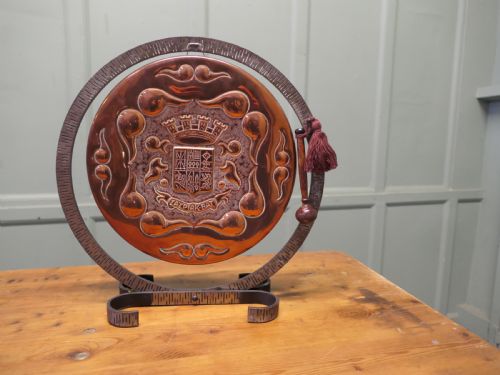
Makers constructed the resonant sounding elements primarily from hammered brass, bronze, and silver plate, often shaping disks or bowls to produce a clear, sustained tone when struck. These metal components required precise hammering and tuning to achieve the desired acoustic resonance expected in formal dining rooms.
Supporting frames utilise sturdy materials including oak, walnut, bamboo, wrought iron, and carved hardwood, frequently assembled with integrated hanging loops of cord. Distinctive examples incorporate natural animal horn or copper elements, marrying utilitarian metalwork with organic textures.
Several Victorian households repurposed cattle horns to suspend their dinner gongs, ensuring that dinner was announced with genuine rural flair.
Factors of Quality
Quality in a tabletop dinner gong lies in the structural integrity of the frame and the resonance of the metal disc. Superior examples feature well-balanced wooden or iron stands that securely support the hanging bell without dampening its acoustic vibration.
Artisanal detail distinguishes finer pieces, evident in hand-hammered surfaces, intricate wood or bone carving, and the preservation of original strikers. The thickness and alloy composition of the metal directly dictate the depth and clarity of the musical tone produced.
The Tabletop Dinner Gong Glossary
- Japonisme
- The nineteenth-century fascination with Japanese art and design. This influence appears in the structural motifs and decorative carving of frames produced during the Victorian and Edwardian periods.
- Silver Plate
- A thin layer of silver applied to a base metal such as copper or brass. This finish provided the appearance of solid silver for domestic items while remaining durable.
- Aesthetic Movement
- A late nineteenth-century design current prioritising visual beauty over narrative meaning. Pieces from this movement display refined craftsmanship and stylized ornamentation.
Tabletop Dinner Gong: Frequently Asked Questions
How do you clean a brass dinner gong?
Dust the metal and wooden frame gently with a dry, soft cloth to prevent the accumulation of grime.
Avoid harsh chemical polishes that can strip away aged patination or damage delicate carved surfaces and hanging cords.
What wood was used for gong frames?
Makers most frequently utilised dense domestic hardwoods such as oak and walnut for structural stability.
Exotic pieces incorporated carved hardwoods or bamboo to complement imported Asian design motifs.
Were these gongs used daily?
Victorian and Edwardian households relied on these instruments to announce the serving of meals to family members and guests.
They served both a practical domestic purpose and acted as decorative conversation pieces in dining rooms.
How do you date an antique gong?
Dating relies on examining the construction techniques of the wooden frame, the style of metalwork, and prevailing design movements.
Victorian pieces often feature heavy oak or elaborate brass casting, while Edwardian examples display lighter proportions.