






Table Centrepiece Flower Stand
A table centrepiece flower stand brings height and colour to the dining table, drawing the eye upwards with tiered glass and silver plate.
Table Centrepiece Flower Stand
A table centrepiece flower stand forms the architectural focal point of a formal dining table, designed to hold floral arrangements and fruit across multiple tiers or trumpets. These decorative arrangements span the Victorian, Edwardian, and Art Nouveau periods, reflecting changing tastes in interior display.
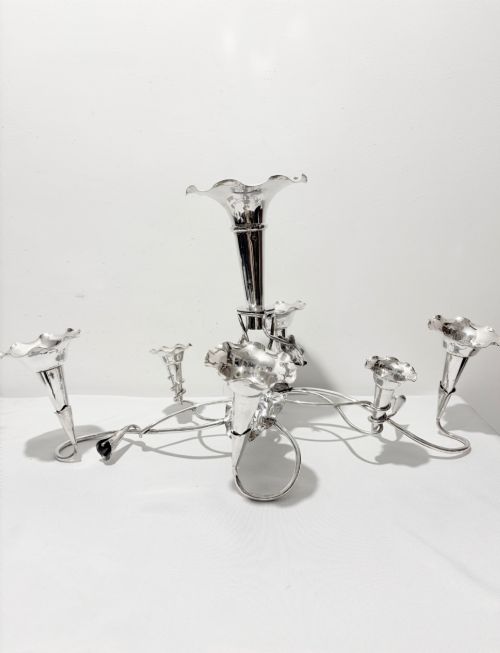
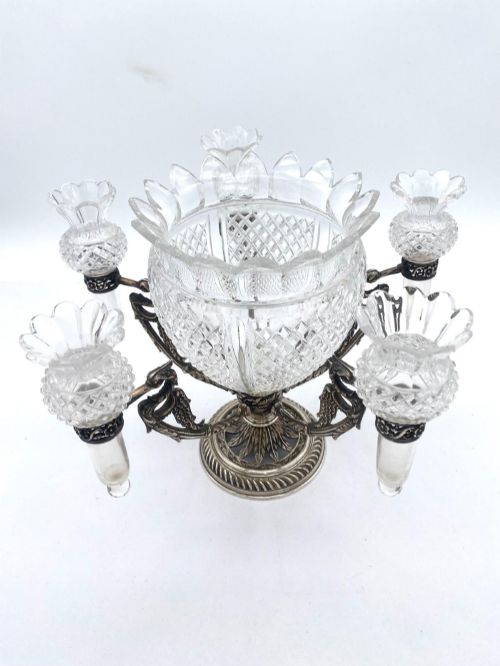
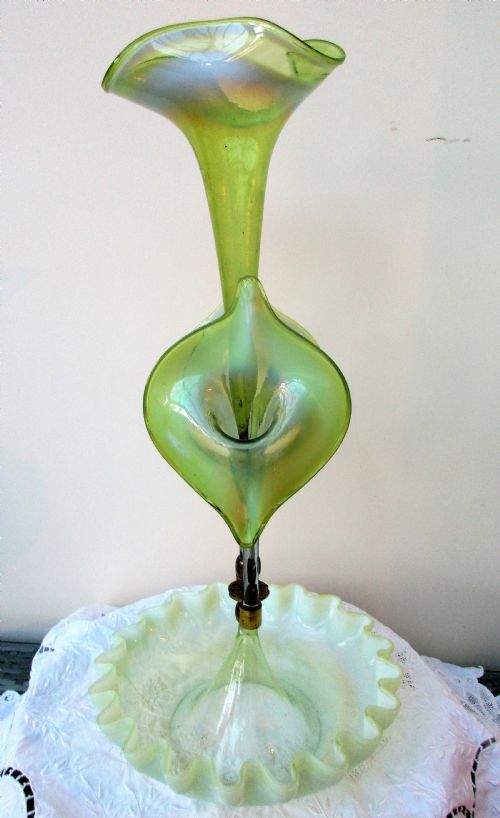
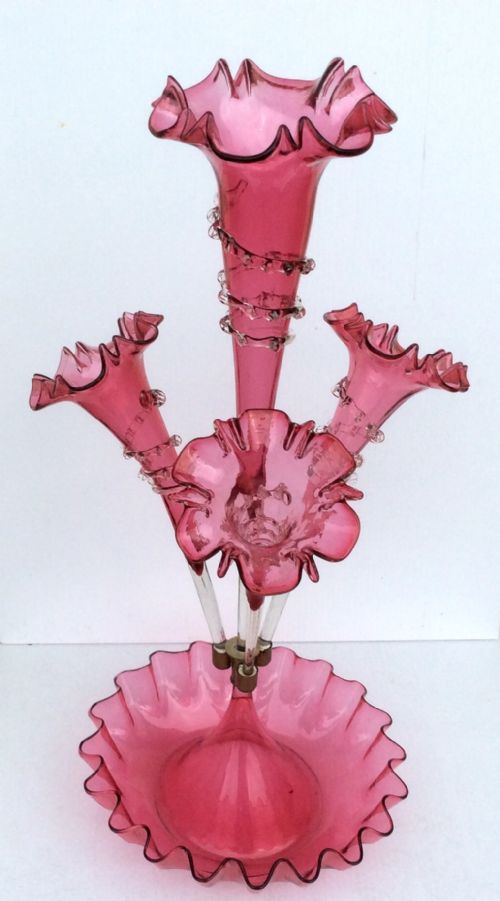
The most frequent examples encountered on this page are silver plated epergnes featuring cut, cranberry, ruby, or green glass inserts. Alongside these multi-armed epergnes, buyers find porcelain birds mounted in ormolu candelabra, brass flower pot stands, and larger silver plated multiple bottle coasters.
Originating largely from the nineteenth and early twentieth centuries, these objects combine sturdy metal frames with delicate blown or moulded glass vessels. They survive as functional centrepieces that continue to organise floral displays with period character.
How they were made
Makers constructed these stands by combining heavy metal plating techniques with free-blown or moulded glass. Silver plating over a base metal provided a durable, bright finish for the frames, branches, and trumpet holders.
Glass components, including ruby, cranberry, and green variants, were shaped by hand while hot, often incorporating etched patterns or fluted rims. Ormolu mounts and porcelain elements were secured with mechanical fasteners to brass or plated armatures.
Table Centrepiece Flower Stand Retail Price Guide 2026
Typical asking prices for table centrepiece flower stand among the pieces listed under this phrase on Sellingantiques today, from the lower quarter to the upper quarter. They describe what is for sale here now, not the wider market.
Listings feature silver plated frames paired with cranberry, ruby, green, and clear glass across Victorian and Edwardian periods.
What varies in quality
Quality rests in the crispness of the metal chasing and the weight of the silver plating over the base metal. Superior examples retain their original glass inserts without replacement, matching the exact proportions intended by the maker.
The clarity and depth of colour in the glass trumpets distinguish finer pieces from simpler commercial output. Delicate etching, complex multi-trumpet configurations, and substantial cast metal bases elevate the stature of an individual stand.
Osler·Walker & Hall·Royal Worcester
The Table Centrepiece Flower Stand Glossary
- Epergne
- A large table centrepiece featuring a central dish or basket surrounded by multiple smaller hanging baskets or trumpet vases. This form dominated formal dining tables during the Victorian era for displaying fruit and flowers.
- Silver Plate
- A thin layer of silver bonded to a base metal such as copper or Britannia metal. This technique offered the visual appeal of solid silver at a lower cost during the nineteenth century.
- Cranberry Glass
- A rich red-pink glass coloured by the addition of gold chloride to the molten batch. It is widely seen in Victorian decorative tableware and epergne trumpets.
- Ormolu
- Gilded bronze or brass used for decorative mounts and decorative stands. The technique involves applying a gold amalgam to a bronze base and heating it to drive off the mercury.
- Fluted
- Having parallel shallow grooves running vertically along the body of a glass trumpet or metal column. This decorative feature catches the light and adds structural rigidity.
Table Centrepiece Flower Stand: Frequently Asked Questions
What is a table centrepiece flower stand?
A table centrepiece flower stand is a decorative tabletop structure designed to elevate floral displays, fruit, or foliage above the dining surface. They typically feature a central vessel complemented by smaller flanking trumpets or hanging baskets.
These pieces were central to formal dining table arrangements during the Victorian and Edwardian periods. They allowed hosts to create elaborate, multi-tiered displays that did not obstruct conversation across the table.
How do I clean an antique epergne?
Cleaning requires separating the glass components from the metal frame to prevent damage to either material during handling. Wash the glass gently in warm, soapy water without using abrasive cloths that might scratch etched surfaces.
Polish the silver plated or brass frame with a soft cloth and a dedicated metal cleaner formulated for plated items. Avoid getting polish residue onto the glass inserts, particularly around etched or coloured areas.
How do I date a Victorian flower stand?
Dating relies on stylistic indicators such as the heavy ornamentation of the Victorian period versus the flowing, organic lines of later Art Nouveau pieces. Maker marks, registry marks stamped on the metal, and manufacturing techniques also provide clues to the decade of production.
Edwardian examples from around 1900 often feature lighter, airier proportions and simpler silver plated wirework compared to their mid-nineteenth-century predecessors. Examining the construction of the glass trumpets helps confirm the period.
Can I use these stands for daily dining?
These stands function well for contemporary dining provided they are handled with care during placement and cleaning. Their stable bases support fresh flower arrangements or seasonal fruit just as they did in the nineteenth century.
Care should be taken with heavy water jugs or thick stems that might stress delicate nineteenth-century glass trumpets. Placing felt pads beneath the base protects modern dining surfaces from the metal feet.