


Silver Flower Centrepiece
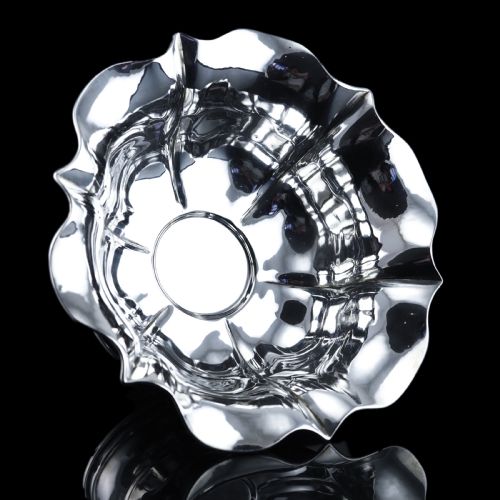
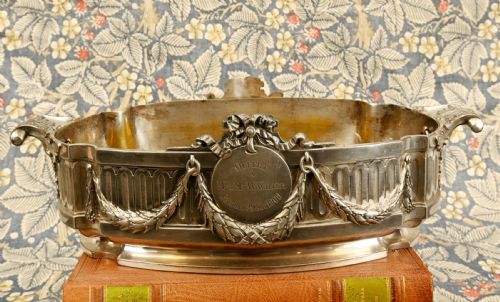
A silver flower centrepiece commands the middle of a dining table, holding stems and water while catching the candlelight.
Silver Flower Centrepiece
When you search for a silver flower centrepiece, you are looking at table vessels designed to hold floral arrangements, ranging from low bowls and jardinières to tall epergnes and vases. The versions you are most likely to meet on this page span the Victorian, Edwardian, and later periods, reflecting changing dining fashions across the nineteenth and twentieth centuries.
The forms vary widely in purpose, including pierced presentation bowls, handled rose bowls, and multi-piece epergnes complete with glass liners. Stylistically, they draw on Victorian exuberance, Edwardian formality, and the sinuous lines of Art Nouveau or Arts & Crafts movements.
Originating largely from British workshops alongside continental European centres, these pieces served as focal points for formal meals and festive displays. They survive today in solid silver, silver plate, pewter, and combinations incorporating cut glass or ceramics.
How they were made
Silversmiths shaped solid silver and silver plate through hammering, spinning, and casting, often piercing the metal to create intricate botanical or geometric trellis patterns. Many forms incorporate removable glass liners, green glass inserts, or fitted ceramic pots to hold water safely without damaging the metalwork.
Makers utilised EPNS and solid sterling silver alongside pewter, applying techniques such as etching to glass components and hand-hammering surfaces to achieve distinct tactile finishes. Work from this era frequently combined metal mountings with independent vessels, requiring precise jointing and soldering to secure handles, feet, and rims.
Pieces span the Victorian and Edwardian eras, incorporating Neo-Classical, Art Nouveau, and Arts & Crafts design motifs.
What varies in quality
The distinction between standard production items and finer examples rests on the weight of the metal, the crispness of the chased or pierced decoration, and the integrity of any associated glass or ceramic liners. Pieces bearing maker marks from recognised firms or silversmiths generally demonstrate greater attention to structural proportion and detail.
Overall heaviness and balance indicate superior manufacturing, particularly in larger epergnes and tall vases that must support heavy floral arrangements without tipping. The preservation of original liners and the subtlety of surface ornamentation further separate standard utilitarian vessels from distinguished decorative works.
Liberty & Co.·Goldsmiths & Silversmiths·Walker & Hall·Josiah Williams & Co·WMF·Daniel & Arter
The Silver Flower Centrepiece Glossary
- Epergne
- A large table centrepiece featuring a central dish with multiple branching arms or hanging baskets for fruit, sweetmeats, or flowers. These multi-tier structures often incorporate coloured or etched glass inserts.
- Jardiniere
- An ornamental pot or stand designed to hold growing plants or large floral displays on a table or sideboard. They appear in ceramic, silver plate, and pewter.
- Rose Bowl
- A wide, open bowl traditionally fitted with a wire flower-grid or lid pierced with holes to support short-stemmed rose arrangements. They sit low on the dining table.
- EPNS
- Electroplated Nickel Silver, a common base metal manufacturing technique involving a thin coating of silver deposited onto a nickel-copper alloy. It allowed makers to produce durable table wares at lower cost.
- Pierced
- Metalwork perforated with decorative patterns such as lattices, scrolling foliage, or geometric openings. This technique lightened the visual weight of large bowls and vases.
Silver Flower Centrepiece: Frequently Asked Questions
How do I clean a silver flower centrepiece?
Wash the piece gently in warm, soapy water using a soft cloth, taking care to remove any residual floral preservative or hard water deposits from the metal and glass.
Dry thoroughly with a soft flannel to prevent spotting, and apply a mild silver polish only when necessary to maintain the natural highlights of the design.
Are glass liners original?
Original glass liners were custom-blown or moulded to fit the specific contours of the silver mount, often featuring hand-etched decoration or polished rims that match the period of the piece.
Replacements generally lack the precise fit, thickness, or slight imperfections characteristic of nineteenth and early twentieth-century glass production.
Can I use these for fresh flowers?
Most of these vessels are designed to hold water and fresh stems, particularly those equipped with glass liners, ceramic pots, or watertight silver bowls.
For pieces with pierced bodies, the included glass or ceramic insert protects the exterior metalwork from direct moisture and corrosion.
What is an epergne used for?
An epergne served as an elaborate tablescape centrepiece during formal Victorian and Edwardian dinners, holding a combination of flowers, fruit, and sweetmeats across its multiple tiers.
The branching design allowed guests to converse across the table beneath the elevated floral displays.