


Swiveling Mirror
A swiveling mirror offers adjustable reflection on a pivoted frame, bringing practical elegance to a dressing room or table.
Swiveling Mirror
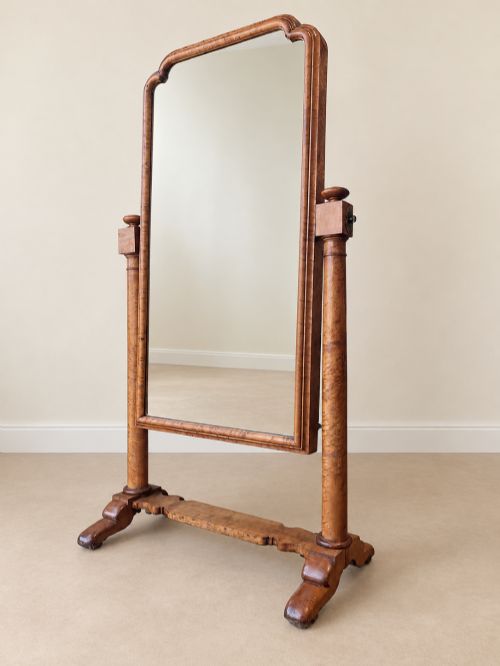
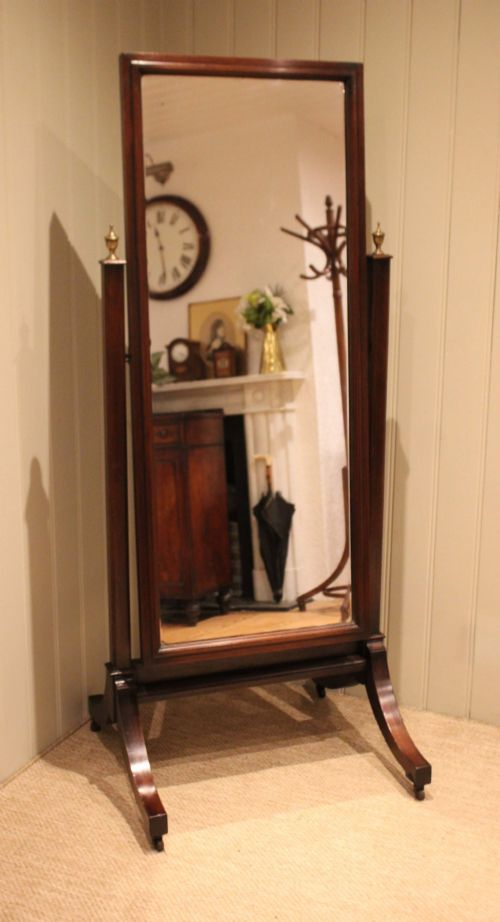
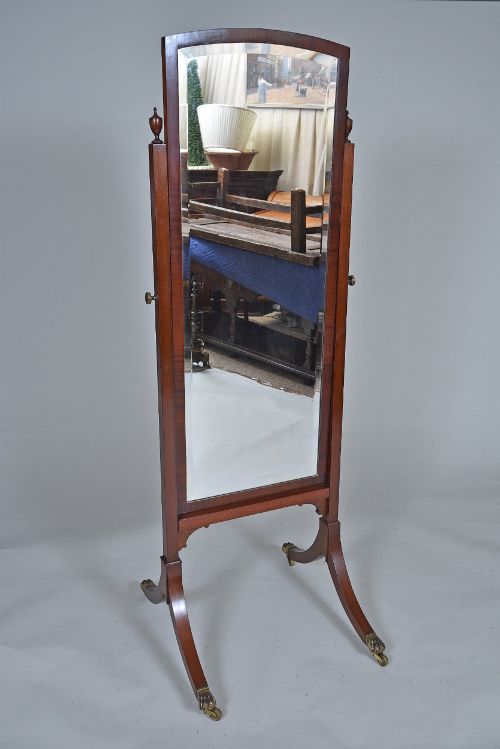
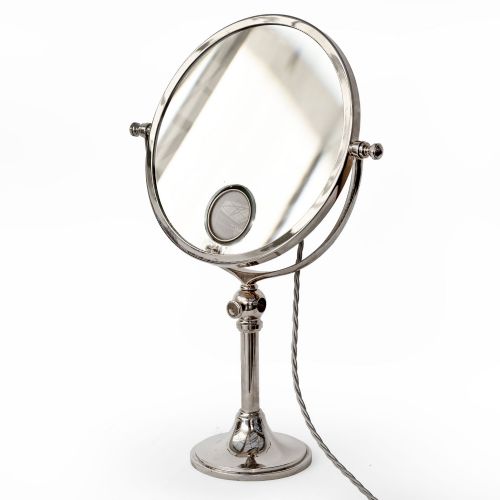
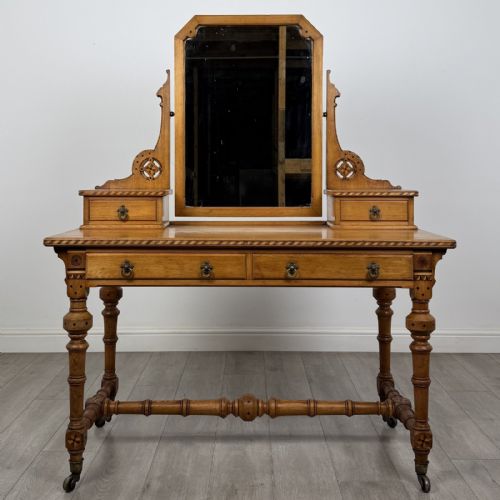
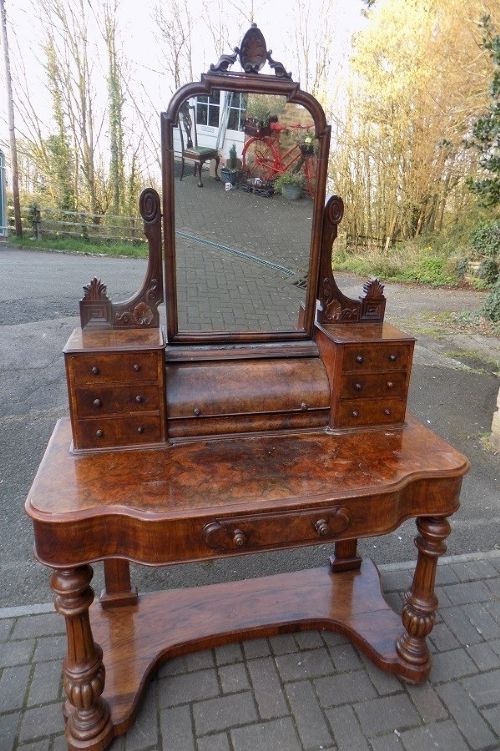
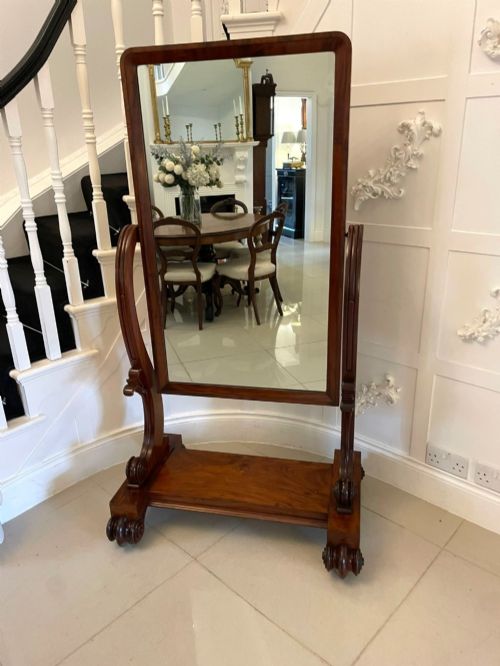
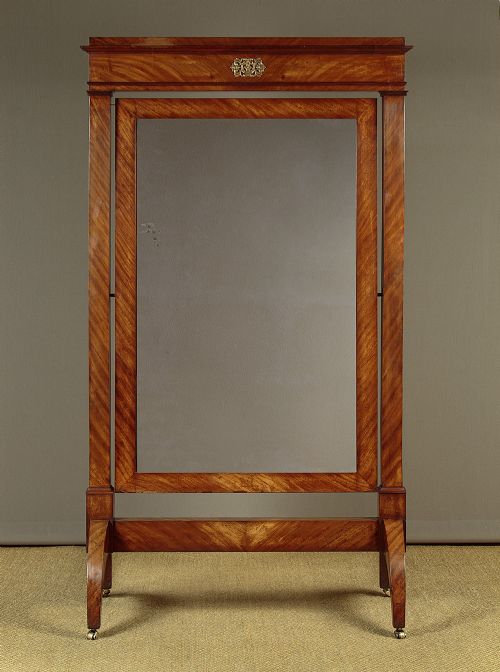
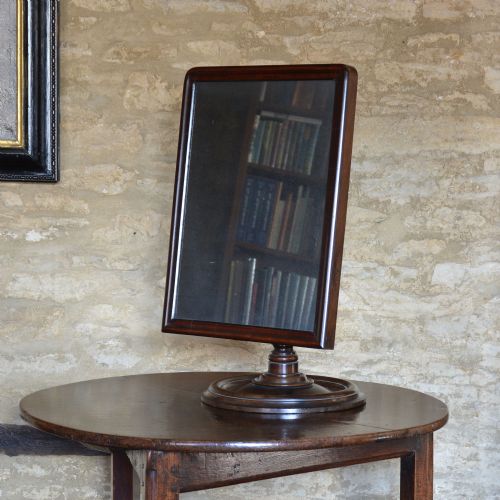
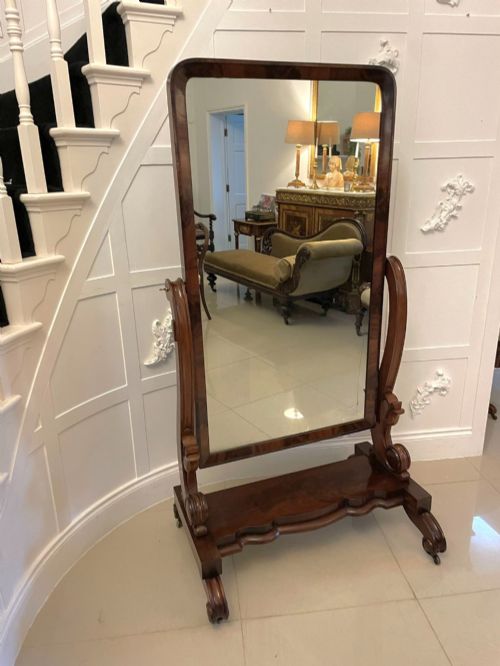
A swiveling mirror is designed to tilt on vertical pivots or axes, allowing the user to adjust the angle of the glass. When searching for a swiveling mirror, buyers encounter numerous variations, from large freestanding cheval glasses to smaller table top toilet mirrors. These pieces appear in forms such as dressing mirrors, shaving mirrors, and vanity mirrors.
The selection on this page spans several centuries, drawing heavily from the Victorian and Edwardian eras alongside Georgian and 18th-century examples. Forms range from simple table top swing mirrors resting on box bases to grand cheval mirrors supported by sturdy floor frames. Oak, mahogany, and walnut frequently form the primary structure of these pivoting glasses.
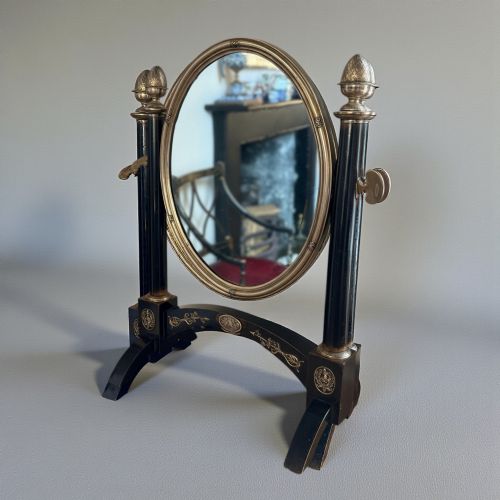
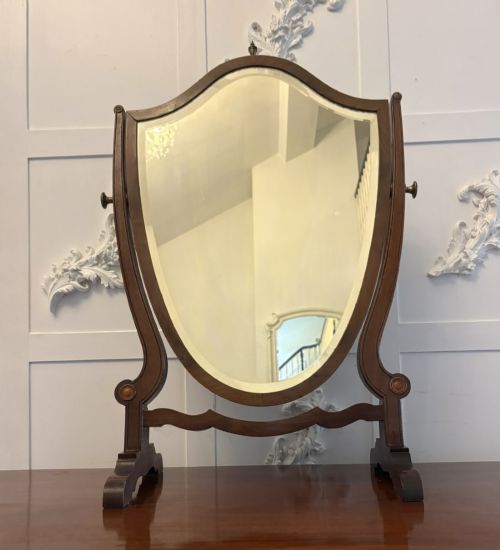
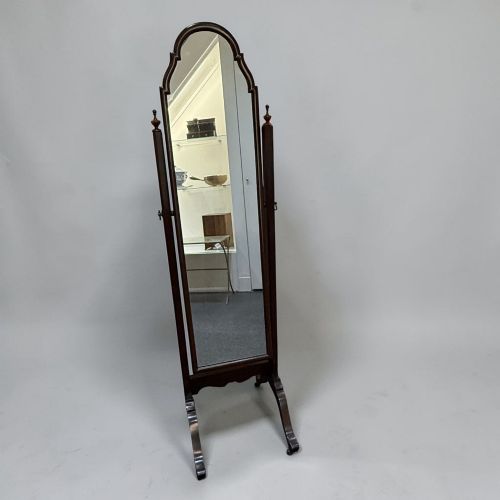
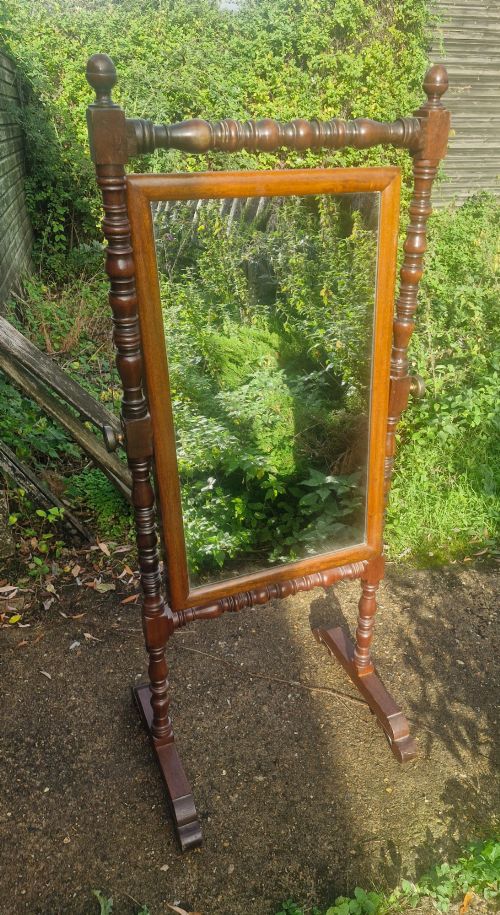
Smaller variants sit comfortably on dressing tables, often featuring shaped shield glasses or oval frames mounted on upright arms. Larger floor-standing cheval mirrors allow a full-length view, sometimes incorporating barley twist supports or brass mounts. Each format serves the fundamental purpose of adjustable reflection, whether for daily grooming or interior adornment.
Assessing quality in pivoting mirrors
Quality in a swiveling mirror rests upon the proportion of the frame, the depth and figure of the timber, and the integrity of the pivoting mechanism. Finer pieces display carefully selected mahogany or burr walnut veneers, while lesser examples rely on plain secondary woods with minimal grain patterning. The weight and finish of the brass or bronze hardware also distinguish superior workshops from standard production.
The stability of the upright supports and the smoothness of the swivel action indicate the care taken during manufacture. Well-balanced frames hold their adjusted angle without slipping, demonstrating precise tension in the pivot screws or side pins. Original mirror glass with subtle beveling and age-related oxidation further separates exceptional period survivals from later replacements.
Swiveling Mirror Retail Price Guide 2026
Typical asking prices for swiveling mirror among the pieces listed under this phrase on Sellingantiques today, from the lower quarter to the upper quarter. They describe what is for sale here now, not the wider market.
Some Victorian shaving mirrors include integrated candle sconces so gentlemen could illuminate their chins during a foggy London dawn.
Heal and Sons·Thomas Rubergall
The Swiveling Mirror Glossary
- Cheval mirror
- A large floor-standing dressing mirror supported by four legs and vertical side posts that allow the glass to swing entirely. These tall glasses enable full-length viewing.
- Toilet mirror
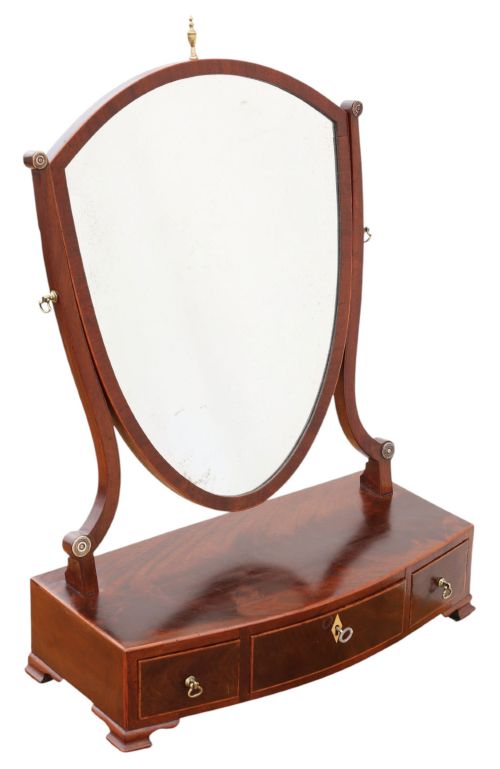
- A smaller glass designed to sit upon a dressing table or chest, sometimes called a swing mirror. They frequently incorporate small drawers within the base.
- Shield mirror
- A dressing glass featuring a plate cut into the shape of a heraldic shield. This style gained popularity during the Georgian and Victorian periods.
- Barley twist
- A decorative turning technique resembling a spiraling rope. This motif appears on the upright supports of 19th-century pivoting mirrors.
- Ormolu
- Gilded bronze mounts applied to furniture and mirror frames for decoration. This technique is particularly common on French Empire pieces.
Swiveling Mirror: Frequently Asked Questions
What is a swiveling mirror?
A swiveling mirror is a pivoting glass mounted on vertical axes that lets the user tilt the reflection angle. They range from small table top toilet mirrors to large floor-standing cheval glasses.
These pieces support daily grooming and dressing by offering adjustable angles of reflection. They have remained staple furnishings in bedrooms and dressing rooms for centuries.
How do I use a table top mirror?
Table top versions sit directly upon a dressing table, chest of drawers, or vanity unit. Many designs feature a small box base with tiny drawers for holding small accessories.
Users adjust the tilt of the glass using side screws or pivot pins to find the desired angle. They require a stable surface to prevent movement when adjusting the frame.
Where were cheval mirrors placed?
Cheval mirrors stand directly on the floor and were traditionally kept in bedrooms or dressing rooms. Their tall frames provide a full-length view rather than just a waist-up reflection.
Because of their footprint, they require adequate floor space to allow the frame to tilt forward and backward safely. They often serve as both functional items and prominent decorative furniture.
How do I date an antique mirror?
Dating relies on examining the timber species, joinery methods, hardware, and the characteristics of the mirror glass itself. Georgian and Victorian pieces show distinct styles in their upright posts, base construction, and veneer choices.
Secondary woods and backboards provide additional clues regarding the period of manufacture. Comparing the decorative motifs, such as brass mounts or turned uprights, helps place the piece within a specific era.