




Swiss Brass Desk Clock
A swiss brass desk clock brings precision engineering and polished metal to any surface, offering both reliable timekeeping and undeniable presence.
Swiss Brass Desk Clock
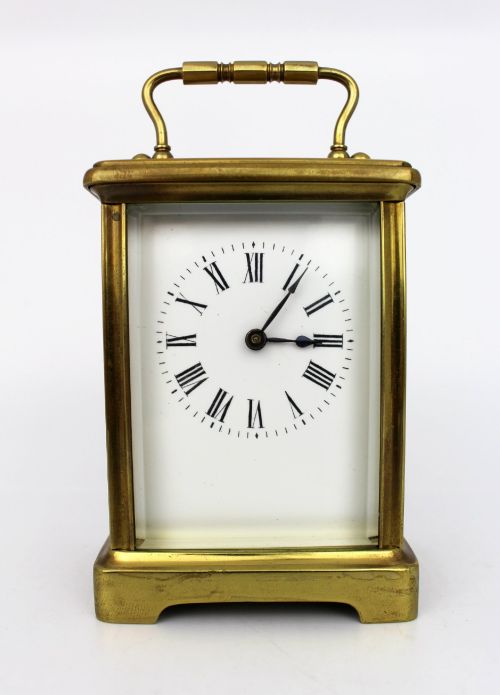
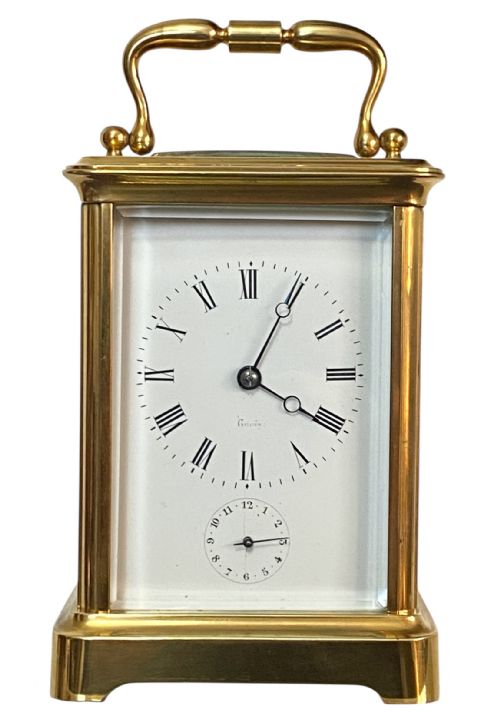
A swiss brass desk clock encompasses portable timepieces designed for tables, desks and mantelpieces, originating from Swiss workshops across the nineteenth and twentieth centuries. These objects range from heavy carriage clocks housed in leather travel cases to mid-century skeleton movements and atmospheric clocks driven by temperature changes.
The versions most frequently encountered on this page belong to the mid-century modern and Edwardian periods, utilising brass, gilt metal and glass to display intricate dials. Forms include miniature strut clocks with easel backs, inline skeleton timepieces and elaborate carriage clocks featuring alarm mechanisms or champleve enamel.
Makers such as Imhof, Jaeger LeCoultre and Luxor dominate the selection, showing how Swiss horology adapted from traditional nineteenth-century carriage designs to striking modernist desk accessories. Each piece balances mechanical complexity with decorative metalwork suited for personal workspaces or formal rooms.
Evaluating Quality and Craftsmanship
Quality in a swiss brass desk clock rests upon the sophistication of the movement and the integrity of the casing materials. Fine examples feature multi-jewelled mechanisms, crisp dial execution and substantial cast brass or gilt housings that retain their original finish without excessive wear.
The presence of specialised complications, such as grande sonnerie striking trains, alarms or barometer combinations, elevates a piece significantly above standard time-only models. Original accessories, including fitted leather cases and manufacturer boxes, further distinguish superior survivals from ordinary items.
Some miniature carriage clocks were specifically built small enough to travel inside a pocket for the Chinese export market.
Imhof·Jaeger LeCoultre·Luxor·Van Cleef And Arpels·J F Bautte Et Cie
The Swiss Brass Desk Clock Glossary
- Carriage clock
- A portable spring-driven timepiece originally designed for travel, featuring a carrying handle and glass panels on all sides. These typically incorporate a platform escapement.
- Strut clock
- A timepiece supported by a hinged prop or easel on the back, intended to stand upright on a desk or table surface. They often feature protective folding leather or metal cases.
- Skeleton timepiece
- A clock designed without a traditional dial face or case backing, exposing the entire gear train and movement plates to view. This style gained particular popularity during the mid-century modern era.
- Atmospheric clock
- A timepiece driven by changes in ambient temperature and atmospheric pressure, eliminating the need for manual winding. The hermetically sealed expansion chamber winds the mainspring continuously.
- Grande sonnerie
- A complex striking mechanism that automatically chimes the hours and quarters on every quarter-hour, alongside the full hour count. It represents a high achievement in miniature clockmaking.
Swiss Brass Desk Clock: Frequently Asked Questions
How do Atmos clocks work?
Atmos clocks operate using a sealed bellows containing a gas and liquid mixture that expands and contracts with temperature fluctuations. This mechanical breathing motion winds the mainspring automatically.
Because temperature changes drive the system, these clocks require virtually no human intervention to maintain power. A variation of just one degree is enough to keep the movement running for days.
What is a carriage clock?
A carriage clock is a portable timepiece fitted with a handle and glass windows that reveal the internal escapement. Travellers originally carried them in protective leather cases during the nineteenth century.
Over time, these utilitarian travel items evolved into decorative desk and mantel pieces. Swiss makers adapted the traditional format into miniature versions and luxury statement objects.
How do I wind an eight day clock?
Eight day clocks require manual winding approximately once a week using a matching key inserted into the dial or back plate. Turning the key tensions the internal mainspring.
Care must be taken not to overwind the spring past its natural stop point. Regular servicing helps maintain accurate timekeeping across the full duration of the power reserve.
Are skeleton clocks fragile?
Skeleton clocks expose their gear trains and delicate escapements directly to the open air, lacking the protective enclosure of a traditional dial. This exposed construction requires careful handling during placement and cleaning.
Displaying them away from heavy foot traffic or direct sunlight protects the intricate brass components from dust and accidental impacts. A glass dome is frequently used to shield sensitive movements.