




Swedish Style Painted Chest
A swedish style painted chest brings pale elegance and sturdy storage into a room, spanning centuries of craftsmanship.
Swedish Style Painted Chest
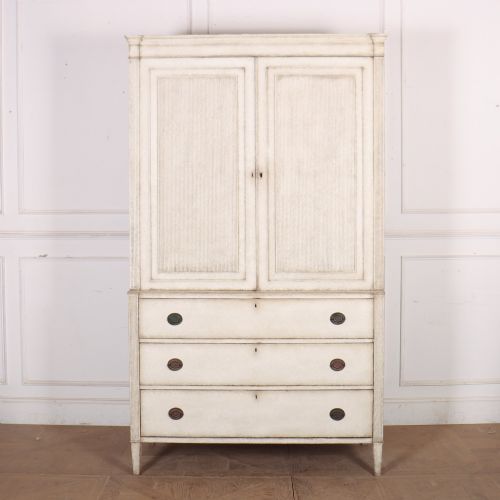
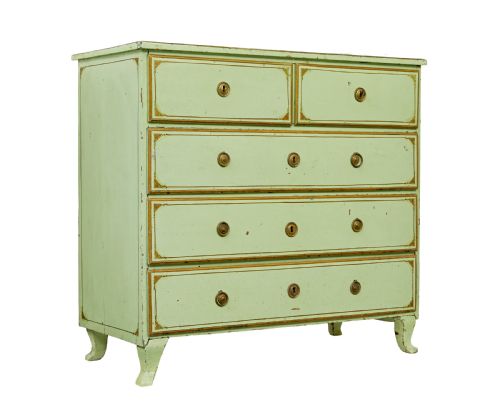
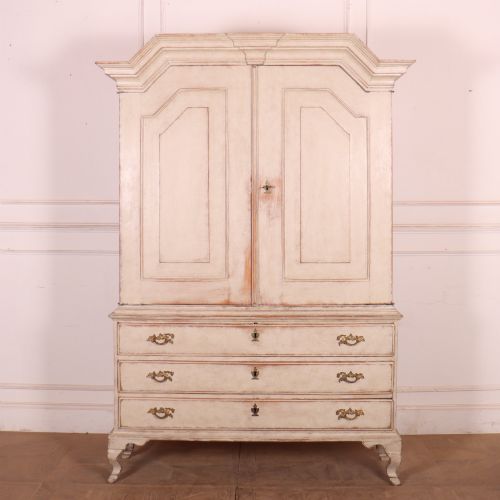
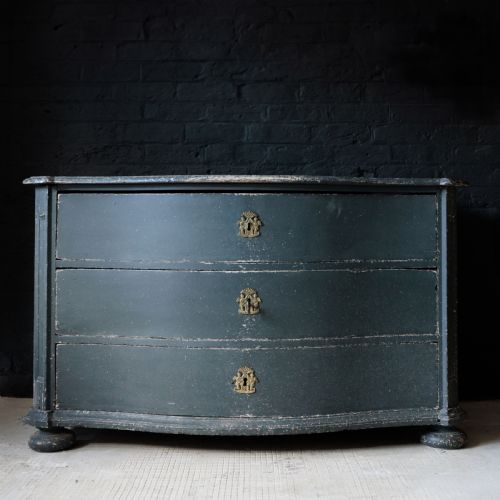
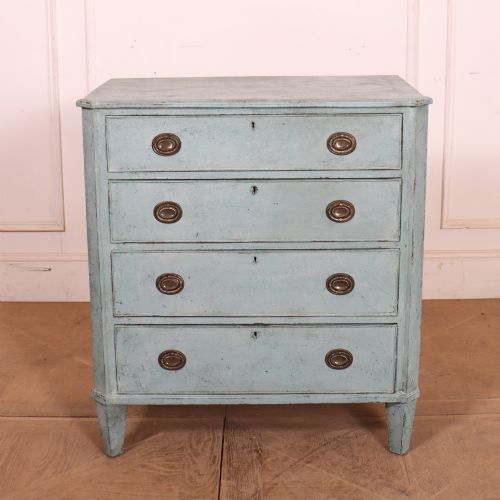
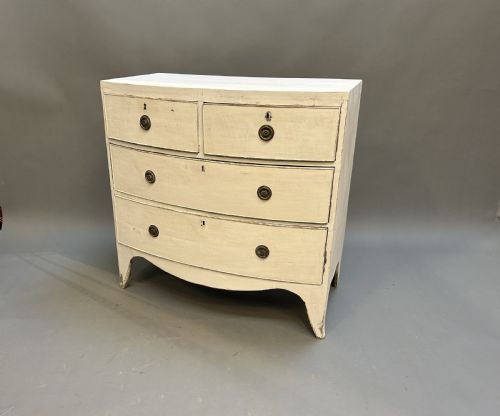
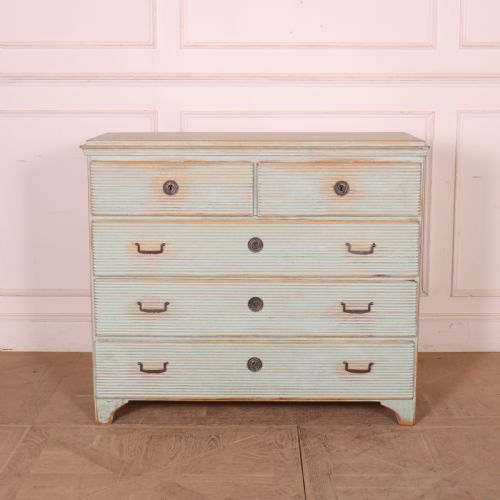
A swedish style painted chest encompasses a variety of storage forms, from eighteenth-century commodes to nineteenth-century pine chests of drawers and linen cupboards. Pieces often arrive with serpentine fronts, fluted drawer fronts, or faux marble tops.
Originating largely from Scandinavian workshops, these items cross several periods including the eighteenth century, nineteenth century, and Victorian eras. The most common form encountered on this page is the painted pine chest of drawers or commode.
Makers and artisans utilised regional aesthetics such as Gustavian neoclassicism, Scandinavian country, and baroque revival. These designs range from formal architectural facades to simpler rustic country blanket boxes and coffers.
How They Were Made
Carpenters constructed carcasses primarily from solid pine and oak, relying on traditional timber joinery for durability. Iron and brass hardware such as drawer pulls and escutcheons completed the construction.
Surfaces received layers of paint, often in soft grey or muted tones, sometimes finished by hand to create faux marble tops. Decoration drew on baroque, neoclassical, and empire styles with carved fluting and serpentine curves.
Swedish Style Painted Chest Retail Price Guide 2026
Typical asking prices for swedish style painted chest among the pieces listed under this phrase on Sellingantiques today, from the lower quarter to the upper quarter. They describe what is for sale here now, not the wider market.
Some nineteenth-century chests sport faux marble tops painted by hand to look like stone without the heavy lifting.
What Varies in Quality
The sophistication of the painted finish and the integrity of the original wood ground dictate the character of the piece. Examples retain early or original painted surfaces, while others show later redecoration by hand.
Structural complexity sets different tiers apart, ranging from simple nailed blanket boxes to sophisticated serpentine commodes with detailed fluted drawer fronts and brass fittings. The presence of regional stylistic elements, such as Gustavian neoclassical proportions, influences the overall architectural weight.
The Swedish Style Painted Chest Glossary
- Commode
- A low cabinet or chest of drawers, often featuring decorative painted finishes and serpentine fronts. These pieces served practical storage functions in bedrooms and reception rooms.
- Gustavian
- A Swedish neoclassical style characterised by restrained symmetry, pale paint colours, and classical motifs derived from French designs. It flourished during the late eighteenth century.
- Serpentine
- A shape of furniture front that curves outward at the centre and inward at the sides, or vice versa. This contour requires skilled carpentry.
- Escritoire
- A writing desk equipped with drawers and a sloping lid or fall front. These items combine practical compartment storage with a writing surface.
- Coffer
- A large wooden chest used historically for storing valuables, linen, or documents. They often feature hinged lids and sturdy iron hardware.
Swedish Style Painted Chest: Frequently Asked Questions
What periods do these painted chests come from?
The selection includes pieces originating from the eighteenth century, the nineteenth century, and the Victorian era. Specific dates noted in the archive span from seventeen-fifty through the late nineteenth century.
Stylistic influences cover Gustavian neoclassicism, baroque revival, and Scandinavian country traditions. Each era contributes distinct proportions and decorative paint treatments.
Are these chests made of solid wood?
Construction primarily utilises solid pine and oak timber for the main bodies and drawer structures. Metal components like iron and brass appear in hinges, locks, and handles.
Surfaces are finished with paint, occasionally mimicking more expensive materials through decorative faux marble effects on the top surfaces.
What is a Gustavian style chest?
A Gustavian chest reflects Swedish neoclassical design influenced by French royal courts but interpreted with simpler, lighter proportions. They typically feature pale painted finishes and subtle carved details.
Items from this tradition emphasise restraint, symmetry, and functional elegance rather than heavy ornamentation.
How do I care for a painted wooden chest?
Maintain the painted wood by dusting gently with a dry, soft cloth and avoiding harsh chemical cleaners that might damage historical finishes. Keep pieces away from direct heat sources and strong sunlight to prevent timber movement.
Wax can be applied sparingly to unpainted wooden interior elements if the timber requires nourishment.