


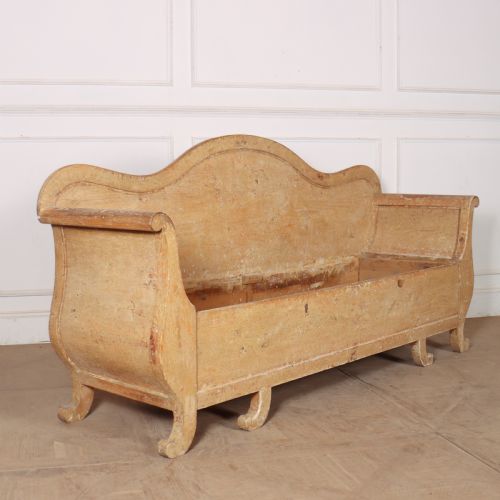


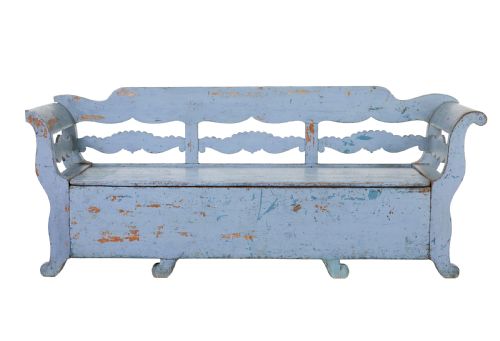


Swedish Settle Bench
A Swedish settle bench offers traditional Scandinavian seating and storage, bringing robust pine construction and historic painted surfaces into a room.
Swedish Settle Bench
When you search for a Swedish settle bench, you are looking at substantial wooden seating with high backs and enclosed sides designed to block draughts. These pieces originate primarily from the eighteenth and nineteenth centuries, reflecting Scandinavian country and Gustavian aesthetics.
You are most likely to meet painted pine and softwood versions on this page. Many examples date from the nineteenth century, including large rustic forms and smaller children's variants in beechwood or birch.
The inventory includes regional variations, such as Austrian country settle benches alongside Swedish originals. Forms range from simple storage benches to high-backed settles and sofas influenced by the Gustavian style.
How they were made
These benches were constructed primarily from native softwoods like pine, utilising joined planks for the high backs and enclosed storage bases. Joinery methods relied on traditional pegging and sturdy framing to withstand daily domestic use in rural farmhouses.
Surfaces were frequently finished with layers of paint, often applied in muted tones that have aged and worn over generations. Some pieces incorporated secondary hardwoods such as beechwood or birch for structural elements or smaller children's variants.
Swedish Settle Bench Retail Price Guide 2026
Typical asking prices for swedish settle bench among the pieces listed under this phrase on Sellingantiques today, from the lower quarter to the upper quarter. They describe what is for sale here now, not the wider market.
Listings feature pieces spanning the eighteenth and nineteenth centuries, predominantly constructed from pine and finished with historic paint.
What varies in quality
The distinction between ordinary and exceptional examples rests upon the preservation of original painted surfaces and the integrity of the timber. Pieces retaining their historic paint layers hold greater character than those stripped or heavily repainted in later periods.
Proportion and scale also define the piece, with larger nineteenth-century examples and finer Gustavian-inspired designs demonstrating more sophisticated joinery and decorative restraint than basic utilitarian workshop output.
The Swedish Settle Bench Glossary
- Settle bench
- A wooden bench featuring a high back, solid arms, and frequently a box base for storage. This form was designed to keep sitters warm by blocking cold air in unheated rooms.
- Gustavian
- The Swedish neoclassical style spanning the late eighteenth and early nineteenth centuries. It is characterised by lighter proportions and restrained classical ornamentation.
- Softwood
- Timber derived from conifers, predominantly pine in these Scandinavian pieces. It provided an accessible material for domestic furniture production.
- Scandinavian Country
- The vernacular furniture tradition of rural northern Europe. These items prioritise functional construction and local materials over formal academic design.
Swedish Settle Bench: Frequently Asked Questions
What is a Swedish settle bench used for?
A Swedish settle bench provides both seating and enclosed storage within a single piece of furniture. Historically, the high back and solid sides served to block cold draughts in traditional rooms.
Today, these benches function well in hallways, kitchens, or living spaces where extra seating and concealed storage are required.
How do I identify a Gustavian settle?
A Gustavian settle displays neoclassical design influences originating from late eighteenth-century Sweden. These pieces often feature lighter proportions and cleaner lines compared to heavier rustic furniture.
Look for painted finishes in muted palettes and subtle carved details that reflect Swedish interpretations of French neoclassical styles.
Are these benches made of pine?
Many of these benches are constructed from pine, which was readily available across Sweden and other parts of Europe. Carpenters utilised softwood planks for the large backs and box bases.
Some examples also incorporate beechwood, birch, or general painted wood depending on the specific workshop and regional traditions.
How do I care for painted pine furniture?
Care for painted pine by dusting it regularly with a dry cloth and avoiding harsh chemical cleaners. Protecting historic paint surfaces from direct sunlight and excessive moisture preserves the finish.
Maintain stable indoor humidity levels to prevent the timber from expanding or contracting significantly over time.