




Swedish Painted Sideboard
A Swedish painted sideboard brings bright storage and pale timber tones to a room, offering practical utility alongside distinct Scandinavian character.
Swedish Painted Sideboard
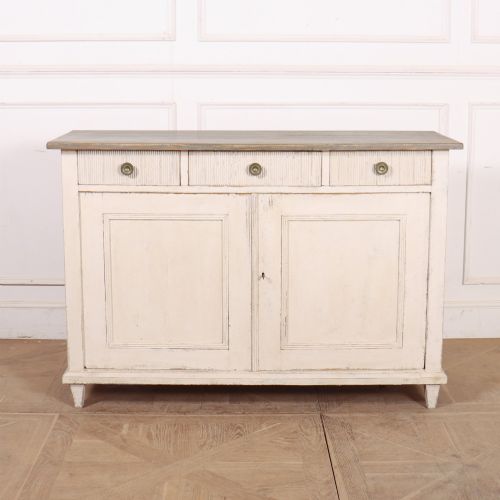
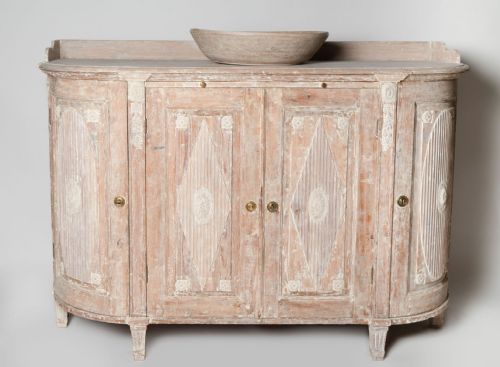
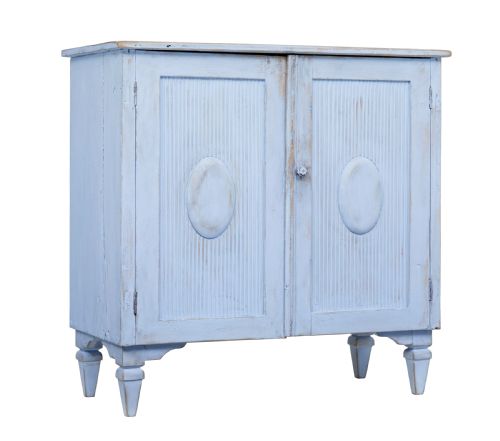
When you search for a swedish painted sideboard, you encounter robust storage furniture originating from northern Europe, primarily rendered in pine and softwood. The inventory spans from the eighteenth century through the nineteenth century, encompassing regional iterations like Gustavian forms and rustic country cupboards.
While sideboards proper appear alongside enfilades and buffets, the selection also includes commodes, linen cupboards, and kitchen cabinets sharing similar painted finishes. These pieces served practical domestic storage needs in Scandinavian homes, evolving from simple utilitarian carcases into decorative household fixtures.
The aesthetic leans towards pale painted surfaces, sometimes revealing scraped paint or ragwork decoration underneath later layers. Buyers select these items to anchor dining spaces or hallways with functional storage that carries historical depth and surface texture.
What varies in quality
Quality rests significantly in the integrity of the painted surface, distinguishing original or scraped historic finishes from unsympathetic modern repainting. The handling of decorative details, from restrained Gustavian carving to simpler rustic mouldings, marks the ambition of the original maker.
Structural preservation also dictates distinction, noting how well timber joints hold together and whether original brass or iron hardware remains intact. Proportion and scale influence desirability, particularly when comparing compact commodes to expansive enfilades and linen cupboards.
Some nineteenth century pine cupboards wear their history openly through layers of ragwork paint applied with old rags.
The Swedish Painted Sideboard Glossary
- Gustavian
- The Swedish neoclassical style spanning the late eighteenth and early nineteenth centuries. It is characterised by restrained classical motifs and pale, luminous paintwork.
- Enfilade
- A suite of fitted cabinets or a long sideboard designed to stand in a line along a wall. These grand storage pieces frequently date from the mid nineteenth century.
- Ragwork
- A decorative painting technique utilising rags to apply or manipulate colour on a surface. This method creates mottled, textured patterns visible on nineteenth century pine furniture.
- Commode
- A low chest of drawers or cabinet designed for domestic storage. Examples in this inventory display serpentine fronts or neoclassical proportions.
- Softwood
- Timber derived from conifers such as pine, used extensively in Scandinavian furniture construction. It provides a lightweight yet stable carcase for layered paint finishes.
Swedish Painted Sideboard: Frequently Asked Questions
How do I clean a painted wooden sideboard?
Dust surfaces regularly with a soft, dry cloth to prevent dirt accumulation. Avoid harsh chemical cleaners that can damage historic paint layers.
For stubborn marks, use a slightly damp cloth with mild soap, drying the timber immediately afterwards. Preserving the integrity of the original paint finish requires gentle handling.
What rooms suit a Swedish sideboard best?
Dining rooms utilise these pieces effectively for storing tableware, linens, and serving items. Their substantial surface area also functions well for displaying lamps or decorative objects.
Hallways and living spaces benefit from the bright, pale tones which help reflect light. The diverse forms, from narrow commodes to large linen cupboards, fit varied spatial requirements.
How do I identify a Gustavian piece?
Look for restrained neoclassical details such as fluted columns, tapered legs, and subtle carved swags or rosettes. These elements reflect French influence adapted to Swedish tastes.
Paint colours tend towards soft greys, creams, and pale blues applied over pine or softwood. The overall aesthetic prioritises symmetry and understated elegance over heavy ornamentation.
Are zinc and marble tops original?
Metal and stone toppings on nineteenth century sideboards and commodes often served practical functions in serving or food preparation. Zinc and marble provided durable, wipe-clean surfaces for heavily used furniture.
Evaluating these elements involves checking how the top integrates with the wooden carcase structure. Both materials appear on continental and Scandinavian storage pieces from this era.