
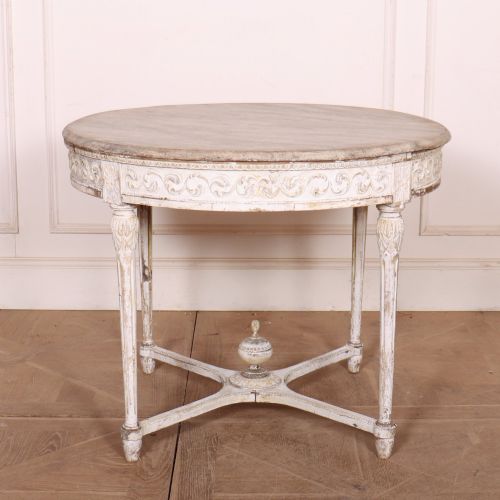
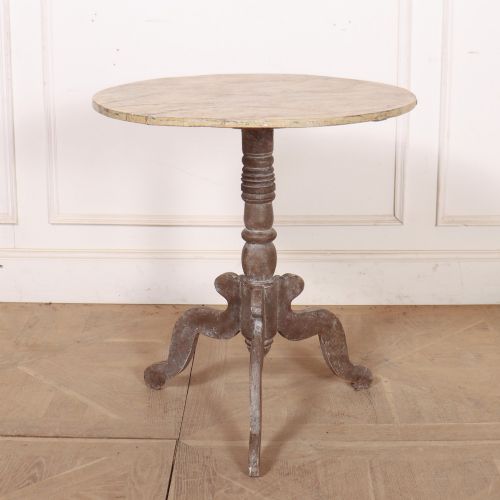
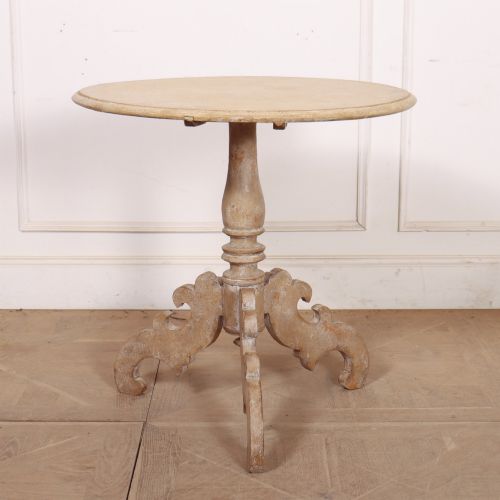
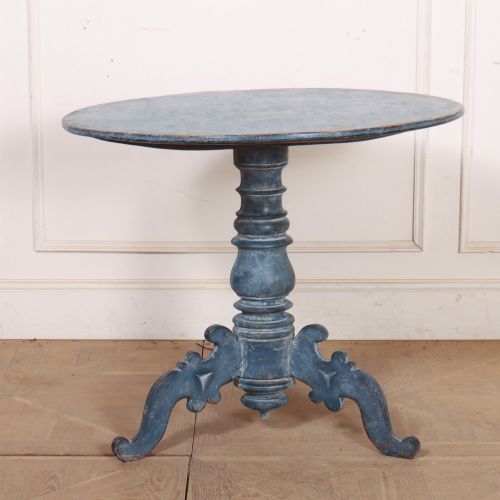
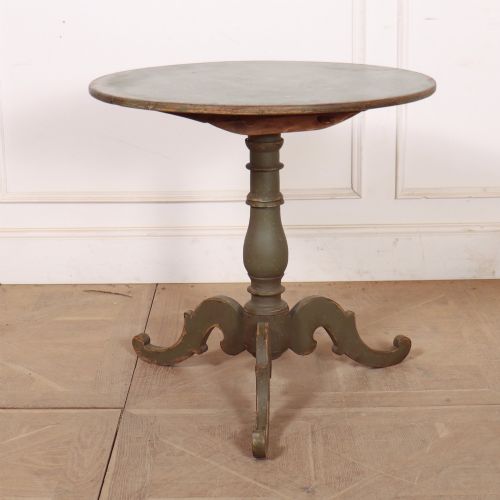


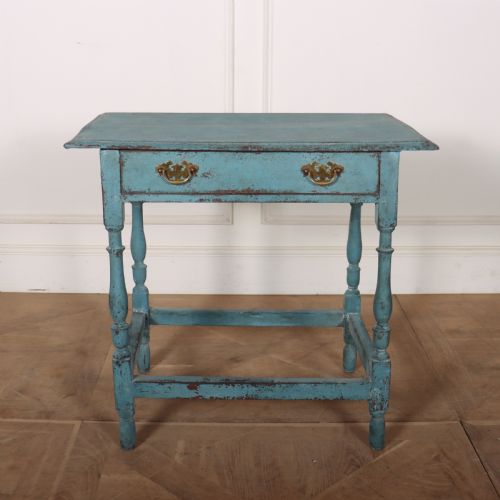


Swedish Painted Lamp Table
These Swedish painted lamp tables bring practical surface space and pale, weathered surfaces to a room.
Swedish Painted Lamp Table
A swedish painted lamp table provides a compact surface for lighting and small items, taking forms such as occasional tables, side tables, and pedestal tables. Most examples on this page date from the nineteenth century, alongside earlier eighteenth century pieces and specific years like 1860, 1880, and 1890.
The dominant styles include Gustavian, Scandinavian country, Swedish country, and Georgian country, reflecting northern European rural and neoclassical tastes. These tables function well beside seating or in hallways, offering useful utility without dominating a room.
How they were made
Construction relies primarily on pine and softwood, shaped into tripod bases, pedestals, and four-legged side tables. Timber components are finished with paint, often layered over time, and occasionally accented with gold leaf or paired with marble tops.
Joinery techniques follow traditional woodworking methods suited to softwood construction, ensuring stability for daily use. Surfaces receive painted finishes that define the regional aesthetic, ranging from simple monochrome coats to decorative treatments.
Listings span the eighteenth and nineteenth centuries, including specific years like 1860, 1880, and 1890, alongside styles such as Gustavian and Scandinavian country.
What varies in quality
Quality rests in the integrity of the painted surface, where original or early finishes hold greater character than later repainting. The crispness of carved details on tripod bases and pedestal columns also distinguishes finer examples from simpler provincial work.
Proportion and timber selection dictate the overall balance of the piece, with well-turned legs and even softwood construction marking superior craftsmanship. Wear and patination should appear natural to the age of the table, integrating harmoniously into the painted surface.
The Swedish Painted Lamp Table Glossary
- Gustavian
- The Swedish neoclassical style spanning the late eighteenth and early nineteenth centuries, known for restrained ornamentation and light painted finishes. It draws inspiration from French court taste interpreted through a northern sensibility.
- Tripod base
- A support structure featuring three legs radiating from a central pillar, commonly found on smaller occasional and lamp tables. This design provides stable footing on uneven floors.
- Softwood
- Timber from conifer trees, such as pine, which was widely utilised in Scandinavian furniture making for its workability and abundance. It forms the core material of most painted tables.
- Occasional table
- A small, movable table intended for specific, intermittent use rather than central placement in a room. Lamp tables and side tables fall into this versatile category.
Swedish Painted Lamp Table: Frequently Asked Questions
Where should I place a lamp table?
These compact tables fit naturally beside armchairs, sofas, or in narrow hallways where surface space is limited. Their modest proportions allow them to sit quietly in corners or serve as bedside surfaces.
Ensure the height matches your seating or lighting needs so the table functions practically in daily use.
How do I date a painted table?
Dating relies on construction methods, timber characteristics, and the style of the turned legs or pedestal. Eighteenth-century pieces often display different joinery details compared to late nineteenth-century examples.
The layers and wear of the paint surface also offer clues to the age and history of the piece.
Are these tables sturdy enough for daily use?
Constructed from pine and softwood, these tables were built for practical domestic tasks. Tripod and pedestal designs distribute weight effectively for holding lamps and small decorative objects.
Routine care and placement away from extreme moisture ensure they remain stable and functional.
What defines Swedish country style?
Swedish country furniture combines practical utility with lighter colour palettes, often featuring painted finishes in pale tones. It reflects a regional adaptation of neoclassical and vernacular European designs.
This aesthetic prioritises functional forms and weathered surfaces over heavy, dark timbers.