
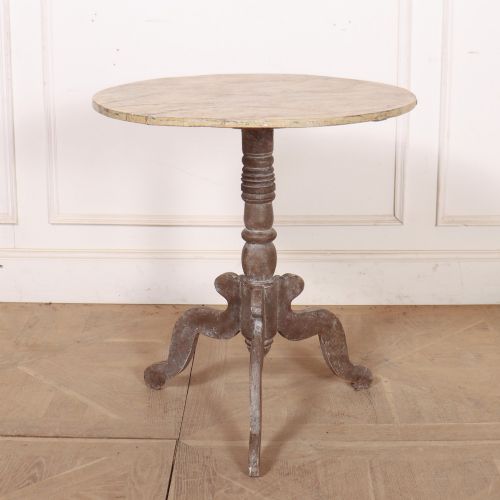
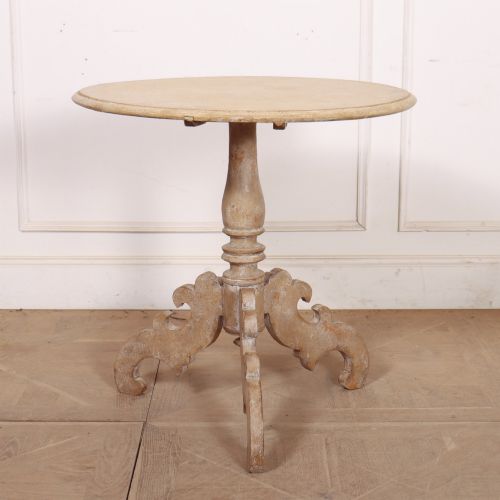
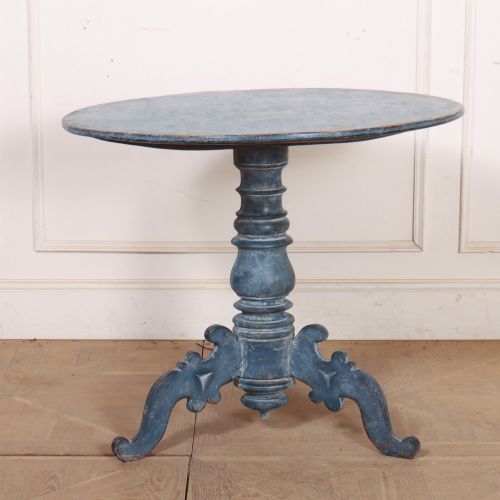
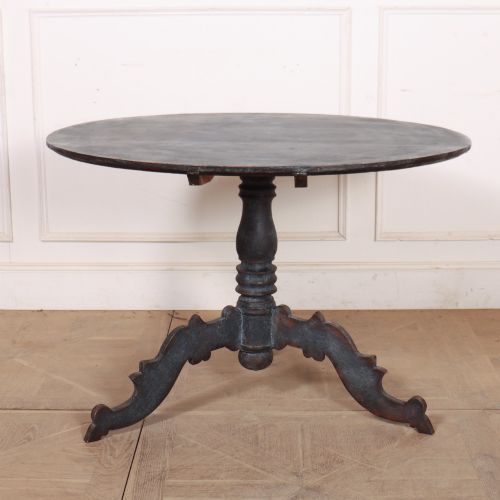
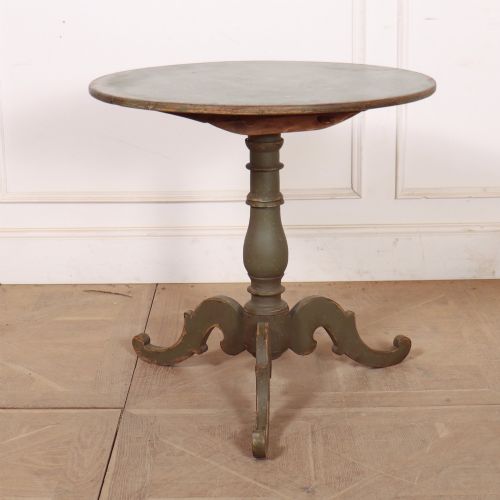


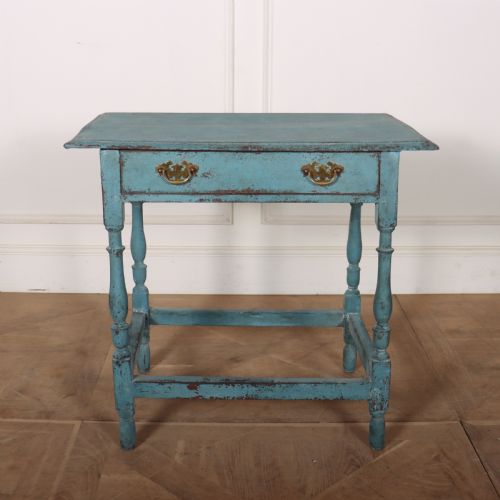


Swedish Painted Accent Table
A swedish painted accent table brings bright utility and quiet northern character to a room, offering versatile display space with historic charm.
Swedish Painted Accent Table
A swedish painted accent table takes several forms across this selection, most commonly appearing as a lamp table, occasional table, or side table from the nineteenth century. These compact items served practical domestic needs in northern homes while providing a decorative surface for lighting and daily objects.
Makers fashioned these furnishings in styles ranging from Scandinavian country and Swedish country to Gustavian and Georgian country. Alongside standard tables, the selection includes related forms such as folding tables, supper tables, and stools to suit smaller spaces.
The nineteenth century dominates the timeline, supported by examples from eighteen-ninety, nineteen hundred, nineteen ten, and the eighteenth century. Buyers frequently encounter pine, softwood, and painted wood surfaces finished with traditional paint and ragwork techniques.
How they were made
Carpenters constructed these tables primarily using pine and softwood as structural timbers, shaping sturdy legs and tops suited to everyday household demands. Painted wood finishes sealed the grain and introduced decorative colour to interiors.
Artisans applied paint directly to the timber, utilising specialised techniques like ragwork to create textured patterns across the surface. Brass elements occasionally appear as functional hardware or decorative accents on these pieces.
Listings span four distinct stylistic traditions: Scandinavian country, Swedish country, Gustavian, and Georgian country.
What varies in quality
The sophistication of the painted finish separates simpler country items from more refined Gustavian examples. Original surface treatments demonstrate distinct artistic effort through layered pigments and specialised application methods like ragwork.
Proportion and structural balance dictate the visual weight of each piece within a room. Well-turned legs and harmonious tabletop dimensions reflect the skill of the original maker.
The Swedish Painted Accent Table Glossary
- Gustavian
- A neoclassical Swedish design style spanning the late eighteenth and early nineteenth centuries. It combines French influence with restrained Nordic simplicity.
- Ragwork
- A decorative paint technique involving rags or cloths to apply or manipulate colour on a surface. This creates subtle, mottled textures across the painted wood.
- Softwood
- Timber derived from conifer trees, such as pine, commonly utilised for country furniture construction. It provides a workable material that accepts painted finishes readily.
- Lamp table
- A small occasional table designed originally to hold a lighting fixture. These compact surfaces suit corners and bedside placement.
- Pine
- A common softwood timber utilised extensively in Scandinavian furniture making. It forms the primary structural base for painted tables.
Swedish Painted Accent Table: Frequently Asked Questions
Where did these tables originate?
These furnishings originate from Sweden and broader Scandinavian regions, reflecting local domestic traditions from the eighteenth through early twentieth centuries.
Craftsmen built them using accessible regional timbers like pine and softwood to furnish domestic interiors.
What styles do these tables represent?
The pieces span Scandinavian country, Swedish country, Gustavian, and Georgian country aesthetics. Each style offers a distinct interpretation of Nordic design.
Gustavian examples tend toward restrained neoclassical elegance, whereas country pieces display robust vernacular character.
How were painted accent tables used?
Historic households utilised these compact surfaces as lamp tables, supper tables, or general side tables for daily convenience. Their modest proportions allowed easy movement between rooms.
They provided practical utility for holding lighting, meals, and small household items.
What materials are typical for these pieces?
Pine and softwood form the core structural materials for the vast majority of these tables. Artisans finished them with painted wood surfaces and occasional brass details.
Paint treatments range from solid colours to textured ragwork applications.